
Summary of A new cellular connectivity service for Arduino IoT Cloud
Arduino introduced a SIM-only service for IoT devices, enabling global cellular access to the Arduino IoT Cloud via Arm Pelion. This single SIM works in over 100 countries with unified data plans, initially launching in the US. It supports the MKR GSM 1400 board and future LTE models, allowing secure data transmission without coding or with custom API integration. The service offers 10MB free for 90 days or a $1.50/month subscription for 5MB, aiming to simplify scalable IoT development across various sectors.
Parts used in the Arduino Cellular IoT Service:
- Arduino SIM
- Arm Pelion Connectivity Management
- Arduino IoT Cloud platform
- Arduino MKR GSM 1400 board
- Webhooks
- API
- Open-source libraries
- Arduino IDE
Arduino has launched a SIM-only service exclusively for IoT (internet of things) devices based on the Arduino platform to give developers and manufacturers cellular access to the Arduino IoT Cloud platform.
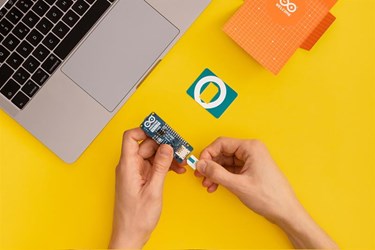
The cellular service, provided by Arm Pelion Connectivity Management, means a single physical Arduino SIM can be used in more than 100 countries worldwide with one simple data plan. The Arduino SIM data plan is launching initially in the US, with availability in Europe and Asia to follow in summer 2019.
Fully integrated with Arduino IoT Cloud, Arduino says its SIM is continuing the company’s mission to democratise IoT technology, “making cellular IoT accessible to everyone from makers to professionals across domains already using Arduino today – in education, agriculture, industrial, retail and more”.
It is designed so that users can easily send sensor data to databases, spreadsheets or alerts, without any coding necessary, using Webhooks, or are able to create custom IoT applications using the API.
Arduino SIM is initially rolling out with support for Arduino MKR GSM 1400 (3G with 2G fallback) – a 32-bit Arduino board supporting TLS and X.509 certificate-based authentication through an on-board secure element and crypto-accelerator.
Arduino says its IoT Cloud makes it possible for anyone to connect to these boards securely without any coding required, but they are still programmable using open-source libraries and the traditional Arduino IDE. A roadmap is in place to support the upcoming Arduino MKR NB 1500 (LTE Cat-M and NB-IoT), with plans to open it to third party cellular boards at a later date.
Arduino adds that its SIM provides a streamlined path for cellular IoT development with 10 MB of data free for up to 90 days, and the option for a simple subscription at 5 MB for $1.50 USD per month. The one plan provides the same amount of data traffic for the same price wherever in the world the device is being operated. By partnering with Arm Pelion Connectivity Management, Arduino believes its the cellular service has a solid foundation for users planning to scale to large numbers of devices in the future.
Source: A new cellular connectivity service for Arduino IoT Cloud
- What is the new Arduino service?
It is a SIM-only service exclusively for IoT devices based on the Arduino platform to provide cellular access to the Arduino IoT Cloud. - How many countries can the Arduino SIM be used in?
A single physical Arduino SIM can be used in more than 100 countries worldwide. - Which board does the service initially support?
The service initially rolls out with support for the Arduino MKR GSM 1400 board. - Does using this service require coding?
No, users can easily send sensor data without any coding necessary using Webhooks. - What are the pricing options for the data plan?
The plan includes 10 MB of data free for up to 90 days or a subscription at 5 MB for 1.50 USD per month. - Can I use this SIM outside the United States?
Yes, the data plan provides the same amount of data traffic for the same price wherever in the world the device is operated. - Will third-party cellular boards be supported later?
Yes, there are plans to open the service to third party cellular boards at a later date. - What security features does the MKR GSM 1400 board have?
The board supports TLS and X.509 certificate-based authentication through an on-board secure element and crypto-accelerator.
