
Summary of Arduino automatic dust collection system
This article details a DIY automatic dust collection system designed by Brumberjack Woodworks using Arduino hardware. The system utilizes 3D-printed ball valves actuated by heavy-duty servo motors to direct airflow from a central collector to various workshop machines. Controlled via push buttons and an Arduino board, the setup includes internal PVC grounding to prevent static sparks. The project emphasizes efficient dust management by opening only necessary valves, reducing the required collector capacity.
Parts used in the Automatic Dust Collection System:
- Heavy duty dust collector
- 3D-printable ball valves
- Large 35KG servo motors
- Dust collection tubes
- PVC pipes
- Arduino board
- External power supplies
- Simple push buttons
Using a little Arduino hardware and programming YouTuber Brumberjack Woodworks has created a fantastic automatic dust collection system for his workshop. Providing an easy way to collect dust from any of the machines he may be using. Equipped with servo mounted blast gates the desk collection system Arduino code is available to download from GitHub from the link below. Check out the overview below to be taken through the complete thought and design process of system and its implementation.
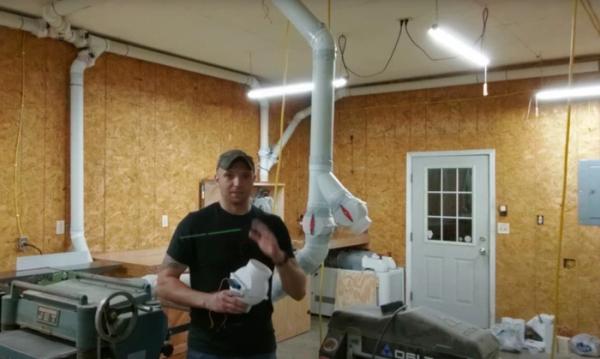
“This whole system starts with a heavy duty dust collector, which is essentially a huge vacuum cleaner. The exact model isn’t that important, so long as it can handle the workload. Luckily, the key part of this system design is valve-based direction. By only opening the valves you need, you can reduce the necessary capacity of the dust collector. “
DIY dust collection system
“Brumberjack_Woodworks created his own 3D-printable ball valves for this system. Each of the ball valves is massive, so they can handle a lot of air flow and dust. They have large 35KG servo motors for actuation. The ball valves simply mount inline with the dust collection tubes running to each machine. By opening and closing the valves, shop workers can control the covered areas. Importantly, the PVC pipes need internal grounding to keep static arcs from igniting sawdust in the air.”
“An Arduino controls the operation of the servo valve actuators. Power for the servos comes from large external power supplies, as Arduino boards cannot output the necessary current to operate these heavy duty servos. Simple push buttons connected to the board tell it to open the specific valves, so a button can be mounted next to each tool for easy access.”
Source: Arduino automatic dust collection system
- What is the main purpose of this system?
To provide an easy way to collect dust from any machine in the workshop. - How does the system reduce the necessary capacity of the dust collector?
By only opening the specific valves needed for the active machine. - Can I use any model of dust collector for this project?
Yes, as long as the model can handle the workload. - What material are the ball valves made from?
The ball valves are custom 3D-printable designs created by the author. - What type of motors are used to actuate the valves?
Large 35KG servo motors are used for actuation. - Why do the PVC pipes need internal grounding?
Grounding prevents static arcs from igniting sawdust in the air. - How does the Arduino control the operation of the servos?
It controls the servo valve actuators based on input from simple push buttons. - Where does the power for the servos come from?
Power comes from large external power supplies because the Arduino cannot output enough current. - How can a user easily access the controls?
A button can be mounted next to each tool for easy access.
