
Summary of QUICK AND SIMPLE MILLIOHMMETER
This article introduces a simple, hobbyist-friendly MiliOhm Meter project by [mircemk]. Built using an Arduino and common lab parts housed in a cigar box, it features a concise sketch of under thirty lines. The design emphasizes creativity with colored tape for labeling instead of paint. It serves as an excellent learning tool for basic electrical measurements, though it lacks NIST traceability calibration.
Parts used in the MiliOhm Meter:
- Arduino
- Common lab parts
- Cigar box
- Colored tape
User [mircemk] presents his “MiliOhm Meter” project which you can build with an Arduino, a handful of common parts from your lab, and a cigar box. It doesn’t get much simpler than this, folks. While this is something you won’t be getting calibrated with NIST traceability, it looks like a fun and quick project that’s more than suited for hobbyist measurements. It’s not only easy to build, the Arduino sketch is less than thirty lines of code. This is a great learning project, plus you get something useful for your lab when its finished.
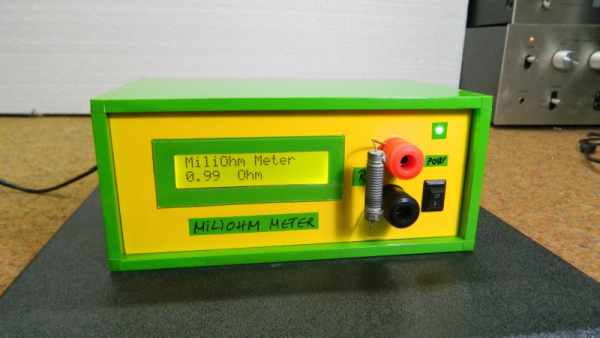
We like the creative use of colored tape instead of paint on the project’s box. If this style suits you, [mircemk] has published several other similar lab instrument projects on his Hackaday.io page, including a frequency meter, an audio spectrum analyzer, and an auto-ranging capacitance meter to name a few. You might recognize him from some other projects we’ve featured, such as the crazy kinematic arms that set a clock’s hands every minute.
Source: QUICK AND SIMPLE MILLIOHMMETER
- What is the main purpose of the MiliOhm Meter project?
It is designed for fun and quick hobbyist measurements. - How many lines of code does the Arduino sketch contain?
The sketch is less than thirty lines of code. - Can this device be calibrated with NIST traceability?
No, you will not get calibrated with NIST traceability. - What creative material is used instead of paint on the box?
Colored tape is used creatively instead of paint. - Is this project suitable for beginners?
Yes, it is described as a great learning project that is easy to build. - Where can users find similar projects by the creator?
Similar projects are published on his Hackaday.io page. - Does the creator have other lab instrument projects?
Yes, he has a frequency meter, audio spectrum analyzer, and auto-ranging capacitance meter.
