
Summary of BOONTON 40GHZ USB-CONNECTED RF POWER SENSORS
The Boonton RTP5000 Series introduces real-time peak power sensors featuring Real-Time Power Processing™ technology. These USB-connected devices offer 100,000 RF measurements per second with zero latency and no data gaps. They provide high video bandwidth, 100ps time resolution, and capture narrow pulse widths down to 10ns. The system enables detailed analysis of parameters like duty cycle and jitter while identifying anomalies in consecutive pulses.
Parts used in the RTP5000 Series:
- RTP5000 Real-Time Peak Power Sensors
- USB connection interface
- Real-Time Power Processing™ technology
- Measurement Buffer Mode
- Time base resolution (100ps)
- Acquisition rate (up to 100MSa/s)
RTP5000 Real-Time Peak Power Sensors provide high video bandwidth, fast rise-times, and unique Real-Time Power ProcessingTM to deliver 100,000 RF measurements per second, with no gaps in signal acquisition, and zero measurement latency.
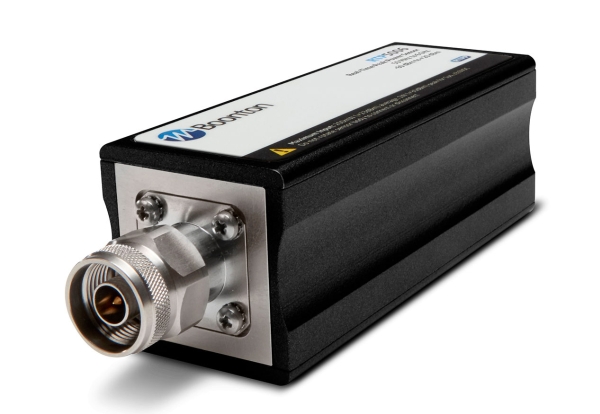
Saelig Company, Inc. has introduced the Boonton RTP5000 Series Real-Time Peak Power Sensors, offering industry-leading performance with wide video bandwidth, fast rise times, fine time resolution, narrow minimum pulse widths, high pulse repetition rates, and superior measurement reading rates. These USB-connected RF power sensors incorporate Boonton’s unique Real-Time Power Processing™ technology, which delivers measurements with no gaps in signal acquisition and zero measurement latency. RTP5000 Peak Power Sensors provide fast, accurate, and reliable RF power sensing, with automatic pulse measurements.
The RTP5000 series features 100ps time base resolution with an acquisition rate up to 100MSa/s, providing 50 points per division with a time base range as low as 5ns/div, gathering useful waveform information often missed by other power analyzers. Pulse widths as narrow as 10ns can be captured and characterized with outstanding trigger stability (< 100psRMS jitter).
Real-Time Power ProcessingTM (RTPP) technology is a unique parallel processing methodology that rapidly performs the multi-step process of RF power measurements. Competing conventional power meters and USB sensors perform measurement steps serially, resulting in long re-arm times and missed data. RTP5000 sensors can capture, display, and measure every pulse, glitch and detail with no gaps in data and zero latency. A Measurement Buffer Mode works in conjunction with Real Time Processing to allow users to collect and analyze measurements from a virtually unlimited number of consecutive pulses or events. A wide variety of parameters can be calculated and plotted (e.g. duty cycle, pulse repetition rate, pulse width variation, pulse jitter, etc.) Anomalies, such as dropouts, can also be identified.
Read more: BOONTON 40GHZ USB-CONNECTED RF POWER SENSORS
- What is the maximum measurement rate of the RTP5000?
The sensors deliver 100,000 RF measurements per second. - Does the RTP5000 have any gaps in signal acquisition?
No, the device provides zero measurement latency with no gaps in signal acquisition. - How narrow can the pulse widths be captured by this sensor?
Pulse widths as narrow as 10ns can be captured and characterized. - What is the time base resolution of the RTP5000 series?
The series features a 100ps time base resolution. - Can the sensor identify anomalies like dropouts?
Yes, users can identify anomalies such as dropouts using the available parameters. - How does Real-Time Power Processing differ from conventional meters?
It uses parallel processing to avoid long re-arm times and missed data caused by serial steps. - What is the minimum time base range offered?
The time base range goes as low as 5ns/div. - Can the device measure pulse repetition rates?
Yes, parameters like pulse repetition rate can be calculated and plotted.
