
Summary of TDK CLAIMS SMALLEST POINT-OF-LOAD DC-DC CONVERTER
TDK introduces the FS series µPOL DC-DC converters, featuring industry-leading power density for space-constrained applications like AI and 5G. By integrating the IC and inductor into a compact 3.3 x 3.3 x 1.5 mm package, these solutions offer 1 watt per mm³ efficiency and reduce system size by 50%. Utilizing advanced packaging like SESUB, they operate across a wide temperature range while lowering total system costs.
Parts used in the FS Series µPOL DC-DC Converter:
- Integrated IC
- Integrated Inductor
- Semiconductor embedded in substrate (SESUB)
- High-performance semiconductors
- Advanced electronic components
µPOL DC-DC converters bring highest power density to space-constrained apps
TDK Corporation announces the new series of µPOL™ DC-DC converters, the industry’s most compact and highest power density point-of-load solutions for applications such as big data, machine learning, artificial intelligence (AI), 5G cells, IoT and computing enterprise.
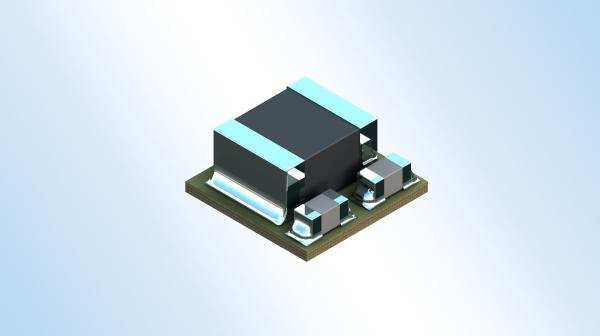
Rather than using side by side discrete integrated circuit (IC) and discrete inductor (L) the new FS series integrates the IC and inductor in a compact configuration which offers a high-density solution for space-constrained applications requiring a low-profile power source.
At 3.3 x 3.3 x 1.5 mm, they minimize the required external components, retaining the highest possible performance while offering a simplified design for ease of integration. This family can deliver a high density solution of 1 watt per mm3, while offering 50% less solution size than the other products available in its class. As a result, this minimizes system solution cost, reduces board size and assembly costs, as well as BOM and PCB costs. It operates at a broad junction temperature range, from -40 °C to 125 °C. Mass production of FS1406 is expected to begin in Q3 2019.
TDK has been developing patents related to these innovations (US 9,729,059 and US 10,193,442) over several years. µPOL™ were developed by TDK’s group company Faraday Semi. These new solutions incorporate high-performance semiconductors in advanced packaging technologies such as semiconductor embedded in substrate (SESUB) and advanced electronic components to achieve unique system integration in a smaller size and lower profile by 3D integration. This integration allows TDK to deliver higher efficiency and ease of use at a lower total system cost to what is currently available today.
Read more: TDK CLAIMS SMALLEST POINT-OF-LOAD DC-DC CONVERTER
- What is the primary advantage of the new FS series?
The FS series offers the highest power density and most compact point-of-load solution for space-constrained applications. - How does the FS series differ from traditional discrete solutions?
It integrates the IC and inductor into a single compact configuration instead of using side-by-side discrete components. - What are the physical dimensions of the converter?
The unit measures 3.3 x 3.3 x 1.5 mm. - Does the FS series reduce board size compared to competitors?
Yes, it offers 50% less solution size than other products available in its class. - What technology enables the unique system integration?
The integration uses semiconductor embedded in substrate (SESUB) and 3D integration techniques. - What is the operating temperature range of the device?
It operates at a broad junction temperature range from -40 °C to 125 °C. - Which companies developed the µPOL technology?
TDK group company Faraday Semi developed the µPOL solutions. - When was mass production of the FS1406 expected to begin?
Mass production was expected to begin in Q3 2019.
