
Summary of Things heat up for self-destructing electronic devices
University of Illinois researchers have developed heat-triggered "transient" electronic devices that self-destruct to aid recycling. By printing magnesium circuits on flexible substrates and coating them with wax-encapsulated acid droplets, the device dissolves when heat melts the wax. Remote triggering is achieved via radio-frequency signals activating an inductive coil. This innovation allows for on-demand destruction of electronics previously destined for landfills.
Parts used in the Transient Electronic Device:
- Magnesium circuits
- Thin flexible materials
- Microscopic droplets of weak acid
- Wax coating
- Radio-frequency receiver
- Inductive heating coil
Expanding on previous research into electronic devices that dissolve in water once they have reached the end of their useful life, researchers at the University of Illinois have developed a new type of “transient” electronic device that self-destructs in response to heat exposure. The work is aimed at making it easy for materials from devices that usually end up in landfill to be recycled or dissolved completely.
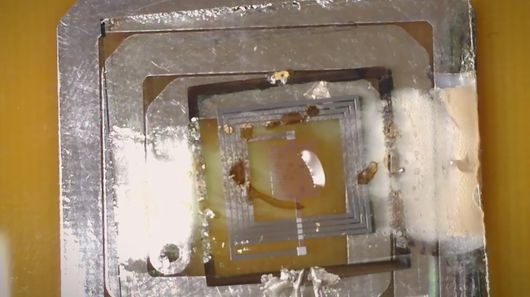
The research involved a group led by aerospace engineering professor Scott R. White teaming up with John A. Rogers, who previously led work in the development of transient electronics that biodegrade in water. These previous devices dissolved in water after a predetermined period of time, which was related to the thickness of outer protective layers encapsulating the actual electronics. But using heat as a trigger has now enabled the creation of electronic devices that can be prompted to self-destruct on demand.
The technology involves first printing magnesium circuits on thin, flexible materials. Microscopic droplets of a weak acid are then trapped in wax, which is coated onto the devices. When exposed to heat, the wax melts and releases the acid, which completely dissolves the device. The researchers were also able to create devices that can be remotely triggered to self-destruct by embedding a radio-frequency receiver and inductive heating coil. In response to a radio signal, the coil heats up and melts the wax, leading to the destruction of the device.
For More Details: Things heat up for self-destructing electronic devices
-
How do these electronic devices self-destruct?
Heat exposure melts a wax coating, releasing trapped weak acid droplets that dissolve the magnesium circuits. -
Can the device be triggered remotely?
Yes, embedding a radio-frequency receiver and inductive heating coil allows remote activation via radio signals. -
What material is used for the circuits?
The circuits are printed using magnesium on thin, flexible materials. -
How does the wax function in this system?
The wax traps microscopic droplets of weak acid and melts upon heat exposure to release the acid. -
Does this technology replace water-based dissolution?
No, it adds a new method using heat as a trigger alongside previous water-based biodegradable designs. -
What is the primary goal of this research?
The aim is to make materials from end-of-life devices easy to recycle or dissolve completely instead of ending up in landfills. -
How does the inductive heating coil work?
The coil heats up in response to a radio signal, which melts the wax to initiate device destruction.
