
Summary of Multi-Chemistry Battery Charger from Microchip
This article describes the MCP1631HV multi-chemistry reference design board, a device for charging various rechargeable batteries. It utilizes an MCP1631HV chip and a PIC16F883 microcontroller to implement charge algorithms for NiMH, NiCd, and Li-Ion chemistries. The board supports one to four NiMH or one to two Li-Ion cells via a SEPIC power converter. Key features include constant current/voltage charging, preconditioning, temperature monitoring, fault detection, automatic battery insertion/removal sensing, and user programmability via onboard buttons.
Parts used in the MCP1631HV Multi-Chemistry Battery Charger:
- MCP1631HV high speed analog PWM
- PIC16F883 microcontroller
- SEPIC power converter
- NiMH batteries
- NiCd batteries
- Li-Ion batteries
- Onboard push buttons
A battery charger is a device used to energize a rechargeable battery by driving an electric current through it. The charging protocol depends on the size and type of the battery being charged. Some battery types have high tolerance for overcharging and can be recharged by connection to a constant voltage source or a constant current source; simple chargers of this type require manual disconnection at the end of the charge cycle, or may have a timer to cut off charging current at a fixed time.
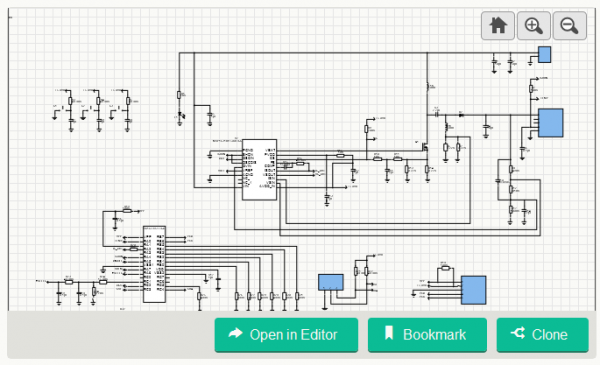
The MCP1631HV multi-chemistry reference design board is used to charge one, two, three or four NiMH batteries or one or two cell Li-Ion batteries. The board uses the MCP1631HV high speed analog PWM and PIC16F883 to generate the charge algorithm for NiMH, NiCd or Li-Ion batteries. It is used to evaluate Microchip’s MCP1631HV in a SEPIC power converter application. As provided, it is user programmable using on board pushes buttons. The board can charge NiMH, NiCd or Li-Ion batteries. It provides a constant current charge (Ni based chemistry) and constant current / constant voltage (Li-Ion) with preconditioning, cell temperature monitoring (Ni based) and battery pack fault monitoring. Also, the charger provides a status or fault indication. It automatically detects the insertion or removal of a battery pack.
For more detail: Multi-Chemistry Battery Charger from Microchip
- What is the primary function of the MCP1631HV board?
It charges one, two, three, or four NiMH batteries or one or two cell Li-Ion batteries. - How does the board generate its charge algorithm?
It uses the MCP1631HV high speed analog PWM and PIC16F883 microcontroller. - Can this charger handle different battery chemistries?
Yes, it supports NiMH, NiCd, and Li-Ion batteries. - Does the charger monitor battery temperature?
Yes, it provides cell temperature monitoring specifically for Ni based chemistry. - How does the system indicate status or faults?
The charger provides a status or fault indication feature. - Can the device detect when a battery is inserted or removed?
Yes, it automatically detects the insertion or removal of a battery pack. - Is the board user programmable?
Yes, it is user programmable using on board pushes buttons. - What type of power converter application does the board evaluate?
It evaluates Microchip's MCP1631HV in a SEPIC power converter application.
