
Summary of 3D Montage in Motion: A Drone-Ground Virtual Environment for Spatial Expression
The Inspection project creates a dynamic 3D photomontage by merging drone and ground-robot imagery and sensor data into a Voronoi-based virtual environment. In nine weeks a multidisciplinary team built a system with robots, ultrasonic sensors, servers, and real-time processing to visualize evolving spatial relationships. The project evaluated multiple robot platforms, chose a Raspberry Pi + GoPiGo + HD camera ground robot, used dual Python HTTP servers, and suggested future work including localization, robot optimization, and swarm intelligence.
Parts used in the Inspection:
- Drone
- Ground robot
- Ultrasonic sensors
- Omnidirectional base (considered in design)
- Pan-tilt servo
- HD camera
- WiFi module
- Riley iPatrol security camera (evaluated)
- X80SV WiFi mobile robot (evaluated)
- Pixy2 camera (evaluated)
- Arduino-based Zumo robot (evaluated)
- GoPiGo shield
- Raspberry Pi
- Deep Learning Robot by Autonomous Inc. (evaluated)
- Python-based HTTP servers (two servers)
- Private local network
Mobile Camera/Drone Interaction
The project “Inspection” merges physical and virtual worlds by creating an evolving 3D photomontage using a Drone-Ground Virtual Environment system. A drone, ground robot, and ultrasonic sensors collect real-time data to build dynamic virtual spaces via the Voronoi Algorithm. This approach offers fresh insights into spatial relationships and object interactions in a continuously updating virtual environment.
The “Inspection” project progressed rapidly from concept to public performance in nine weeks. The team included experts in art, computer science, engineering, and political science who combined robotics, aesthetics, and server systems to deliver innovative solutions. This approach maintained the project’s technical and conceptual significance.
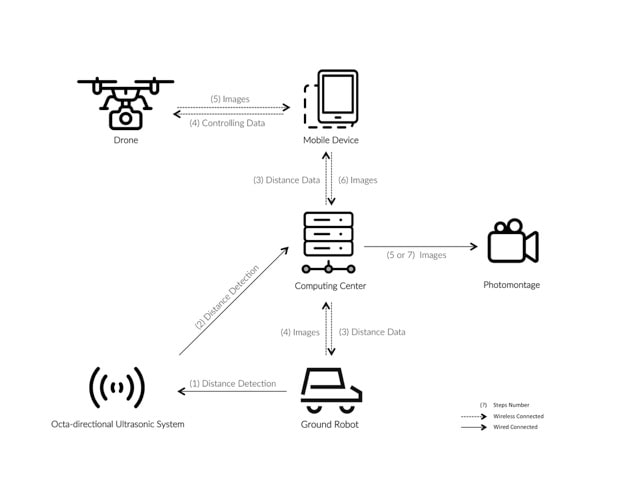
Architecture
This statement highlights the visual architecture of the “Inspection” project, illustrating how the drone, ground robot, sensors, servers, and Voronoi-based 3D photomontage connect. The diagram explains the data flow and system structure, helping users quickly understand how physical data is captured and transformed into a dynamic virtual environment.
Ground Robot Research
This textbook describes the ideal tackle for the ground robot in the” examination” design. Crucial features include an omnidirectional base for nimble movement, a pan-tilt servo with an HD camera that provides flexible and high-quality illustrations, and a WiFi module for real-time data transfer. Programmability allows precise control over movement and data collection, making the robot a versatile platform essential for accurately creating the evolving virtual 3D environment. Such integrated, programmable robots are rare, highlighting the project’s specialized requirements.
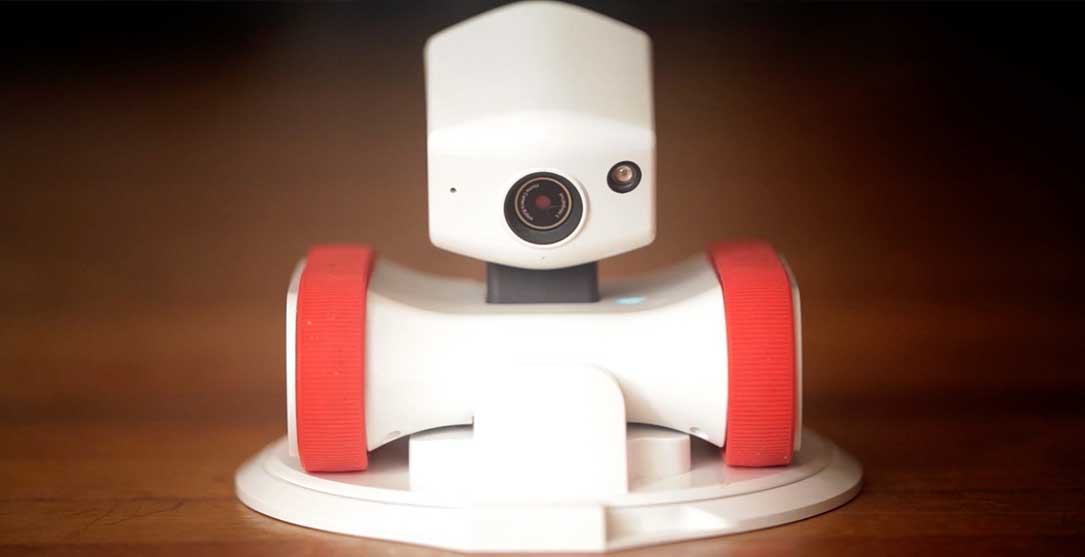
iPatrol Riley Security Camera
A major challenge in the “Inspection” project was finding an off-the-shelf ground robot that met all technical requirements. The Riley bot had good hardware but lacked open APIs, making it unprogrammable and unusable for the project’s reactive system. Recognizing this issue early saved time and highlighted the importance of open, programmable hardware for the Drone-Ground Virtual Environment system.
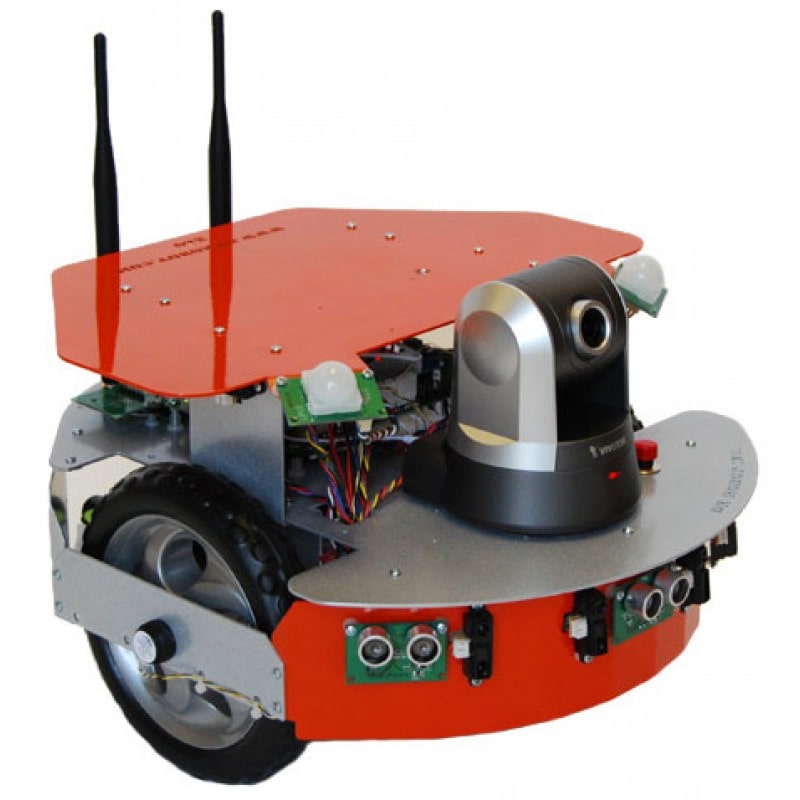
X80SV WiFi Mobile Robot
The evaluation of the X80SV robot for the” examination” design showed it offers advanced features like omnidirectional movement,pan-tilt and HD cameras, WiFi, and collision detectors, ideal for precise data and safe navigation, supporting the design’s pretensions. still, its high cost of$ 3,200 made it infelicitous for the evidence- of- conception phase, where budget effectiveness is crucial. The decision saved resources for core testing, leaving the X80SV as a future option if more funding is available. This highlights the need to balance technical needs with budget constraints in innovative projects.
Pixy2 Robot Vision
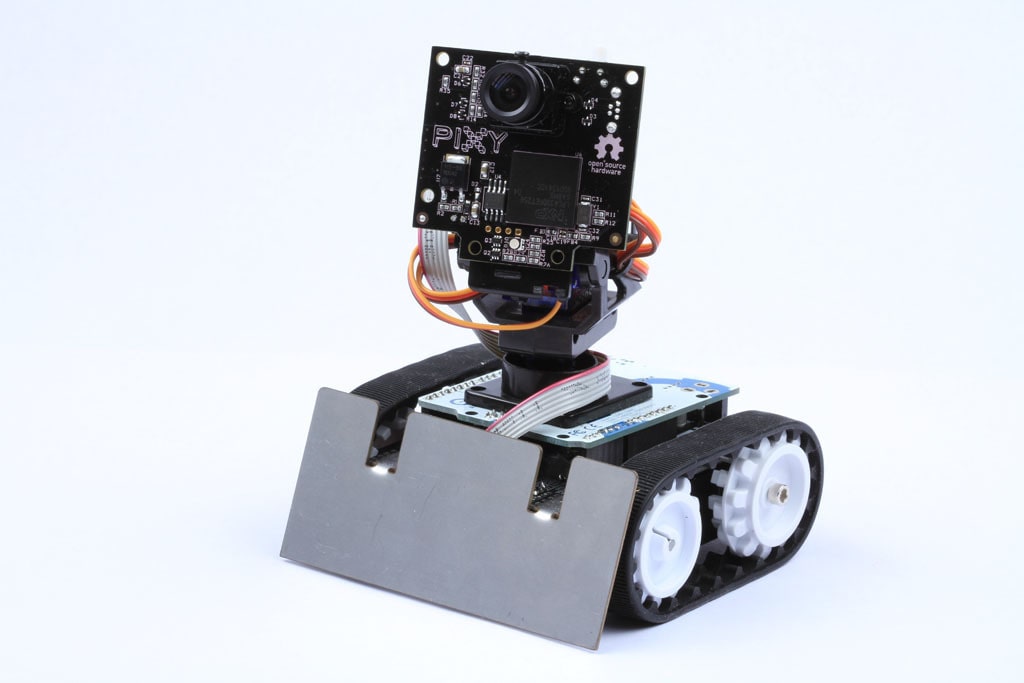
The project shifted from costly, closed commercial robots to flexible, affordable semi-assembled platforms like Arduino and Raspberry Pi. Combining an Arduino-based Zumo robot with a Pixy camera aimed at using color-based object recognition for the 3D photomontage. However, low image resolution and poor data transfer stopped progress, revealing key challenges in low-cost solutions and the need for better image quality and reliable data handling.
Ground Robot with GoPiGo
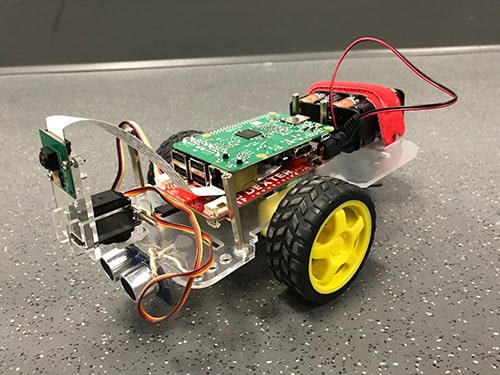
The chosen ground robot combines a GoPiGo shield, Raspberry Pi, and HD camera to balance functionality, flexibility, and cost. This setup enables complex movements and advanced machine literacy, grounded vision, essential for directly landing and rephrasing the physical terrain into a dynamic 3D photomontage. The Jeer Pi powers sophisticated computer vision, while the GoPiGo handles motor control and detectors. The HD camera ensures high-resolution data for detailed virtual representation. Despite minor limitations like a one-dimensional servo and a basic battery, these are solvable technical issues. Overall, this platform offers deep programmability and advanced analysis, providing a strong foundation for the project’s goal of merging physical and virtual worlds.
Deep Learning Robot Evaluation
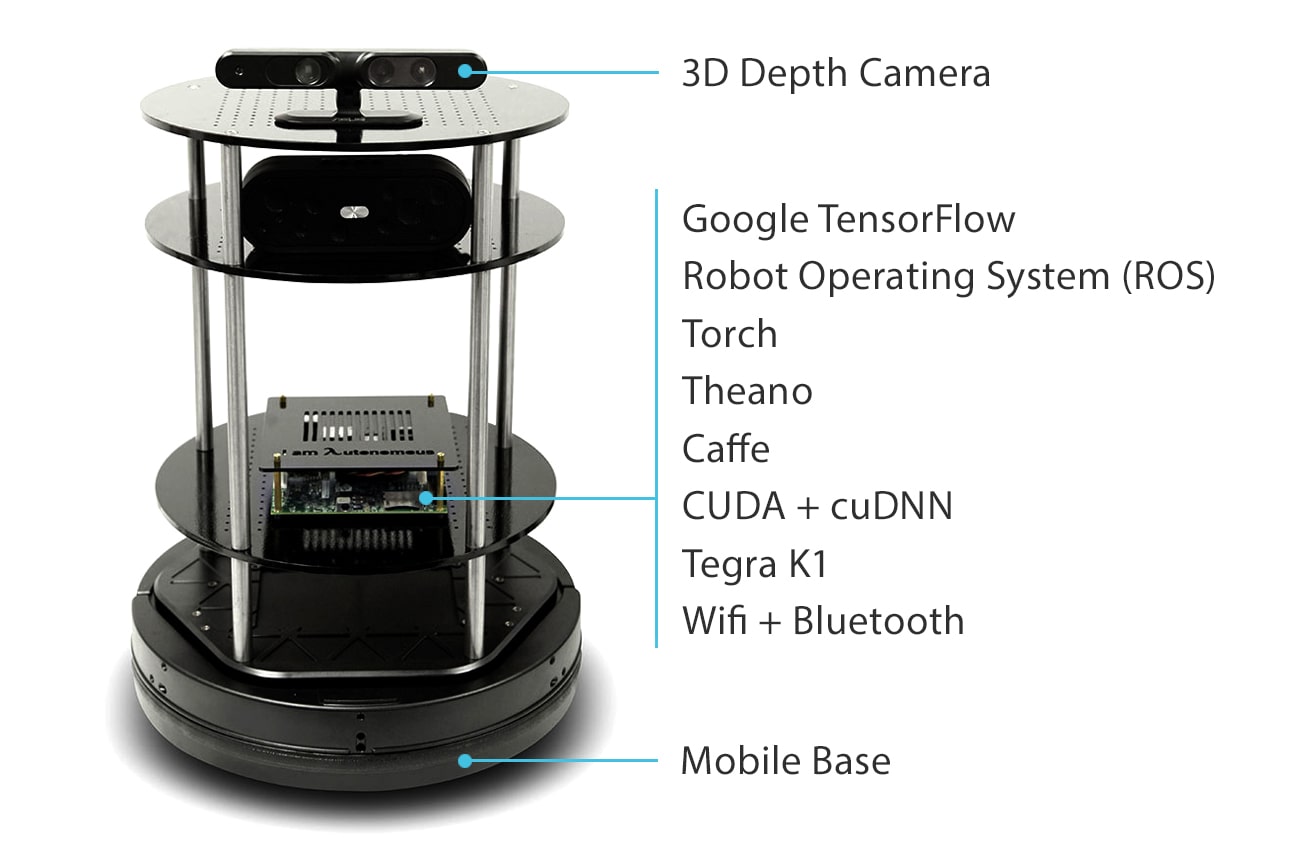
The Deep Learning Robot by Autonomous Inc. offers advanced features—3D depth camera, TensorFlow, and CUDA—for high-level perception and processing, reasonably priced at \$999. It could enhance the Drone-Ground Virtual Environment with rich 3D data, object recognition, and spatial analysis, improving virtual photomontage responsiveness. However, its large size clashes with the project’s “insect-inspired swarm intelligence” concept, which values small, distributed agents. Recognizing this mismatch preserves the “Inspection” project’s conceptual integrity and ensures hardware supports swarm-based interaction across physical and virtual worlds.
Autonomous Movements
The ground robot uses an ultrasonic sensor for basic obstacle avoidance, moving forward when clear, and turning upon detecting an obstacle. This allows it to explore and gather data for the virtual photomontage. However, limited motor speed and a single sensor reduce its effectiveness. Adding two side sensors and a stronger motor would improve navigation and support richer, real-time data collection for the evolving 3D environment.
Server Establishment
The server infrastructure in the “Inspection” project plays a vital role in ensuring fast, stable data transmission. Two Python-based HTTP servers—one for the drone, one for the ground robot—collect images and sensor data, preventing conflicts and allowing simultaneous processing. HTTP protocol simplifies retrieval via URLs for integration into the virtual photomontage. A private local network connects only the drone, ground robot, and sensors, avoiding external interference and ensuring real-time responsiveness. This setup supports continuous, high-integrity data flow from the physical world, enabling accurate and dynamic updates to the virtual 3D environment.
Visual Representation
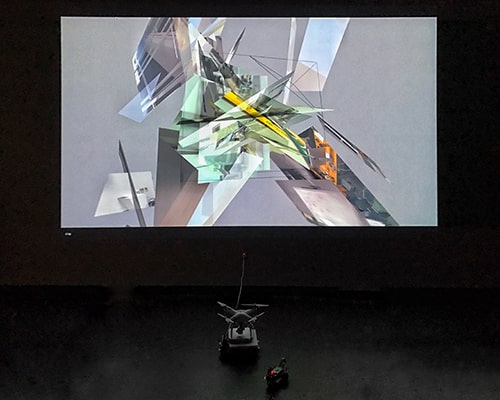
The “Inspection” project displays real-time images from a drone and ground robot to merge physical and virtual spaces. This dynamic view reveals changing spatial relationships, turning sensor data into an immersive visual experience.
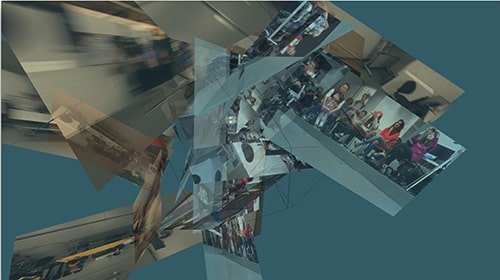
The evolving 3D photomontage uses a Voronoi algorithm to place drone (orange) and ground robot (blue) images in 3D space. New images are added in real time, creating a dynamic, aesthetic view of the changing physical environment.
Future Works
Future improvements aim to enhance the “Inspection” project through better localization, optimized robotics, and swarm intelligence integration.
-
Set up the Localization System
To enable accurate tracking of drone and ground robot positions within the physical space. -
Optimize Ground Robot
To improve the robot’s mobility, sensor coverage, and battery efficiency for smoother data collection. -
Implement the Swarm Intelligent Algorithm with Multiple Robots
To simulate collective behavior and enhance spatial exploration through coordinated multi-robot interaction.
Read more: 3D Montage in Motion: A Drone-Ground Virtual Environment for Spatial Expression
- What does the Inspection project create?
An evolving 3D photomontage merging drone and ground robot images and sensor data via a Voronoi algorithm. - How quickly was the Inspection project developed to public performance?
The project progressed from concept to public performance in nine weeks. - What ground robot platform was chosen for the project?
The project chose a ground robot combining a GoPiGo shield, Raspberry Pi, and HD camera. - Why was the Riley robot unsuitable for the project?
Riley had good hardware but lacked open APIs and was unprogrammable for the reactive system. - How does the server infrastructure handle data?
Two Python-based HTTP servers (one for the drone, one for the ground robot) collect images and sensor data to avoid conflicts and allow simultaneous processing. - What algorithm is used to place images in the 3D photomontage?
The Voronoi algorithm is used to place drone and ground robot images in 3D space. - What limitations were found with low-cost Pixy camera solutions?
Pixy2 and low-cost setups produced low image resolution and poor data transfer, stopping progress. - What autonomous movement method does the ground robot use?
The ground robot uses an ultrasonic sensor for basic obstacle avoidance: moving forward when clear and turning when an obstacle is detected. - What future improvements are proposed for Inspection?
Future work includes setting up localization, optimizing the ground robot, and implementing swarm intelligence with multiple robots.
