
Summary of PATROL FISH TO COLLECT AND CHECK THE CONTAMINATION OF A WATER BODY
This article describes a biomimetic robotic fish designed for surface water cleaning and pH monitoring. It emphasizes stability through buoyancy and a low center of mass, utilizing propulsion to counter currents. The system uses a web socket and web application for control, with an Arduino NANO receiving signals on the device side. Waterproofing is essential for circuit protection. The project aims to visualize GPS orbits and track coordinates, though the primary focus remains on autonomous or joystick-controlled cleaning and contamination analysis.
Parts used in Robotic Fish:
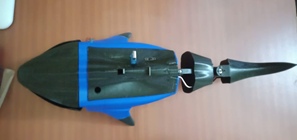
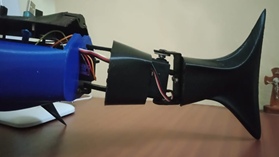
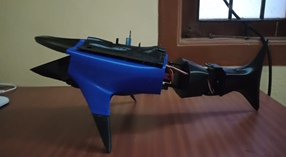
- Biomimetic fish structure
- pH sensor
- Web socket communication mechanism
- Web application (transmitter side)
- Arduino NANO (receiving side)
- Joystick controller
- Waterproofing mechanism
- Actuators
- GPS navigation file from GNSS receiver
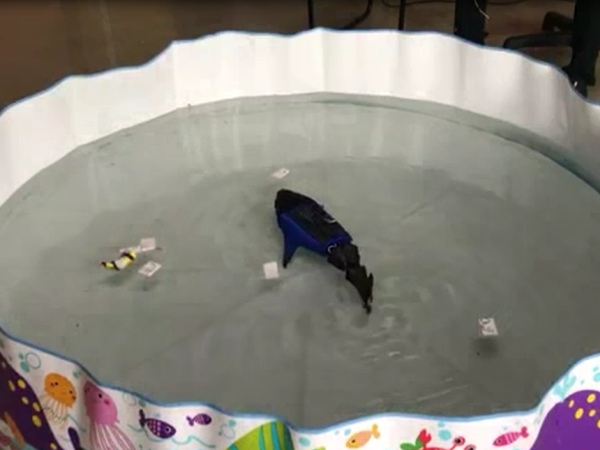
Robotic fish is a biomimicking of a real-world fish being developed with a view to enable surface level cleaning of water bodies.
Introduction
Robotic fish is a biomimicking of a real-world fish being developed with a view to enable surface level cleaning of water bodies. The fish monitors the pH levels of the water that it is currently in. The fish has to perform the above two tasks yet exhibit a good stabilization. To establish a stabilized structure of the fish the right buoyancy and a low center of volume and mass has to be ensured. To bring in locomotion against the currents of the water and to enable enough propulsion to push forward the garbage collected requires the fish to produce adequate thrust. To transfer commands to the fish from the operator a suitable communication mechanism, a web socket accompanied by a web application on the transmitter side and a ESP32 on the receiving side enables one to send control signals which would in turn enable locomotion and surface level cleaning. To avoid any damage to the circuitry a suitable water proofing mechanism is adopted.
Objectives
- To plot the x, y and z co-ordinates.
- To estimate and visualize the 3D orbits of the GPS satellites using GPS navigation file from GNSS receiver.
- To analyze the GPS satellite orbit.
Methodology
The implementation of the robotic fish is based majorly on the design which in turn relies on the concept of buoyancy and a low center of mass. Keeping the kinematics of the fish and the structure required to clean the water surface level, the design phase is conducted. The kinematics analysis relies on the links and the number of actuators going to be used in the design to enable a good locomotion in water.
To transfer commands to the fish from the operator a suitable communication mechanism, a web socket accompanied by a web application on the transmitter side and a Arduino NANO on the receiving side enables one to send control signals which would in turn enable locomotion and surface level cleaning. To avoid any damage to the circuitry a suitable water proofing mechanism is adopted. With a view to accomplish the above stated objectives in developing a bio-inspired robotic fish the below review was conducted.
Results
A robotic fish with suitable cleaning structure mechanism controlled over joystick and a Ph sensor would help in the surface level cleaning and checking the contamination of the water body continuously.
Source: PATROL FISH TO COLLECT AND CHECK THE CONTAMINATION OF A WATER BODY
-
What is the primary purpose of the robotic fish?
The robotic fish is developed to enable surface level cleaning of water bodies and monitor pH levels. -
How does the robotic fish achieve stabilization?
It ensures stabilization by maintaining the right buoyancy and a low center of volume and mass. -
Can the robotic fish move against water currents?
Yes, it produces adequate thrust to bring in locomotion against currents and push forward collected garbage. -
What components are used for communication between the operator and the fish?
A web socket accompanied by a web application on the transmitter side and an Arduino NANO on the receiving side enables command transfer. -
How is the circuitry protected from damage?
A suitable waterproofing mechanism is adopted to avoid any damage to the circuitry. -
What sensors are integrated into the robotic fish?
The fish is adjusted with a pH sensor to continuously check the contamination of the water body. -
What is the best way to control the robotic fish's movement?
The robotic fish can be controlled over a joystick for its movement and cleaning functions. -
Does the project involve analyzing GPS satellite orbits?
Yes, one objective is to estimate and visualize the 3D orbits of GPS satellites using a GNSS receiver.
