
Summary of EFS SERIES SURFACE POTENTIAL SENSORS
TDK’s EFS series are feedback surface voltage sensors that provide highly stable surface potential measurement for photosensitive drums in color copiers and printers, eliminating electric-field disturbances and minimizing effects of temperature and probe distance. They deliver ±0.05 V reliability, 1.5–3.5 mm sensing distance, 11 ms responsiveness, compact lightweight design, and long-term stable output via a unique structure and superelastic alloy chopper with a piezoelectric element.
Parts used in the EFS SERIES SURFACE POTENTIAL SENSORS:
- Photosensitive drum (measurement target)
- Detection electrode
- Feedback output circuit
- Electrical field control chopper
- Probe shield cover
- Probe (detection probe)
- Superelastic alloy chopper
- Piezoelectric element
- Sensor housing/optimized structural components
TDK’s EFS series sensors eliminate the effects of disturbances in the electric field intervening between the photosensitive drum and the detection electrode
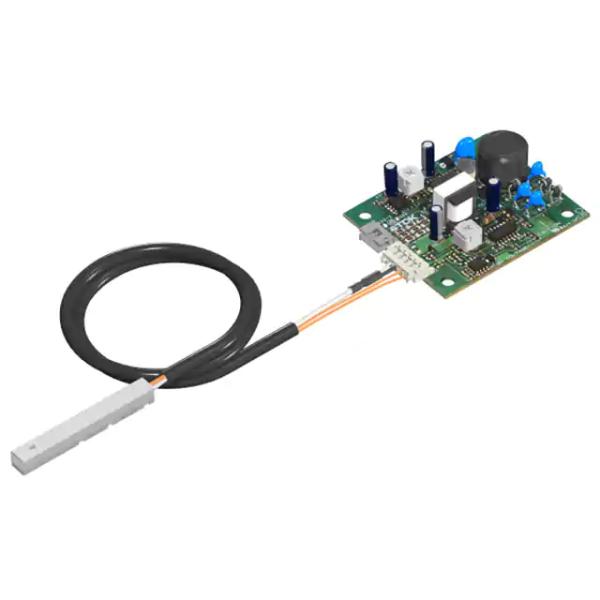
TDK’s EFS series sensors are feedback surface voltage sensors that support the improved image quality of color copiers and next-generation color printers with the reliability of ±0.05 V or below. The voltage sensors are constructed using high-stability output circuits that feed the detected photosensitive drum surface potential back to the electrical field control chopper and probe shield cover. EFS series sensors eliminate the effects of disturbances in the electric field intervening between the photosensitive drum and the detection electrode. They also show extremely stable and precise output performance where the adverse effects of temperature fluctuations and detection distance (probe positioning) are greatly reduced.
Features:
- Reliability of ±0.05 V or lower
- Available sensing distance of 1.5 mm to 3.5 mm
- In this range, output voltage variation is small and robust output stability can be obtained despite changes in the ambient temperature
- Unique optimized structure and circuit design have achieved miniaturization and weight reduction, as well as greater performance in response to market needs
- Quick responsiveness of 11 ms which supports high-speed machines
- Extremely stable output performance is maintained for long periods of time through accurate driving made possible with the unique structural design and superelastic alloy chopper consisting of the piezoelectric element with optimized conversion efficiency
Read more: EFS SERIES SURFACE POTENTIAL SENSORS
- What level of voltage reliability do EFS series sensors provide?
They provide reliability of ±0.05 V or lower. - What sensing distance is available for EFS series sensors?
Available sensing distance is 1.5 mm to 3.5 mm. - How do EFS sensors handle disturbances in the electric field?
They eliminate the effects of disturbances intervening between the photosensitive drum and the detection electrode using feedback and probe shielding. - How does ambient temperature affect EFS sensor output?
The sensors greatly reduce adverse effects of temperature fluctuations, maintaining extremely stable output performance. - What is the response time of the EFS series sensors?
They have a quick responsiveness of 11 ms, supporting high-speed machines. - What design features contribute to the sensors' miniaturization and weight reduction?
Unique optimized structure and circuit design achieved miniaturization and weight reduction while improving performance. - How is long-term stable output achieved in EFS sensors?
Accurate driving enabled by the unique structural design and the superelastic alloy chopper with a piezoelectric element maintains extremely stable output over long periods. - Does probe positioning affect EFS sensor output?
Detection distance (probe positioning) has greatly reduced adverse effects within the specified sensing range, yielding robust output stability.
