Home > Projects > Sensor – Transducer – Detector Projects > ARTIK + MKR1000 + DHT11 + MQTT

ARTIK + MKR1000 + DHT11 + MQTT

Summary of ARTIK + MKR1000 + DHT11 + MQTT


This article describes an IoT project using two Genuino MKR1000 boards, a DHT11 sensor, and LEDs to monitor temperature and humidity via Samsung ARTIK Cloud. The system sends sensor data to the cloud and triggers LED actions based on set rules using the MQTT protocol.

Parts used in the IoT Temperature and Humidity Monitor:

  • Arduino MKR1000
  • DHT11 Temperature & Humidity Sensor (4 pins)
  • LED (generic)
  • Samsung ARTIK Cloud for IoT
  • Arduino IDE
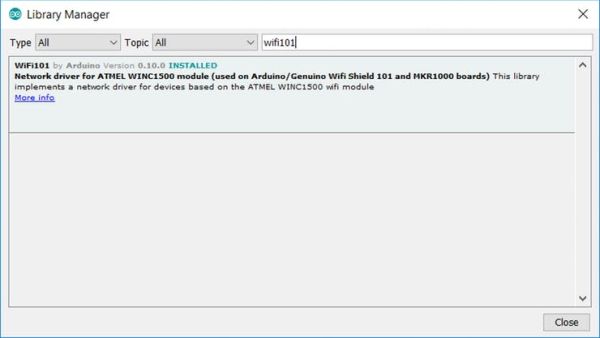
  • WiFi101 library
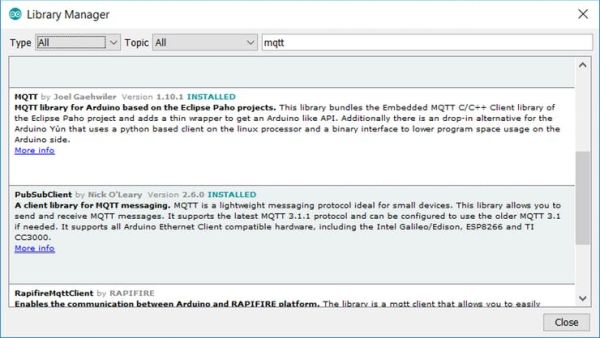
  • MQTT library by Joel Gaehwiler
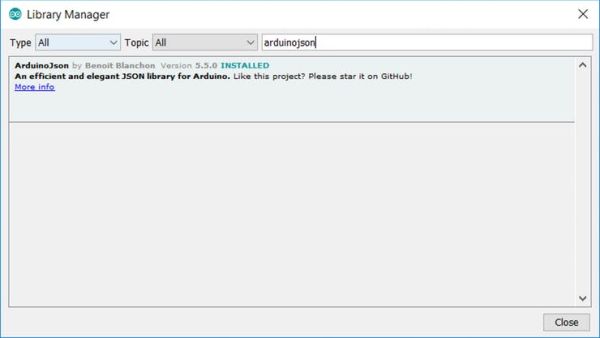
  • ArduinoJson library

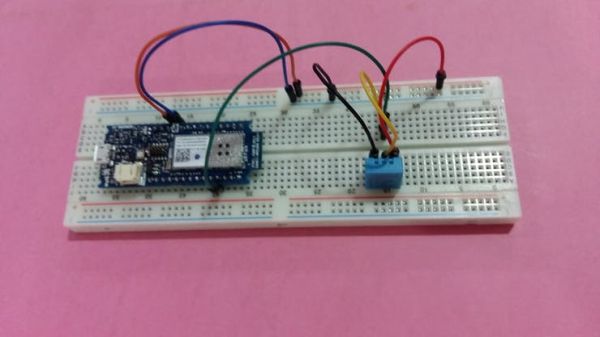
An IOT app which make uses of ARTIK Cloud, Genuino MKR1000, DHT11 temperature and humidity sensor and MQTT protocol.

artik_arduino

Things used in this project

Hardware components

Arduino MKR1000
Arduino MKR1000
× 2
DHT11 Temperature & Humidity Sensor (4 pins)
× 1
LED (generic)
LED (generic)
× 2

Software apps and online services

ARTIK Cloud for IoT
Samsung ARTIK Cloud for IoT
Arduino IDE
Arduino IDE

Story

sensor

Setup the ARTIK cloud MQTT parameters

char mqttCloudServer[]     = "api.artik.cloud"; 
int  mqttCloudPort         = 8883; 
char mqttCloudClientName[] = "ARTIK-Arduino"; 
char mqttCloudUsername[]   = "[device-id]";  
char mqttCloudPassword[]   = "[device-token]";  
char mqttCloudDataOut[]    = "/v1.1/messages/[device-id]";  
WiFiSSLClient ipCloudStack; 
MQTTClient mqttCloudClient; 

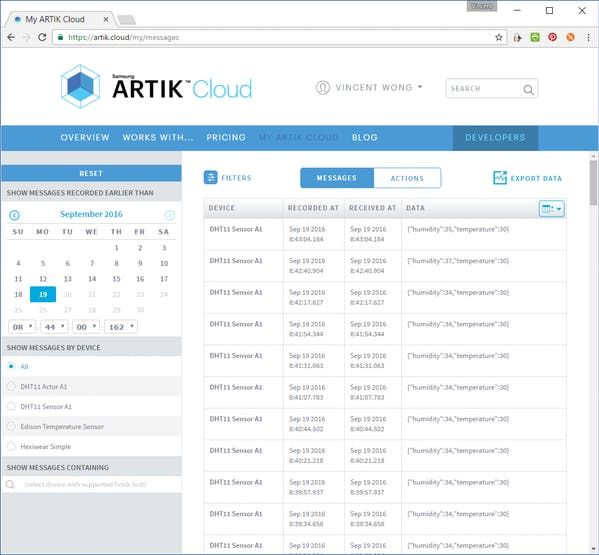
Sending messages to ARTIK cloud.

void sendToArtikCloud(float temperature, float humidity) { 
loadBuffer(temperature, humidity); // load current values into the buffer 
mqttCloudClient.publish(mqttCloudDataOut, buf); 
} 
void loadBuffer(float temperature, float humidity) { 
StaticJsonBuffer<200> jsonBuffer; 
JsonObject& dataPair = jsonBuffer.createObject(); 
dataPair["temperature"] = temperature; 
dataPair["humidity"] = humidity; 
dataPair.printTo(buf, sizeof(buf)); 
} 
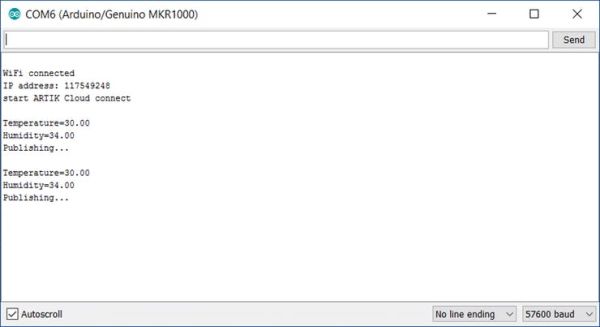
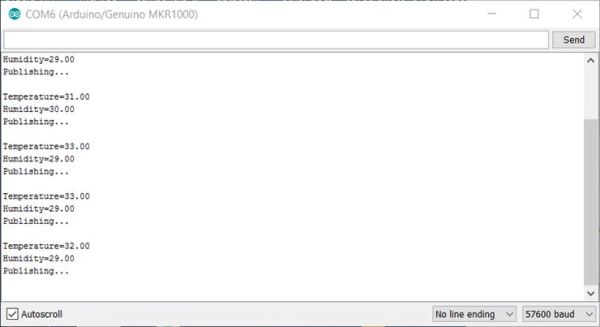
sensor_running_serialmon_1

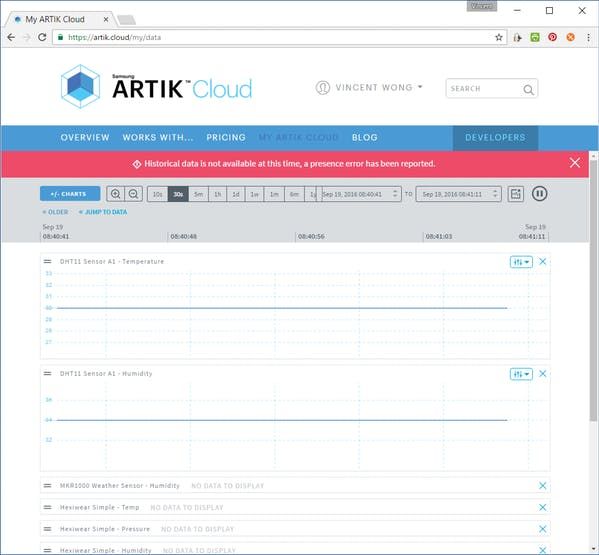
sensor_running_chart

sensor_running_action

Setup the LED temperature and humidity actuators

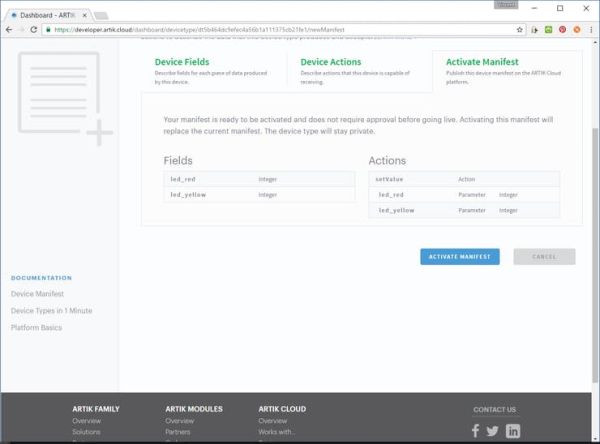
Create a device type (DHT11 Actor)

Connect a device (DHT11 Actor A1)

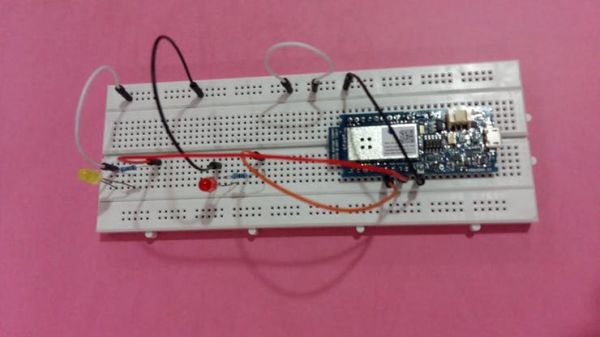
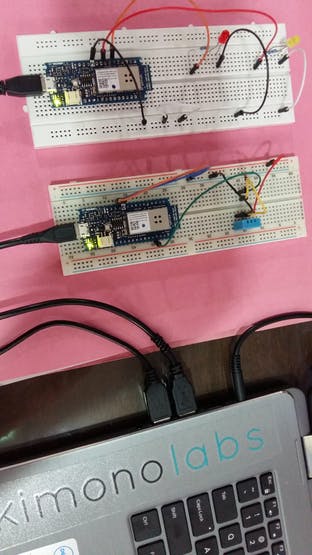
Connect the physical devices

actor

Setup ARTIK cloud MQTT parameters

// ARTIK Cloud MQTT params 
char mqttCloudServer[]     = "api.artik.cloud"; 
int  mqttCloudPort         = 1883; 
char mqttCloudClientName[] = "ARTIK-Arduino"; 
char mqttCloudUsername[]   = "[device-id]";  
char mqttCloudPassword[]   = "[device-token]";  
char mqttCloudActionsIn[]    = "/v1.1/actions/[device-id]";  
WiFiClient ipCloudStack; 
MQTTClient mqttCloudClient; 

Receiving MQTT actions.

void messageReceived(String topic, String payload, char * bytes, unsigned int length) { 
Serial.print("topic="); Serial.println(topic); 
Serial.print("payload="); Serial.println(payload); 
Serial.print("bytes="); Serial.println(bytes); 
Serial.print("length="); Serial.println(length); 
parseBuffer(payload); 
} 

Parse and process the actions from ARTIK cloud.

void parseBuffer(String payload) { 
StaticJsonBuffer<200> jsonBuffer; 
String json = payload; 
JsonObject& root = jsonBuffer.parseObject(json); 
const char* nameparam = root["actions"][0]["name"]; 
const int actionLEDRed = root["actions"][0]["parameters"]["led_red"]; 
const int actionLEDYellow = root["actions"][0]["parameters"]["led_yellow"]; 
Serial.print("name="); Serial.println(nameparam); 
Serial.print("led_red="); Serial.println(actionLEDRed); 
Serial.print("led_yellow="); Serial.println(actionLEDYellow); 
Serial.println(); 
if (actionLEDRed == 1) { 
  if (savedRedValue != actionLEDRed) { 
    digitalWrite(LED_RED_PIN, HIGH); 
    savedRedValue = actionLEDRed; 
  }  
  savedRedTime = millis();       
} else { 
  if (savedRedValue != actionLEDRed) { 
    if (millis() - savedRedTime > RED_DELAY) { 
      digitalWrite(LED_RED_PIN, LOW); 
      savedRedValue = actionLEDRed;       
    } 
  } 
} 
if (actionLEDYellow == 1) { 
  if (savedYellowValue != actionLEDYellow) { 
    digitalWrite(LED_YELLOW_PIN, HIGH); 
    savedYellowValue = actionLEDYellow; 
  }  
  savedYellowTime = millis();       
} else { 
  if (savedYellowValue != actionLEDYellow) { 
    if (millis() - savedYellowTime > YELLOW_DELAY) { 
      digitalWrite(LED_YELLOW_PIN, LOW); 
      savedYellowValue = actionLEDYellow;       
    } 
  } 
} 
} 

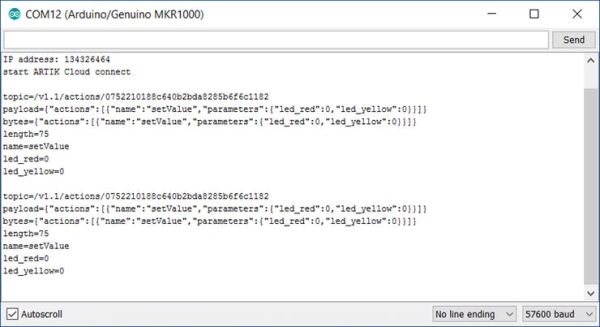
actor_running_serialmon_2

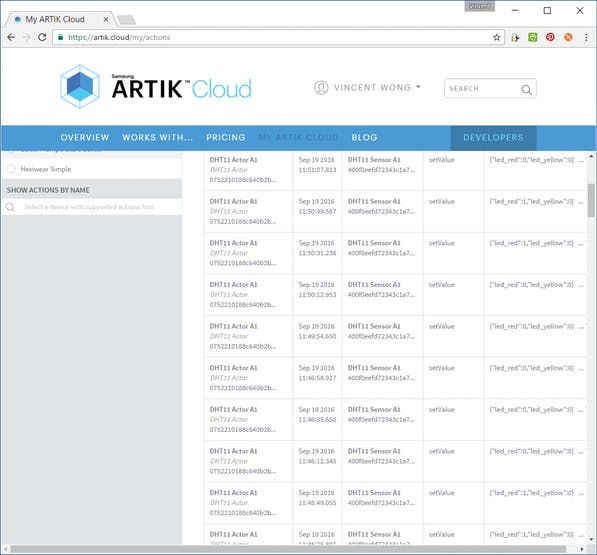
actor_running_action

Create Rules

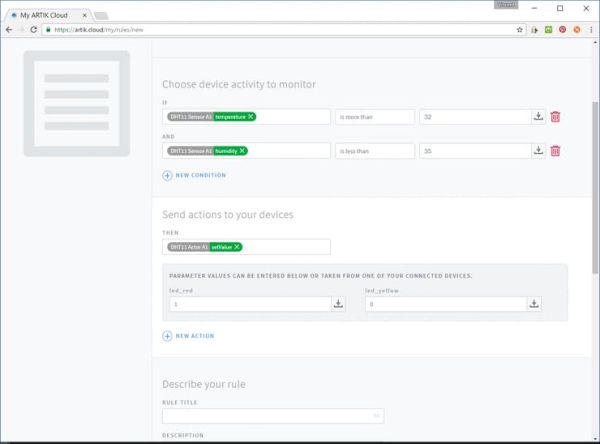
actor_createrule

actor_fiedls_setvalue

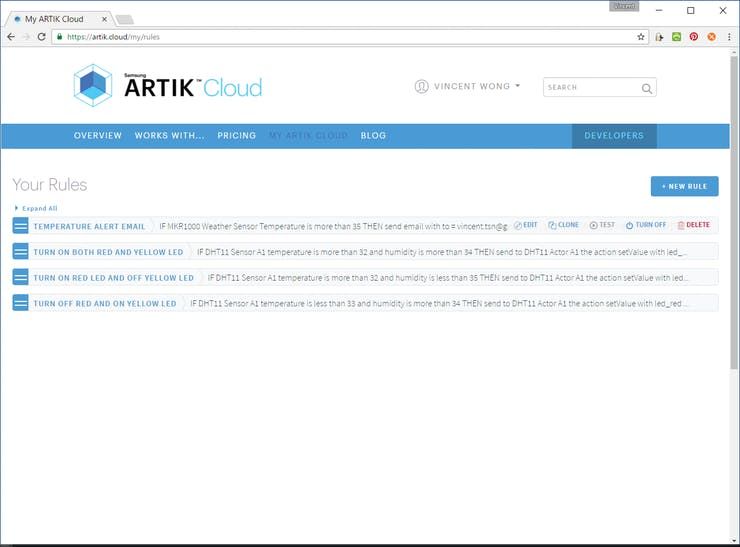
rules_list

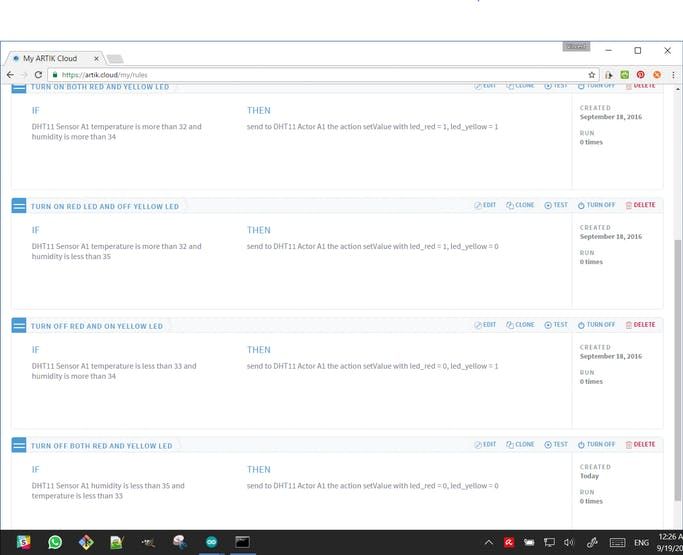
There are 4 rules:

  • IF DHT11 Sensor A1 temperature is more than 32 and humidity is more than 34 THEN send to DHT11 Actor A1 the action setValue with led_red = 1, led_yellow = 1‌
  • IF DHT11 Sensor A1 temperature is more than 32 and humidity is less than 35 THEN send to DHT11 Actor A1 the action setValue with led_red = 1, led_yellow = 0‌
  • IF DHT11 Sensor A1 temperature is less than 33 and humidity is more than 34 THEN send to DHT11 Actor A1 the action setValue with led_red = 0, led_yellow = 1
  • IF DHT11 Sensor A1 humidity is less than 35 and temperature is less than 33 THEN send to DHT11 Actor A1 the action setValue with led_red = 0, led_yellow = 0‌

expandrules_test_2

Demo Video

Please note that you will need to wait for the temperature to heat up (LED on) and cool off (LED off). The red LED is turned on at 37 seconds and turned off at 1:13 seconds. The demo video shows only temperature changes. I used a hair dryer to change the temperature around the DHT11 sensor.

sensor_actor_03

videodemo_log

Code

artik_dht11_sensor.ino

C/C++

#include <MQTTClient.h>
#include <ArduinoJson.h>
#include <WiFi101.h>
#include "DHT.h"

#define DHTPIN 2     // what digital pin we're connected to
#define DHTTYPE DHT11   // DHT 11

DHT dht(DHTPIN, DHTTYPE);

const char* _SSID     = "[Wi-Fi SSID]";
const char* _PASSWORD = "[Wi-Fi Password]";  

// ARTIK Cloud MQTT params
char mqttCloudServer[]     = "api.artik.cloud";
int  mqttCloudPort         = 8883;
char mqttCloudClientName[] = "ARTIK-Arduino";
char mqttCloudUsername[]   = "[device-id]"; 
char mqttCloudPassword[]   = "[device-token]"; 
char mqttCloudDataOut[]    = "/v1.1/messages/[device-id]"; 

WiFiSSLClient ipCloudStack;
MQTTClient mqttCloudClient;

char buf[128];

float temperature, humidity;

int n = 0;

void getNextSample(float* Temperature, float* Humidity)
{
  // Wait a few seconds between measurements.
  delay(2000);

  // Reading temperature or humidity takes about 250 milliseconds!
  // Sensor readings may also be up to 2 seconds 'old' (its a very slow sensor)
  *Humidity = dht.readHumidity();
  // Read temperature as Celsius (the default)
  *Temperature = dht.readTemperature();
  // Read temperature as Fahrenheit (isFahrenheit = true)
  // float f = dht.readTemperature(true);

  //printf("Temp=%.2f, Pres=%.2f, Humi=%.2f\n", Temp_c__f, Pres_hPa__f, Humi_pct__f);

  Serial.print("Temperature="); Serial.println(*Temperature);
  Serial.print("Humidity="); Serial.println(*Humidity);
}

void setup() {

  Serial.begin(57600);  

  dht.begin();
  
  // Wifi Setting
  WiFi.begin(_SSID, _PASSWORD);
  while (WiFi.status() != WL_CONNECTED) {
    delay(500);
    Serial.print(".");
  }
  Serial.println();
  Serial.println("WiFi connected");
  Serial.print("IP address: ");
  Serial.println(WiFi.localIP());
  
  mqttCloudClient.begin(mqttCloudServer, mqttCloudPort, ipCloudStack);

  Serial.println("start ARTIK Cloud connect"); Serial.println();
  
  while (!mqttCloudClient.connect(mqttCloudClientName, mqttCloudUsername, mqttCloudPassword)) {
    Serial.print("*");
    delay(500);    
  }

}

void messageReceived(String topic, String payload, char * bytes, unsigned int length) {}

void sendToArtikCloud(float temperature, float humidity) {
  loadBuffer(temperature, humidity); // load current values into the buffer
  mqttCloudClient.publish(mqttCloudDataOut, buf);
}

void loadBuffer(float temperature, float humidity) {
  StaticJsonBuffer<200> jsonBuffer;
  JsonObject& dataPair = jsonBuffer.createObject();

  dataPair["temperature"] = temperature;
  dataPair["humidity"] = humidity;

  dataPair.printTo(buf, sizeof(buf));
}
void loop() {

  if (++n > 10) { 
    Serial.println("Stopped.");
    exit(0); 
  }

  mqttCloudClient.loop();
  delay(1000);
  
  getNextSample(&temperature, &humidity);
  
  Serial.println("Publishing..."); Serial.println();
  
  sendToArtikCloud(temperature, humidity);

  delay(15000);

}

artik_led_actor.ino

C/C++

#include <MQTTClient.h>
#include <ArduinoJson.h>
#include <WiFi101.h>

#define LED_RED_PIN 11
#define LED_YELLOW_PIN 13
#define RED_DELAY 5000
#define YELLOW_DELAY 10000


const char* _SSID     = "[Wi-Fi SSID]";
const char* _PASSWORD = "[Wi-Fi Password]";  

// ARTIK Cloud MQTT params
char mqttCloudServer[]     = "api.artik.cloud";
int  mqttCloudPort         = 1883;
char mqttCloudClientName[] = "ARTIK-Arduino";
char mqttCloudUsername[]   = "[device-id]"; 
char mqttCloudPassword[]   = "[device-token]"; 
char mqttCloudActionsIn[]    = "/v1.1/actions/[device-id]"; 

WiFiClient ipCloudStack;
MQTTClient mqttCloudClient;

char buf[128];

int savedRedValue, savedYellowValue;

unsigned long savedRedTime, savedYellowTime;

void setup() {

  Serial.begin(57600);  

  pinMode(LED_RED_PIN, OUTPUT);
  pinMode(LED_YELLOW_PIN, OUTPUT);

  savedRedValue = savedYellowValue = 0;
  
  // Wifi Setting
  WiFi.begin(_SSID, _PASSWORD);
  while (WiFi.status() != WL_CONNECTED) {
    delay(500);
    Serial.print(".");
  }
  Serial.println();
  Serial.println("WiFi connected");
  Serial.print("IP address: ");
  Serial.println(WiFi.localIP());
  
  mqttCloudClient.begin(mqttCloudServer, mqttCloudPort, ipCloudStack);

  Serial.println("start ARTIK Cloud connect"); Serial.println();
  
  while (!mqttCloudClient.connect(mqttCloudClientName, mqttCloudUsername, mqttCloudPassword)) {
    Serial.print("*");
    delay(500);    
  }

  mqttCloudClient.subscribe(mqttCloudActionsIn);

}

void messageReceived(String topic, String payload, char * bytes, unsigned int length) {
  Serial.print("topic="); Serial.println(topic);
  Serial.print("payload="); Serial.println(payload);
  Serial.print("bytes="); Serial.println(bytes);
  Serial.print("length="); Serial.println(length);

  parseBuffer(payload);
}

void parseBuffer(String payload) {
  StaticJsonBuffer<200> jsonBuffer;
  String json = payload;
  JsonObject& root = jsonBuffer.parseObject(json);
  const char* nameparam = root["actions"][0]["name"];
  const int actionLEDRed = root["actions"][0]["parameters"]["led_red"];
  const int actionLEDYellow = root["actions"][0]["parameters"]["led_yellow"];

  Serial.print("name="); Serial.println(nameparam);
  Serial.print("led_red="); Serial.println(actionLEDRed);
  Serial.print("led_yellow="); Serial.println(actionLEDYellow);
  Serial.println();


  if (actionLEDRed == 1) {
    if (savedRedValue != actionLEDRed) {
      digitalWrite(LED_RED_PIN, HIGH);
      savedRedValue = actionLEDRed;
    } 

    savedRedTime = millis();      
        
  } else {
    if (savedRedValue != actionLEDRed) {
      if (millis() - savedRedTime > RED_DELAY) {
        digitalWrite(LED_RED_PIN, LOW);
        savedRedValue = actionLEDRed;      
      }
    }
  }


  if (actionLEDYellow == 1) {
    if (savedYellowValue != actionLEDYellow) {
      digitalWrite(LED_YELLOW_PIN, HIGH);
      savedYellowValue = actionLEDYellow;
    } 

    savedYellowTime = millis();      
        
  } else {
    if (savedYellowValue != actionLEDYellow) {
      if (millis() - savedYellowTime > YELLOW_DELAY) {
        digitalWrite(LED_YELLOW_PIN, LOW);
        savedYellowValue = actionLEDYellow;      
      }
    }
  }

  
}
void loop() {

  mqttCloudClient.loop();
  delay(500);
    
}

Quick Solutions to Questions related to IoT Temperature and Humidity Monitor:

  • How many Arduino MKR1000 boards are used in this project?
    The project uses two MKR1000 boards.
  • What sensors are connected to the system?
    A DHT11 temperature and humidity sensor is used.
  • Which cloud service does this IoT app utilize?
    The app makes use of Samsung ARTIK Cloud for IoT.
  • What protocol is used for communication between devices and the cloud?
    The MQTT protocol is used.
  • How can I control the LEDs based on environmental conditions?
    Rules are set in ARTIK Cloud to send commands to the Red and Yellow LEDs based on temperature and humidity thresholds.
  • What libraries must be installed in Arduino IDE for this project?
    You need to install WiFi101, MQTT by Joel Gaehwiler, and ArduinoJson.
  • What happens when the temperature exceeds 32 and humidity exceeds 34?
    The system sends an action to set both led_red and led_yellow to 1.
  • Can real actuators like air conditioners replace the LEDs?
    Yes, the real actuators could be the air-conditioner and ceiling fan instead of LEDs.

About The Author

Ibrar Ayyub

I am an experienced technical writer holding a Master's degree in computer science from BZU Multan, Pakistan University. With a background spanning various industries, particularly in home automation and engineering, I have honed my skills in crafting clear and concise content. Proficient in leveraging infographics and diagrams, I strive to simplify complex concepts for readers. My strength lies in thorough research and presenting information in a structured and logical format.

Follow Us:
LinkedinTwitter
Scroll to Top