
Summary of Animatronic Green-Winged Macaw Papercraft
This project creates an animatronic Green-Winged Macaw papercraft to educate about wildlife trafficking, combining printed papercraft parts with a simple servo-driven skeleton and Arduino control. The build uses paper assembly, a clothes peg skeleton reinforced with screws and copper wire, a standard and mini servo for neck/head movement, and common workshop supplies to animate and pose the model realistically or simulate mistreatment by altering paper placement.
Parts used in the Animatronic Green-Winged Macaw Papercraft:
- Papercraft download (Green-Winged Macaw) printed on 16 A4 sheets
- Clothes peg (half used as main body support)
- 6 inch screws with nuts (two for support)
- Copper wire piece (~20 cm)
- Standard servo
- Mini servo
- Two servo extension cables
- Balsa wood piece (15 x 15 cm) or thick cardboard
- Styrofoam piece
- Velcro piece (10 x 5 cm)
- Arduino
- Soldering iron and solder (welding)
- Pieces of wire or network cable for connections
- Breadboard
- Glue and hot glue
- Scissors
- Drill (for making holes)
- Nails (for feet attachment)
In captivity, unlikely to receive necessary care.
I did this and the other animals as if they were being bred in captivity, reproducing their sorrow and ill-treatment with some simple changes in papercraft and pasting a bit crooked and crumpling the paper. However, if you make one, can portray the beauty of this animal simply by pasting the paper as the assembly instructions.
Videos –
Using R / C radio to determine the limits of the servo and test the skeleton:
With arduino:
Materials needed:
– Papercraft download (free): http://cp.c-ij.com/en/contents/3157/green-winged-macaw/index.html
– 16 sheets A4
– A clothes-peg
– Tree of a 6 inch screws with nuts
– A piece of copper wire about 20 cm
– A standard servo and a mini servo
– 2 servo extension cables
– A piece of balsa wood (15 x 15 cm) * can also use thick cardboard
– A piece of Styrofoam
– a piece of velcro (10x 5 cm)
– An Arduino
– Welding, pieces of wire (I used a cable network), breadboard, glue, hot glue, scissors, etc …
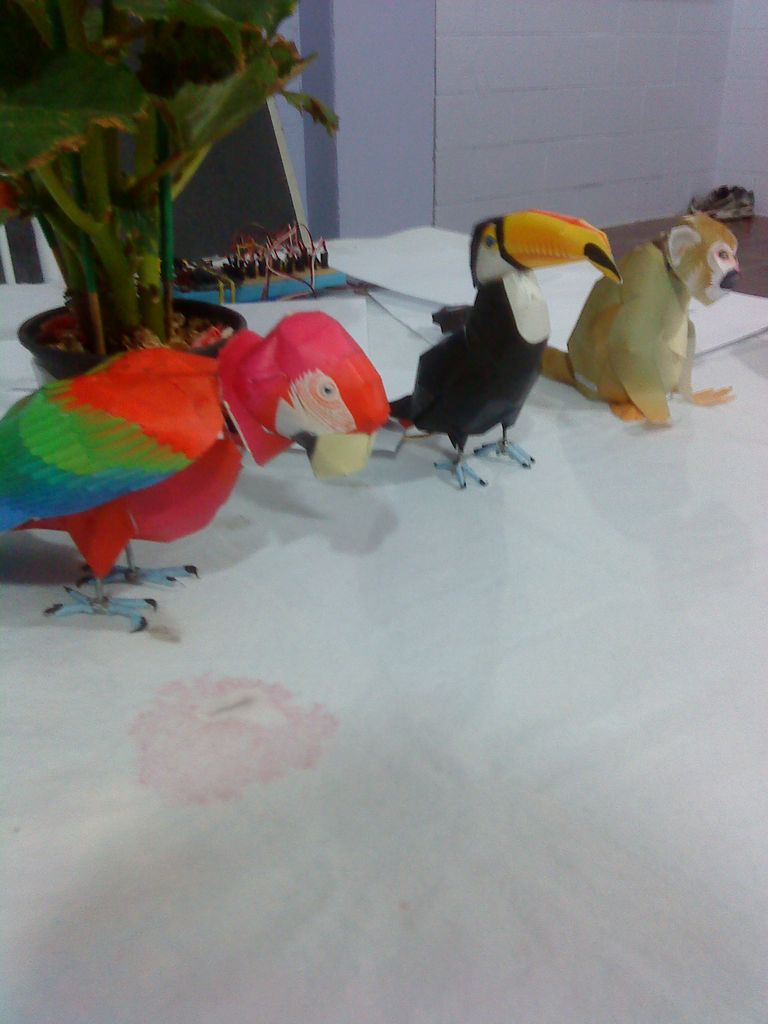
Step 1: Assembling papercraft :
Assemble the following parts and book:
Head – 1,2,3 and 4
Tail – 5.6 e1
Torso – 8
* Tail and torso together
assembling the piece 9 and book
Thighs – 10 and 11
Paws – 22, 25, 23 and 26
Wings – right, left and 16 12.13, 14.15 and 17
* Join the wings with the number 18 and book
Step 2: Assembling the skeleton
For each foot, cut two pieces of copper wire and weld nuts.
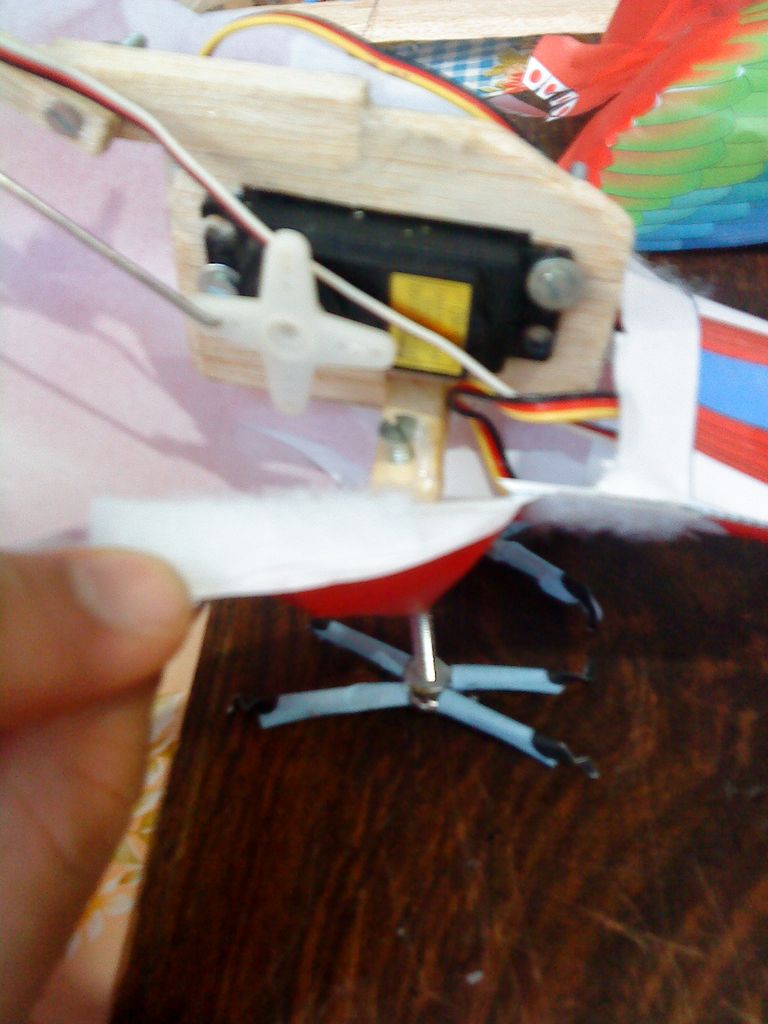
The standard servomotor serves to raise the neck of the macaw and was attached to a piece of balsa wood, as figure and rod arm movement has taken place with the metal of the clothespin. The mini servo moves the head and was glued directly on the arm
Step 3: Assembling Macaw
Glue parts 10 and 11 in number 9, forming the thighs and enter parafuzos, screwing in the preacher and put his paws. Place the nails in pieces of copper and set with the help of hot glue.
Servos were fixed upon the peg, getting a good balance.
For more detail: Animatronic Green-Winged Macaw Papercraft
- What papercraft files are needed?
The Green-Winged Macaw papercraft download from cp.c-ij.com used across 16 A4 sheets. - How is the macaw skeleton built?
The skeleton uses half a clothes peg supported by two 6 inch screws and reinforced with copper wire pieces soldered with nuts. - Which servos control movement?
A standard servo raises the neck and a mini servo moves the head. - How are servos mounted?
The standard servo is attached to balsa wood and linked to the clothespin metal for arm movement; the mini servo is glued directly to the arm. - What materials attach the feet?
For each foot, two copper wire pieces are cut, nuts are welded, nails are placed in copper pieces, and hot glue secures them. - Can cardboard replace balsa wood?
Yes, thick cardboard can be used instead of the 15 x 15 cm balsa wood piece. - Is an Arduino required?
An Arduino is listed among the materials for control in the project. - How is realism or mistreatment portrayed?
By altering papercraft assembly—pasting crooked, crumpling paper—or by following neat assembly to portray beauty.
