
Summary of Peggy – Arduino Portable RF Rain Tracker
This article describes "Peggy," a portable rain tracker that alerts users to sudden rainfall, allowing them to retrieve sun-dried laundry. The system uses an Arduino-based transmitter with a rain sensor and a receiver with alarms.
Parts used in the Peggy Project:
- Arduino Nano
- Telecontrolli RT40 433Mhz transmitter module
- Telecontrolli sensitive rain sensor
- IC Schmitt trigger (HEF40106BP)
- 5V 1A power bank
- Resistors (100/1K2/5K6/1M ohm)
- NPN general-purpose transistor (BC847 or BC337)
- LED
- Ceramic capacitors (2x100nF)
- 15.5cm copper cable (antenna)
- PCB
- USB type-A plug
- Waterproof enclosure
- Arduino Uno rev.3
- Telecontrolli RR10 433Mhz receiver module
- Buzzer
- 6x male pins
- Jumpers and wires
- Soldering tools, drill, and hot glue
- Plastic or wooden peg
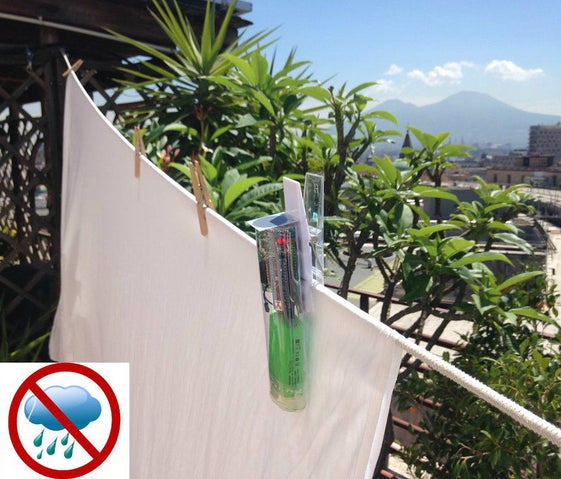
My country mild climate lets the sun to shine for the greatest part of the year, then tumble driers are not widely used and so we often use to drain clothes in the sun.
What to do when a sudden rainfall comes?
This project has been made for anyone drain clothes in the sun or, simply, needs an alert when it starts to rain.
“Peggy” project is a simple portable rain traker that uses a rain sensor, 433 Mhz transmitter-receiver modules and Arduino.
Step 1: How It Works
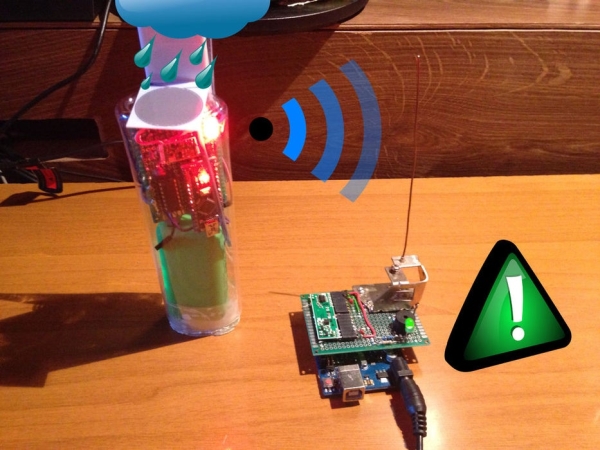
This prototype basically do this:
When rain sensor detect rain over a predefinied treshold level, transmitter module sends a continue RF signal. A listening receiver module detect this data, when sent, and activate acoustic and visual alarm till you stop it shutting down the system.
Step 2: Parts Needed

Main components for this project are from Telecontrolli . I wanted to try these hardware because i was not satisfied of the basic cheap chinese RF and rainsensor modules.
Trasmitter hardware :
- Arduino Nano
- Telecontrolli RT40 433Mhz transmitter module
- Telecontrolli sensitive rain sensor
- IC Schmitt trigger (HEF40106BP is six channels but you need only one)
- 5V 1A power bank
- 100/1K2/5K6/1M ohm resistors
- NPN general-purpose transistor (BC847 or BC337)
- led
- 2x100nF ceramic capacitors
- 15.5cm copper cable (for antenna)
- PCB
- USB type-A plug
- waterproof enclosure
Receiver hardware :
- Arduino Uno rev.3
- Telecontrolli RR10 433Mhz receiver module
- NPN general-purpose transistors (BC847 or BC337)
- 100/560/1K2/5K6 resistors
- 2x10nF ceramic capacitors
- 15.5cm copper cable (for antenna)
- PCB
- led
- buzzer
- 6xmale pins
common parts:
- jumpers
- wires
tools:
- solder
- drill
- hot glue
Finally:
- a plastic or wooden peg
Step 3: Rain Sensor
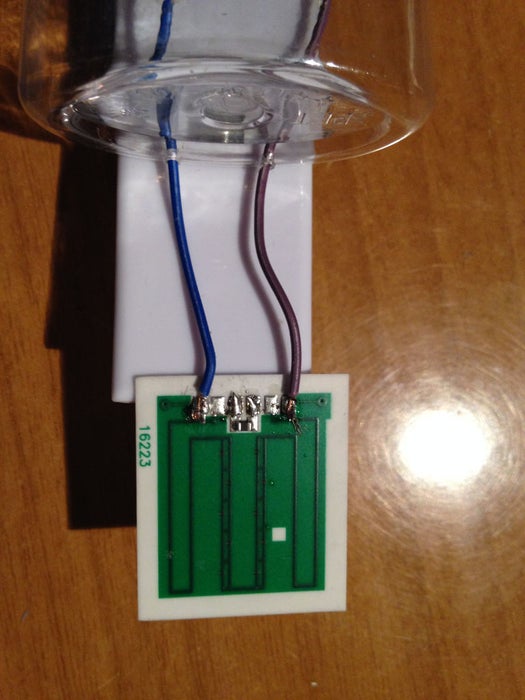
The rain sensor has a capacitive technology. This means that you can detect rain percentage level.
Circuit is on ceramic substrate and it is interfaced with Arduino through an inverting Schmitt trigger.
This sensor can do more. It integrates a thermistor, that lets read external temperature, and a heater resistor (12V operating) that’s used to dry the sensor in case of night-time damp or morning frosts accumulations.
These last two functionalities are not used for this project.
Step 4: Transmitter and Receiver
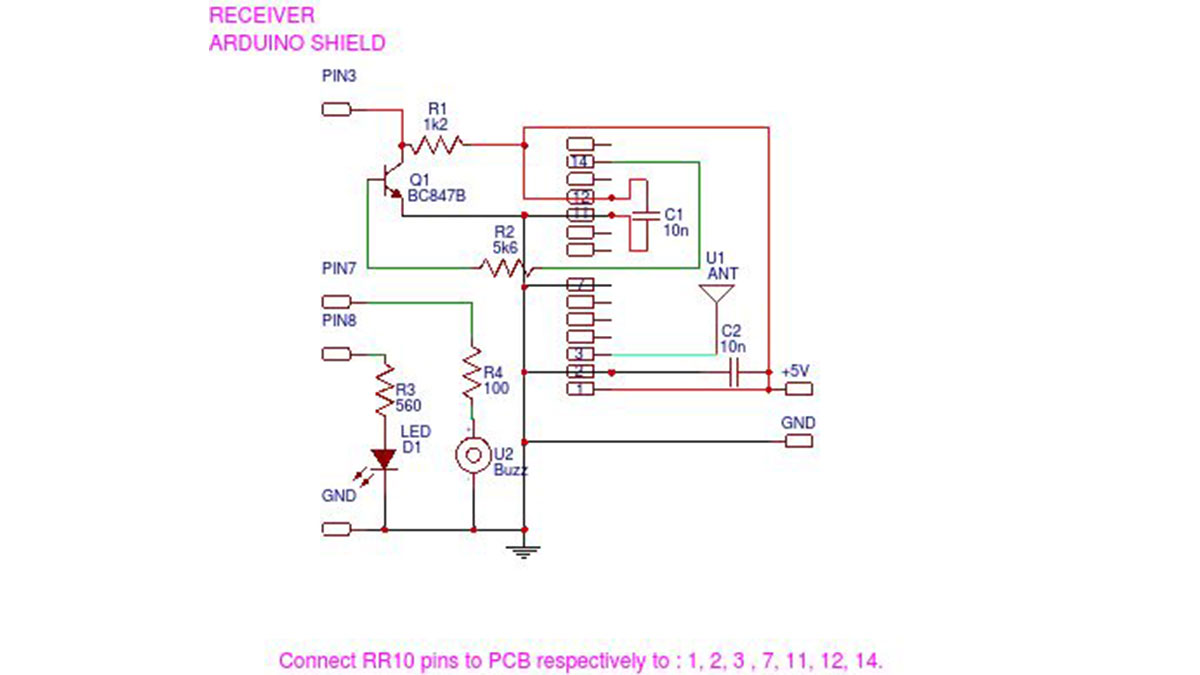
RT-40 is a performing 433Mhz transmitter that gives a good coverage.
The signal transmitted easly cut through my reinforced concrete/brick walls. Transmitter board, together the power bank, must be inserted into a waterproof enclosure. For this scope i’ve adopted an earbuds plastic box sealed with hot glue.
RR10 receiver module is performing, too. It needs only to have a good shielding, for that i have installed a metal plate connected to the ground. For the receiver module i’ve easly created an Arduino Uno shield.
Read more: Peggy – Arduino Portable RF Rain Tracker
-
What is the main purpose of the Peggy project?
The project is designed for anyone drying clothes in the sun or anyone who needs an alert when it starts to rain. -
How does the transmitter module react when rain is detected?
When the rain sensor detects rain over a predefined threshold level, the transmitter module sends a continuous RF signal. -
What happens at the receiver end when the signal is received?
The listening receiver module detects the data and activates an acoustic and visual alarm until the system is shut down. -
Why did the author choose Telecontrolli hardware components?
The author chose this hardware because they were not satisfied with basic cheap Chinese RF and rain sensor modules. -
Can the rain sensor measure temperature?
Yes, the sensor integrates a thermistor that allows reading external temperature, though this feature was not used in this project. -
How is the waterproof enclosure created for the transmitter?
An earbuds plastic box sealed with hot glue is used to house the transmitter board and power bank. -
What method is used to shield the receiver module?
A metal plate connected to the ground is installed to provide good shielding for the receiver module.
