
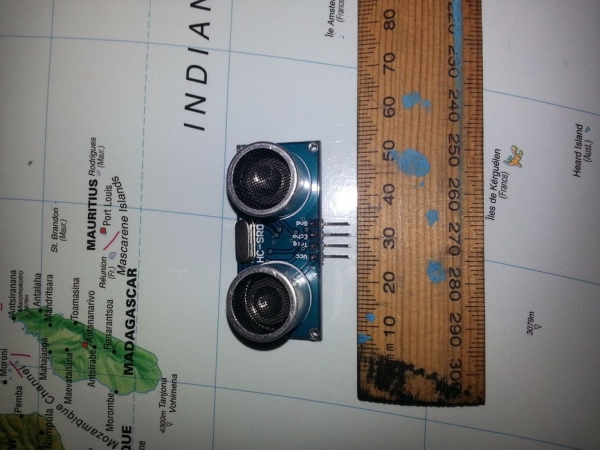
Home > Projects > Sensor – Transducer – Detector Projects > Arduino-Using Shift Registers With Ultrasonic Sensors

Arduino-Using Shift Registers With Ultrasonic Sensors

Summary of Arduino-Using Shift Registers With Ultrasonic Sensors


The HC-SR04 Ultrasonic range sensor can use many Arduino pins when multiplied. This project shows using a 74HC595 8-bit serial-to-parallel shift register to control up to eight HC-SR04 modules (16 I/O lines) while using only four Arduino pins. It includes Arduino code, a basic pin layout, and example HC-SR04 ping code to scan multiple sensors efficiently.

Parts used in the Using Shift Registers With Ultrasonic Sensors:

  • Arduino (any compatible board)
  • HC-SR04 Ultrasonic range sensing modules (up to 8)
  • 74HC595 8-bit serial-to-parallel shift register
  • Wires/jumpers
  • Breadboard or prototyping board
  • Power supply for Arduino

The HC-SR04 Ultrasonic range sensing module is great for sensing distances that can be used as an input for your Arduino projects, but using multiple (more than two) can quickly cost you a lot of pins.

This basic Instructable gives you the code and basic instructions to use the 74HC595 8 bit series to parallel shift register so you can connect up to 8 HC-SR04 modules (16 IO pins) while using only 4 Arduino IO pins

Step 1: Arduino Code
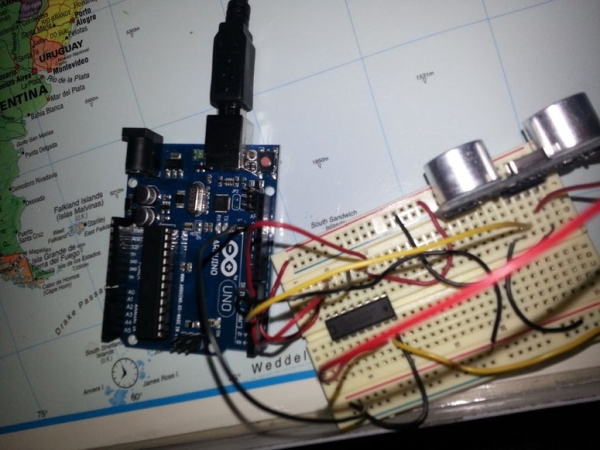
^^Basic layout of shift register IC and picture with only one HC-SR04 sensor^^

The attached File contains the needed Arduino code and pin layout (scanping)

Also attached is basic code for using the HC-SR04 Ultrasonic range sensing module (ping)

Source: Arduino-Using Shift Registers With Ultrasonic Sensors

Quick Solutions to Questions related to Using Shift Registers With Ultrasonic Sensors:

  • What is the purpose of using a 74HC595 with HC-SR04 sensors?
    To expand outputs so up to eight HC-SR04 modules (16 IO pins) can be connected while using only four Arduino IO pins.
  • How many HC-SR04 modules can this setup support?
    Up to eight HC-SR04 modules.
  • How many Arduino pins are required for the described setup?
    Only four Arduino IO pins are used to control the shift register and sensors.
  • Does the project include Arduino code?
    Yes, the Instructable includes Arduino code and example ping code for the HC-SR04.
  • Is a specific pin layout provided?
    Yes, a basic pin layout and scanping layout are attached with the project.
  • Can this method reduce pin usage compared to direct wiring?
    Yes, using the shift register reduces the number of Arduino pins required compared to wiring each sensor directly.

About The Author

Ibrar Ayyub

I am an experienced technical writer holding a Master's degree in computer science from BZU Multan, Pakistan University. With a background spanning various industries, particularly in home automation and engineering, I have honed my skills in crafting clear and concise content. Proficient in leveraging infographics and diagrams, I strive to simplify complex concepts for readers. My strength lies in thorough research and presenting information in a structured and logical format.

Follow Us:
LinkedinTwitter
Scroll to Top