
Summary of L BAND SATELLITE ANTENNAS REVEALED
[SignalsEverywhere] showcases a collection of satellite antennas, including commercial shipborne units and QFH helix designs, repurposed via software-defined radio to capture weather images and space signals. The project involves potentially modifying motorized pointing systems using Arduino and CNC shields or building custom positioners, while exploring the unique mechanical and electrical properties of L-band antennas operating between 1 GHz and 2 GHz.
Parts used in Satellite Antenna Repurposing:
- Satellite antennas (including shipborne and QHF types)
- NEMA 17 steppers
- Arduino microcontroller
- CNC shield
- Software-defined radio equipment
- L-band receiver components
[SignalsEverywhere] has a lot of satellite antennas and he’s willing to show them off — inside and out — in his latest video that you can see below. Using software-defined radio techniques, you can use these antennas to pull off weather satellite images and other space signals.
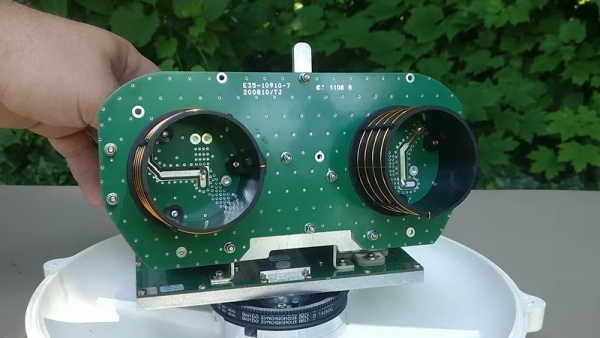
A lot of these antennas are actually made for some commercial purpose like keeping ships connected to Inmarsat. In fact, the shipborne antenna has a nice motorized system for pointing the antenna that [SignalsEverywhere] is hoping to modify for his own purposes.
With what appears to be standard NEMA 17 steppers onboard, it should be relatively easy to supplant the original controller with an Arduino and CNC shield. Though considering the resale value these particular units seem to have on eBay, we might be inclined to just roll our own positioner.
The QHF QFH antenna is another interesting teardown. The antenna makes a helix shape and looks like it would be interesting to build from scratch. There isn’t a lot of details about the antenna designs, but it is interesting to see the variety and range of antennas and how they appear internally.
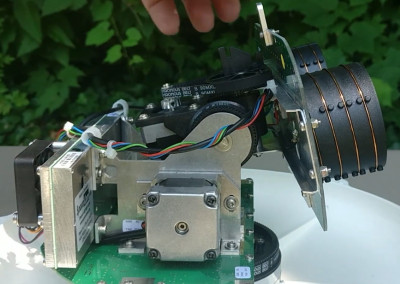
L band is from 1 GHz to 2 GHz, so signals and antennas get very strange at these frequencies. The wavelength of a 2GHz signal is only 15cm, so small antennas can work quite well and are often as much mechanical designs as electrical. The L band contains everything from GPS to phone calls to ADS-B.
We’ve seen radiosonde antennas reborn before. Dish antenna repurposing is also popular.
Source: L BAND SATELLITE ANTENNAS REVEALED
-
What can be achieved with these satellite antennas?
You can use them to pull off weather satellite images and other space signals using software-defined radio techniques. -
How can the motorized system on a shipborne antenna be modified?
The original controller can be suppled with an Arduino and CNC shield because standard NEMA 17 steppers are onboard. -
Why might one choose to build their own positioner instead of modifying existing hardware?
One might choose this due to the high resale value these particular units seem to have on eBay. -
What is the frequency range for L band?
L band ranges from 1 GHz to 2 GHz. -
What is the wavelength of a 2GHz signal mentioned in the article?
The wavelength of a 2GHz signal is only 15cm. -
What types of signals are contained within the L band?
The L band contains everything from GPS to phone calls to ADS-B. -
Are small antennas effective at L band frequencies?
Yes, small antennas can work quite well because the wavelengths are very short.
