
Summary of MINATURE OPTICAL GYROSCOPE IS SMALLER THAN A GRAIN OF RICE
**Summary** Caltech researchers developed a revolutionary optical gyroscope 500 times smaller and 30 times more sensitive than current MEMS versions. Published in Nature, this device utilizes the Sagnac Effect and reciprocal sensitivity enhancement to lengthen laser paths on tiny disks. This innovation overcomes previous noise and size limitations, enabling high-precision angular velocity detection for miniature electronics like watches, drones, and wearables.
Parts used in the Caltech Optical Gyroscope:
- Lasers
- Optical disk
- Laser beams
- End-point sensors
Gyroscopes are present in virtually any modern electronic gadget. They re used in a host of techs, like cell phones, vehicles, drones and wearables. The gyroscopes used presently in our phones will most likely be MEMS-based. Caltech, has gone some extra miles, by successfully developing a new type of gyroscope that is 500 times smaller and 30 times more sensitive than the MEMS version. This research was published in Nature this month.
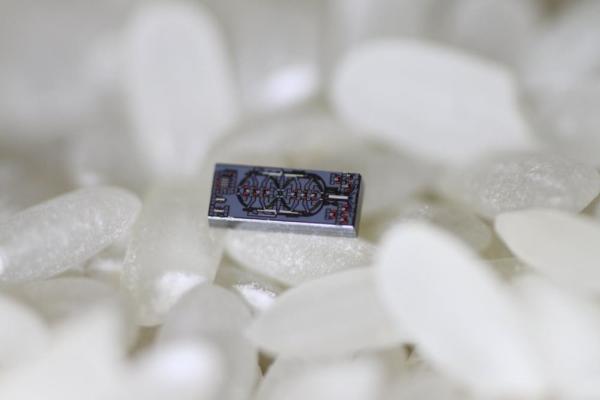
The conventional MEMS-based gyroscopes functions, by measuring the forces of two identical masses that are oscillating and moving in opposite directions. On the other hand, the optical gyroscope that the Caltech research team developed makes use of lasers rather than MEMS to attain the same result. Even thought the optical gyroscopes are effective in theory, in practice they have been hard to shrink, because the noise-to-signal ratio is inversely proportional to the optical gyroscope’s size.
The new optical gyroscope, is based on Sagnac Effect. This effect was discovered by French physicist Georges Sagnac, and the effect is based on Einstein’s principle of general relativity to identify changes in angular velocity. Majorly, a laser is divided into two beams, and each beam is projected along one side of a disk. As a result of light always traveling at a constant speed, the two beams get to the end of the disk at the same time, as long as the disk is not in motion. If the disk is spinning, the laser beams will get to the end-point out of sync.
The gyroscope measures that difference in synchronization, as the end-point beam has little changes in its properties that can reveal changes in the state of an object, like if you just picked up your phone, or dropped it. The Sagnac Effect however, is often prohibitively sensitive to noise in the signal. Things like small thermal fluctuations, vibrations from moving objects or loud noises can disrupt the beams as they travel.
The smaller the gyroscope is, the more easily it gets disrupted. Infact, the smallest high-performance optical gyroscopes operational today are close to the size of a golf ball. This makes it hard for it to be placed in little gadgets like a watch. To counteract these problems, the Caltech research team came up with the idea of lengthening the path that the laser beams will travel, enabling them to place small disks instead of large ones, while still attaining the same level of accuracy. According to Ali Hajimiri, Bren Professor of Electrical Engineering and Medical Engineering in the Division of Engineering and Applied Science, and the leader of the study, the technique is referred to as “reciprocal sensitivity enhancement.” In this context, “reciprocal” means that it affects both beams of the light inside the gyroscope in the same way.
Read more: MINATURE OPTICAL GYROSCOPE IS SMALLER THAN A GRAIN OF RICE
- How does the new Caltech gyroscope differ from conventional MEMS gyroscopes?
The new optical gyroscope uses lasers instead of oscillating masses found in MEMS versions. - What physical principle is the new gyroscope based on?
It is based on the Sagnac Effect, which relies on Einstein’s principle of general relativity. - Why have optical gyroscopes been difficult to shrink in the past?
Their noise-to-signal ratio is inversely proportional to their size, making small devices highly susceptible to disruption. - What technique did the team use to maintain accuracy in a smaller size?
They used reciprocal sensitivity enhancement to lengthen the path the laser beams travel. - How large are the smallest high-performance optical gyroscopes currently available?
They are close to the size of a golf ball. - Can this new technology fit into small gadgets like a watch?
Yes, because it is now small enough to be placed in little gadgets like a watch. - What happens to the laser beams when the disk spins?
The beams arrive at the end-point out of sync due to the rotation. - What factors can disrupt the signal in traditional optical gyroscopes?
Small thermal fluctuations, vibrations from moving objects, or loud noises can disrupt the beams.
