
Summary of Energy-harvesting power management ICs for wireless sensor nodes
Cypress Semiconductor launched the S6AE101A, a low-power PMIC enabling 1 cm² solar-powered wireless sensor nodes for IoT. Paired with the EZ-BLE PRoC module, this battery-free solution offers 1.2 µW startup power and 250 nA consumption. The $49 kit includes the PMIC, module, software, solar module, and USB bridge.
Parts used in the Solar-Powered IoT Device Kit:
- S6AE101A Energy Harvesting PMIC
- EZ-BLE PRoC module
- Supporting software
- Baseboard
- Solar module
- Bluetooth Low Energy-USB bridge
Intended to manage solar-powered wireless sensors for Internet of Things (IoT) applications, these parts are said to be the lowest-power, single-chip Energy Harvesting PMICs, and can be used with solar cells as small as 1 cm². Cypress offers a complete, battery-free energy harvesting solution that pairs the S6AE101A PMIC, the first device in the new family, with the EZ-BLE PRoC module for Bluetooth Low Energy connectivity, along with supporting software, in a $49 kit.
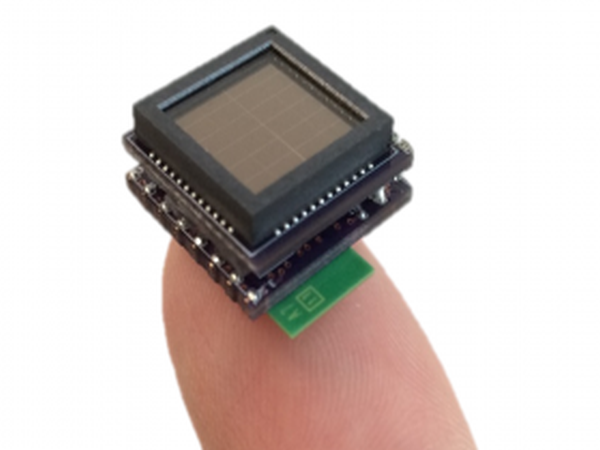
The Cypress Energy Harvesting PMIC devices offer a startup power of 1.2 µW – one-quarter that of the nearest competitor, Cypress asserts, and consumption current as low as 250 nA, maximising the power available for the sensing, processing and communications functions of a target application. The fully-certified, small-form-factor EZ-BLE PRoC module, which is based on Cypress’s PRoC BLE Programmable Radio-on-Chip solution, works with the PMIC devices to contribute to the low power and ease-of-use of an energy harvesting system solution.
The Cypress S6AE101A Energy Harvesting PMIC is sampling now, with production expected in the fourth quarter of 2015. Cypress offers the $49 Solar-Powered IoT Device Kit that contains a baseboard with a solar module and a Bluetooth Low Energy-USB bridge. Cypress PMICs are supported by the Easy DesignSim, a free, web-based simulation tool for Cypress’s PMIC solutions used to validate Energy Harvesting System (EHS) designs, including the bill-of-materials (BOM), schematic and the power consumed (µW) by the sensing, processing and communications functions of a target application.
For More Details: Energy-harvesting power management ICs for wireless sensor nodes
- What is the smallest solar cell size supported by these parts?
The parts can be used with solar cells as small as 1 cm². - How much startup power do the Cypress Energy Harvesting PMIC devices offer?
They offer a startup power of 1.2 µW. - Can these components enable a battery-free energy harvesting solution?
Yes, Cypress offers a complete battery-free energy harvesting solution. - What tool is available to validate Energy Harvesting System designs?
Easy DesignSim is a free web-based simulation tool for validating EHS designs. - Does the kit include a Bluetooth Low Energy-USB bridge?
Yes, the $49 Solar-Powered IoT Device Kit contains a Bluetooth Low Energy-USB bridge. - When was production expected for the Cypress S6AE101A device?
Production was expected in the fourth quarter of 2015. - What connectivity option does the EZ-BLE PRoC module provide?
The module provides Bluetooth Low Energy connectivity.
