
Summary of Electrically Insulated Altoids Tin
This Instructable shows how to electrically insulate an Altoids tin by coating its interior with PlastiDip rubber. After cleaning and separating the lid, mask the exterior, spray 2–3 coats of PlastiDip inside both halves, peel the tape once dry, and trim excess rubber from the lid overlap and curled edge so the tin closes without ripping. The result is a reusable, clean insulated enclosure for electronics.
Parts used in the Electrically Insulated Altoids Tin:
- Altoids tin (standard size)
- Masking tape
- Paper towel
- PlastiDip (sprayable rubber coating by Performix)
- X-Acto knife
- Small flathead screwdriver
- Hands (for assembly and handling)
Step 1: Supplies and Tools
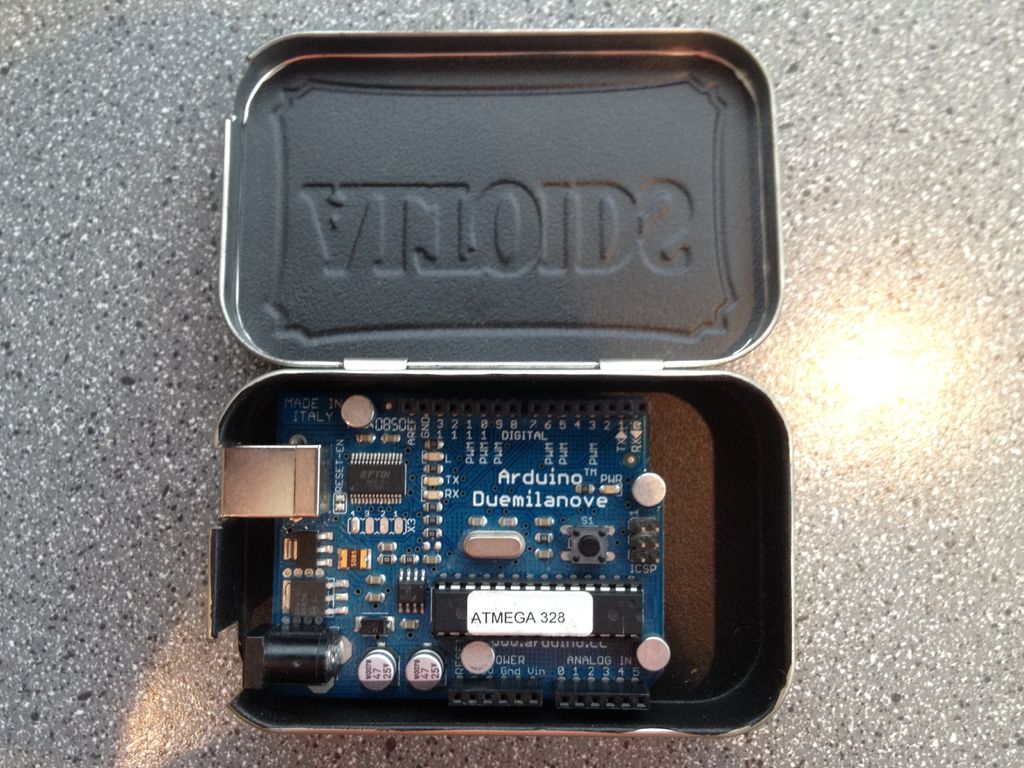
Altoids tin – whatever style you prefer, but my Arduino fits perfectly in the standard size so that’s what I used
Masking tape – to eliminate overspray on the outside of the tin
Paper towel – for cleaning
PlastiDip – this is the good stuff, a “multi-purpose rubber coating” made by Performix
For tools, you’ll need these:
Hands – for doing things
X-Acto knife – for cutting away excess rubber after drying
Small flathead screwdriver – for taking apart the Altoids tin
Step 2: Prep
After that, you’ll want to separate the top of the tin from the bottom, as this will make masking and spraying easier. Take a small flathead screwdriver and gently pry the hinges away the lid can be lifted out.
Now it’s time to mask off the two parts of the tin. Using masking tape, cover up the entire outside of the tin up to the curled edge.
Step 3: Rubberizing
After the PlastiDip is dry, go ahead and carefully peel off the masking tape, making sure to not let the coating rip on the edges. Do not close the Altoids tin yet or the edges may rip!
Step 4: Cleaning Up
- What is the purpose of rubberizing the Altoids tin?
To electrically insulate the conductive metal tin so it can be used safely for DIY electronics. - How do you prepare the tin before spraying PlastiDip?
Clean the inside with a damp paper towel or soap and water if needed, separate the lid from the base, and mask the outside with masking tape up to the curled edge. - How many coats of PlastiDip should be applied?
The article applied 2–3 coats to ensure sufficient coverage. - Can you close the tin immediately after coating?
No, do not close the Altoids tin until the PlastiDip is dry and excess coating at the edges is trimmed to avoid ripping. - What tool is used to remove excess rubber from the edges?
An X-Acto knife is used to cut away the PlastiDip at the curled edge and inside overlap areas. - How do you remove the lid from the tin for easier masking?
Use a small flathead screwdriver to gently pry the hinges and lift the lid out. - Why mask the outside of the tin before spraying?
Masking tape protects the exterior finish and confines the rubber coating to the interior up to the curled edge. - What should you watch for when peeling the masking tape?
Peel carefully to avoid ripping the PlastiDip coating on the edges while it is still attached.
