
Summary of UMTS module UG95 = reliable transfer even in hazard conditions
The Quectel UG95 is a new UMTS/HSPA module designed to be pin-compatible with the GSM/GPRS M95 module. This feature allows manufacturers to migrate from 2G to 3G networks without redesigning their printed circuit boards (PCB). It offers flexibility to use either the M95 for basic connections or the faster UG95 for high-speed data on the same hardware design, ensuring reliability even in hazardous conditions.
Parts used in the Migration Project:
- Quectel UG95 module
- GSM/GPRS module M95
- Printed Circuit Board (PCB)
Moreover, new UMTS/HSPA module Quectel UG95 is pin-compatible with GSM/GPRS module M95 thus offering extraordinarily simple way to migrate to 3G without a PCB redesign.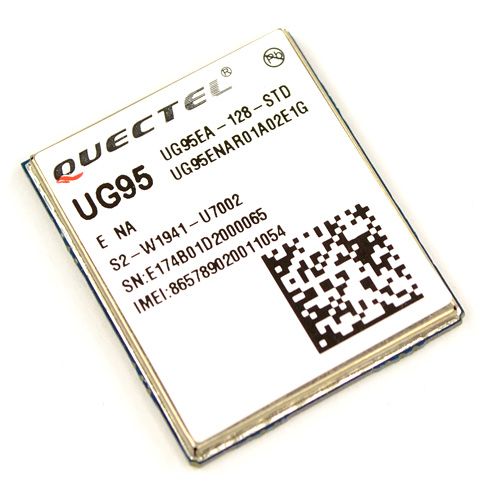
To have a possibility to choose a component on a given PCB place according to our wish is certainly advantageous. For example in audio equipment to use a simple operating amplifier (for less demanding applications) or in other case to use a pin-compatible high-end operating amplifier for more demanding applications (on the same PCB position). This compatibility is common in some fields, in other ones not that much …
In a segment of GSM/GPRS/UMTS modules is this compatibility a sort of an exception, so arrival of the new Quectel UG95 module on the market can be an interesting solution how to use the same design for smaller GSM/GPRS/EDGE connection (with the M95 module) and also for a substantially faster UMTS/HSPA connection with the UG95 module.
For more detail: UMTS module UG95 = reliable transfer even in hazard conditions
- How can manufacturers migrate to 3G without a PCB redesign?
The Quectel UG95 is pin-compatible with the M95 module, allowing the same PCB design to support both. - What is the main advantage of using the Quectel UG95 over the M95?
The UG95 provides substantially faster UMTS/HSPA connections compared to the smaller GSM/GPRS/EDGE connection of the M95. - Does the UG95 require a different operating amplifier?
No, the article states that components like operating amplifiers can remain in the same PCB position due to pin compatibility. - Can the same design be used for both 2G and 3G connections?
Yes, the arrival of the UG95 allows users to use the same design for both GSM/GPRS/EDGE and UMTS/HSPA connections. - Is pin compatibility common in the segment of GSM/GPRS/UMTS modules?
Pin compatibility is described as a sort of an exception in this specific segment. - Under what conditions does the UG95 ensure reliable transfer?
The module ensures reliable transfer even in hazard conditions.
