
Summary of PCB Prototype for Low-Volume Production
This article outlines best practices for low-volume PCB prototyping, emphasizing the balance between cost and quality. It covers critical steps including material selection (FR-4, polyimide), design for manufacturability (DFM), component sourcing strategies, and quality assurance methods like visual inspection and flying probe testing. The text advises working closely with specialized services to manage lead times, avoid over-specification, and ensure a smooth transition from prototype to small-batch production.
Parts used in the Low-Volume PCB Prototyping Project:
- PCB Prototype Service
- Bill of Materials (BOM)
- Gerber Files
- Assembly Drawings
- Solder Paste Stencils
- Pick-and-Place Machines
- Multimeters
- Flying Probe Testers
- Current-Limited Power Supplies
- Laser-Cut Stencils
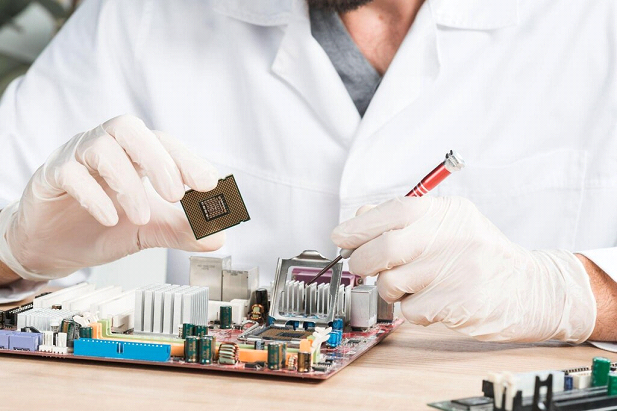
Creating a PCB prototype for low-volume production requires balance. Overbuilding is not necessary, but you shouldn’t cut corners either. The priority should be solid design and clear intent. Early decisions shape your outcome, no matter the number of assembled circuit boards you’re creating. Using a reliable PCB prototype service helps reduce missteps.
Low-volume projects are extremely common in research, testing, or startup environments, as they’re smaller orders, but even these have high technical expectations. Turnaround times must be tight. Material selection, layer count, and surface finish, all of these are very important. Assembly choices matter too. Through-hole, SMT, or mixed assemblies can all affect timelines and outcomes.
Prototyping is about function and also future production. Small batch builds are a rehearsal for scaling. Make smart, production-minded choices from the beginning. A clean schematic and a tight layout save hours later. Focused planning will pay off, especially when product requirements evolve. Low-volume doesn’t mean low priority.
Best Practices for PCB Prototyping for Low-Volume Production
Start by clarifying your board’s function. Keep the design tight and relevant. Low-volume doesn’t excuse unnecessary complexity. Every assembled circuit board must serve its role efficiently. Work closely with a PCB prototype service to catch potential issues early.
Avoid over-specifying. Choose materials and finishes that make sense for the board’s purpose. Save high-end choices for high-reliability or regulatory-required products. Stick to standard sizes and well-supported part packages whenever possible. They simplify sourcing and lower costs.
Always run a DFM (Design for Manufacturability) review. This ensures your prototype circuit board is production-ready even if quantities remain small, this also exposes avoidable design flaws that delay timelines.
Clear documentation helps. Bill of Materials (BOM), Gerbers, and assembly drawings should be accurate and tidy. Any confusion leads to delays or misbuilds. Communication is critical, especially when turnaround times are short. Double-check part availability before locking the design. Align your goals with your fabricator’s capabilities. A well-executed prototype sets the tone for everything that follows.
How to Balance Cost and Quality In PCB Prototypes for Low-Volume Runs
Balancing cost and performance starts with setting realistic goals. A prototype circuit board doesn’t need the most premium stackup or tightest tolerances unless the design absolutely requires it. Define what’s essential. Then cut what isn’t.
Working with a responsive PCB prototype service can help you compare fabrication and assembly tradeoffs. Use standard panel sizes to reduce fabrication costs. Stick with common finishes like HASL unless specific electrical needs call for ENIG or others.
Avoid expensive components unless they’re functionally critical. Many small-batch issues arise from overcomplicated part selections. Make sure every part on your assembled circuit board has a reliable source. Multiple vendors are ideal. Avoid single-source items if lead times or costs might spiral.
You’ll get better pricing if you build a few units at once rather than one at a time. Plan for small batches, even if you need just one functional prototype. Think ahead. Consider what’s coming next and build with it in mind.
Low-Volume PCB Manufacturing Methods and Considerations
Manufacturing a prototype circuit board in low volume follows many of the same principles as large-scale production, with added time and cost sensitivity. Batch size changes everything, from machine setup to sourcing impact. That’s why planning and documentation must be flawless.
Use a PCB prototype service that specializes in small runs. These providers are more willing to tweak setups and run mixed jobs without minimum order headaches. They understand the rhythm of development builds.
Don’t expect pricing to mirror large batches. The unit cost is higher, but the goal is risk reduction, not volume efficiency. Choose materials that match the intended use case. For short-term or internal-use boards, standard FR-4 is usually fine.
Be clear about tolerances, especially on controlled impedance traces or fine-pitch pads. If those features are vital to performance, they require tighter control during production.
An assembled circuit board at low volume needs flexibility during fabrication. Find shops that can accommodate design iterations and minor reworks quickly.
Challenges In PCB Prototyping for Low-Volume Production
Prototyping with low-volume goals often reveals challenges that full-scale production doesn’t. For starters, every change carries more weight. One bad part, one design error, and your entire batch could be scrapped. That risk is amplified when working with a single assembled circuit board or just a few units.
Component sourcing is a common issue. A part might be available in bulk but scarce in smaller quantities. This is where a good PCB prototype service can help by offering sourcing flexibility and substitutions.
Communication is key. Errors in files or documentation can be caught if your assembly partner knows what to watch for. But that depends on them having full, clear input from you.
Time pressure also adds stress. Short runs are often part of tight product timelines. Any delay, material, testing, or rework can derail your schedule. Prototyping isn’t just about the design itself. It’s about managing every upstream and downstream factor affecting the prototype circuit board.
Cost Reduction Strategies for PCB Prototypes in Low-Volume Production
Cost can escalate fast when prototyping at low volume, but you still have options. One of the easiest ways to reduce cost is to simplify the stackup. Unless your assembled circuit board has strict RF or impedance demands, stick with 2-layer or 4-layer boards.
Leverage standard sizes offered by your PCB prototype service. Custom paneling adds cost, while fitting into shared panels brings it down. Avoid tight tolerances unless they’re critical. Standard specs are typically cheaper to produce.
Consolidate orders where possible. Even if you’re only building a few prototype circuit boards, placing them in a single run can save setup fees and minimize delivery charges.
Stick with common surface finishes. HASL is often more affordable than ENIG or immersion silver, especially for early testing. When possible, select parts that are in stock and not end-of-life. It prevents surprises mid-production.
Avoid rush jobs. Give your vendors room to schedule builds more economically, which helps reduce your final cost.
Design for Manufacturability (DFM) for Low-Volume PCB Production
Designing with manufacturability in mind pays off, especially at small volumes. Start with your Gerber and BOM files. Keep them clean, complete, and readable. It helps your assembler catch issues early. You don’t want your assembled circuit board to hit a snag because of unclear silkscreens or overlapping pads.
Stick to standard drill sizes and tolerances. This reduces tool wear and saves time during fabrication. Use well-known part footprints. They’re easier to align and solder correctly.
Limit fine-pitch components unless absolutely necessary. If the PCB prototype service isn’t set up for micro-components or exotic packages, they’ll either charge more or slow the process.
Pay attention to copper pours and spacing. Avoid isolated slivers that could create shorts or clearance issues.
Test points matter a lot; you should include them during layout, even if you’re not testing every signal. Your production partner might need them to verify functionality. Good DFM habits ensure your prototype circuit board is ready to scale up smoothly later.
How to Handle Component Sourcing for PCB Prototypes in Low-Volume Production
Sourcing components for low-volume builds requires planning. You might only need five pieces of a specific IC, but many suppliers have minimum order quantities. That’s why working with an experienced PCB prototype service matters; they often have access to reel splits or part brokers.
Check availability before finalizing the BOM. A design built around hard-to-find parts is risky. If possible, select components from manufacturers with multiple distribution partners. This keeps lead times short.
Have alternates ready. Pin-compatible options with similar specs can save a stalled build. And don’t forget passive components, as resistors and capacitors also go out of stock.
Ask your assembler if they’ll source parts or if you need to supply kits. Both methods work, but clear communication is critical. Packaging matters too. Loose parts might cost you extra fees during assembly.
Avoid rare parts unless absolutely required. Keeping the assembled circuit board simple at this stage makes things easier down the line, especially during production handoff.
Test and Quality Assurance Strategies for Low-Volume PCB Prototypes
Small runs still demand serious quality assurance. Even one faulty assembled circuit board can delay your testing or skew data. Start with visual inspection. Look for solder bridges, poor joints, and misaligned parts. This basic step catches many issues before you even power up.
Next, apply continuity testing. Use a multimeter or bed-of-nails tester to verify connections. For more coverage, consider flying probe testing if your PCB prototype service offers it. It doesn’t require custom fixtures and works well for short runs.
Power up with caution. Use a current-limited power supply for first-time turn-on. If it draws more current than expected, cut power and inspect again. Once the board is live, verify voltages and signals at critical nodes.
Build time into your schedule for rework. Minor fixes happen. Make sure your assembler knows how to log those changes clearly so you can feed them back into design revisions.
Reliable prototype circuit board performance starts with checking every detail, no matter how small.
Managing Lead Time in Low-Volume PCB Prototype Production
Lead time management starts with awareness. Every delay, from sourcing to fab to testing, can stretch your timeline. With low-volume builds, even short hiccups matter. Some parts might have longer lead times than expected. Verify with suppliers before locking down your BOM.
Work with a PCB prototype service that shares scheduling visibility. This helps you anticipate delays and adjust before they hit hard. Plan your design handoff early. Don’t wait until the layout is “perfect.” Let your assembler review files while you finalize the last pieces.
Be realistic with delivery windows. Rushing an assembled circuit board often leads to mistakes or extra costs. On the other hand, too much slack can make the process inefficient.
Batch orders where it makes sense. If boards are grouped logically, you can save time on setup & shipping.
Make space for the unexpected. Always have buffer time in your calendar to accommodate revisions, part swaps, or testing hiccups with your prototype circuit board.
PCB Prototype Material Selection for Low-Volume Production
Choosing the right materials is foundational in assembled circuit board production, mainly for low-volume runs. You don’t need exotic substrates, but consistency is extremely important. FR4 remains a solid baseline, as it’s available, cost-effective, and understood by most PCB prototype service providers.
If your design demands tighter impedance control or higher frequencies, consider alternatives like polyimide or Rogers materials. These offer thermal stability and better electrical performance. However, they also impact cost and availability, so weigh them against your application’s demands.
Copper thickness is another key point. Thinner copper works well for fine-pitch routing but may struggle with higher currents. Standard 1oz or 2oz copper covers most needs.
Keep the material stackup in mind. Mismatched dielectric constants or poor thermal resistance could compromise your prototype circuit board in testing.
Always confirm that your supplier can source the materials in small quantities. Material decisions at this stage often ripple into later production phases.
Transitioning from PCB Prototype to Low-Volume Production: What to Expect
You need detailed planning if you plan to move from a prototype circuit board to a low-volume production batch, as this is not a simple copy-paste. Tolerances, assembly workflows, and component logistics all come under scrutiny. Even if your assembled circuit board functioned perfectly in prototype form, scaling introduces variables.
Documentation must be complete, including Gerber files, BOMs, and assembly drawings. Any ambiguity slows production or introduces risk. If your PCB prototype service made tweaks during assembly, lock those in before production begins.
Tooling becomes a consideration now. Jigs, fixtures, and custom stencils might be needed for consistency. Be prepared to budget for these.
Your CM (contract manufacturer) will look for production efficiencies, so review your DFM feedback carefully. Minor layout changes now can reduce rework and assembly time later.
Testing protocols may also change. Production runs demand repeatable tests, not ad hoc verifications. Define them early. A smooth transition is about a predictable output.
Low-Volume PCB Assembly Process and Best Practices
Low-volume runs lie between hand assembly and full automation. Choosing the right PCB prototype service can make or break your timeline. Some shops excel in short runs, others don’t. Ask up front.
Start with stencil design. Even for small batches, precision in solder paste application matters. Opt for laser-cut stencils matched to your assembled circuit board layout.
Component placement is usually semi-automated. It helps to standardize packages where possible. Avoid mixing SMD and through-hole unless necessary, as it slows things down.
For reflow, settings might shift slightly based on batch size and material. It’s wise to do a thermal profile test at the start of the run.
Visual inspection remains crucial. Automated optical inspection (AOI) is often skipped in small batches due to cost, so ensure human inspection steps are in place.
Communication with your assembler is the final key. Provide clear files, clarify labeling, and confirm packaging expectations early. It avoids friction later.
Managing Small Batch PCB Orders for Low-Volume Production
Handling small batch runs calls for a balance of control and flexibility. Your assembled circuit board might be ready, but managing the order efficiently is its own job.
Keep order sizes aligned with your testing goals. Don’t produce 100 boards when 30 would validate your design. Smaller quantities reduce waste and give room to adjust.
Most PCB prototype service providers allow batch configurations. Ask about lot size options, setup fees, and minimum order requirements before locking in your order.
Consider panelization. Even small runs benefit from efficient panel design, which cuts board handling time and increases assembly throughput. Paneling specs should be reviewed alongside your design files.
Component procurement becomes trickier here. Buying just enough parts for a small run can lead to higher per-piece costs. Watch for this in quotes.
Finally, build in slack for yield loss. Don’t assume 100% success, especially in early runs. Ordering a few extras can avoid gaps in testing or delivery.
Flexible PCB Prototyping for Low-Volume Production
Flexible circuits have unique benefits in low-volume builds. They can save space, reduce connector usage, and simplify enclosures. When designing a prototype circuit board on flex material, bend radius and material stack-up become critical early on.
Choose polyimide substrates for durability. Thinner copper layers help maintain flexibility but can complicate soldering. Your PCB prototype service should offer guidance based on the material specs and assembly process.
When transitioning to assembly, consider stiffeners at connector points or bend regions. They help prevent fatigue cracks during repeated flexing or handling. Laser-cut apertures and support tooling may also be needed.
For your assembled circuit board, alignment during soldering requires care. Temperature control is more sensitive in flex builds. Thermal profiling on the first units will catch any warping issues.
Always validate the mechanical performance post-assembly. Fold and unfold test samples to ensure circuits remain stable and connections hold. Flex boards can streamline design for low-volume needs but require extra attention upfront.
Supply Chain Management for Low-Volume PCB Prototyping
In small runs, supply chain hiccups can delay everything. That’s why sourcing for a prototype circuit board must be planned just as thoroughly as production runs.
Keep your BOM tight. Minimize unique parts, and avoid end-of-life or long-lead components unless essential. Communicate with your PCB prototype service about parts availability up front.
For your assembled circuit board, make room in the timeline for substitutions. Suppliers might recommend equivalents if primary parts are unavailable. Approve those ahead of time to avoid production pauses.
Don’t forget the packaging. Include that in your instructions if you need moisture barrier bags, reels, or tubes for shipping. Special handling can be tricky to arrange on short notice.
If you’re importing components, check customs lead times and documentation needs. A delayed part held in transit will halt your run.
It’s often worth pre-ordering necessary components once the design is close to being finalized. Extras can always be reused for future builds. Agility is very important, but predictability saves money and stress.
Quality Control Challenges in Low-Volume PCB Prototyping
Small batches don’t justify big test systems, so quality control often comes down to process discipline and smart checks. Your assembled circuit board may look fine visually, but without proper electrical validation, faults slip through.
AOI and ICT are often skipped unless specifically requested in a typical PCB prototype service. That puts more pressure on manual inspection and engineering-level testing. Be clear about your inspection expectations.
One frequent issue is inconsistency in solder joints, especially with mixed-size components. Double-check stencil thickness and reflow profiles. Flux residue can also be problematic in tight layouts, so opt for no-clean where possible.
Misplaced passive components or tombstoning happen more in low-volume builds, especially if operators hand-place parts. Keep footprints generous and components aligned with pad geometry.
Visual inspection must be documented. Use checklists, photos, or markup systems to confirm test coverage.
For your prototype circuit board, early detection of defects saves time and keeps design iterations from chasing phantom problems caused by poor assembly.
Managing PCB Prototype and Low-Volume Production Iterations
Design revisions are common in low-quantity builds. However, frequent changes can stall production if they are not handled systematically. Every assembled circuit board must reflect the latest schematic and layout.
Track every revision with unique version labels. This helps avoid confusion when feedback flows in from testing or customers. Your PCB prototype service should support small-batch updates, but lead time will grow with each change.
Before sending a revision, validate every design tweak. Even simple pad shifts can affect soldering or fit. Document the reason for each change so that future builds can avoid known missteps.
During testing, capture all failures, even minor ones, and trace them back to specific PCB versions. This helps refine both design and assembly steps.
A stable prototype circuit board sets the tone for future production. So, even in small runs, treat documentation and versioning with care. With every change, share updated Gerbers, BOMs, and placement files. This cuts confusion and limits costly rework or delay.
Low-Volume PCB Prototyping for Automotive, Medical, and Aerospace Applications
Highly regulated industries require stricter controls, even in early builds. An assembled circuit board in a medical or aerospace prototype must meet precise documentation and quality expectations.
Depending on the use case, your PCB prototype service should offer traceable materials and meet industry-specific standards, such as ISO 13485 or AS9100. For automotive work, thermal shock tolerance and vibration endurance are non-negotiable.
If reliability testing is needed, use standard test coupons. Maintain a clean audit trail of test results and compliance documentation for every prototype circuit board delivered.
Traceability is extremely important. Mark PCBs clearly with lot codes, revision data, & serialized numbers when needed, and packaging should be labeled with handling notes. Temperature-sensitive components must be tracked throughout the build.
Avoid last-minute component swaps in these industries. Unapproved substitutions can delay certification or invalidate test results even if specs match. Always verify supplier credentials and packaging standards.
Low-volume doesn’t mean low scrutiny. Keep records tight, and insist on manufacturing transparency at every step.
Automating PCB Prototype for Low-Volume Production
Automation sounds like a big-volume concern, but it has advantages even at a low scale. An assembled circuit board benefits from repeatable accuracy, and that’s what automation delivers.
Pick-and-place machines cut errors, even for batches under 50 units. Automated solder paste printing ensures consistent coverage. Many PCB prototype service providers now offer semi-automated options for small lots.
Automated Optical Inspection (AOI) also helps, especially with dense layouts or fine-pitch parts. It spots skewed components, missing joints, or polarity issues that hand inspection might miss.
Even test steps can use automation. Fixture-based functional tests or flying probe testing save time. Repeatability improves, and human fatigue won’t compromise results.
Ask the supplier what degree of automation they support for your prototype circuit board. You might be surprised at what’s available for low-quantity runs. And in some cases, a little upfront investment in automation reduces manual error correction, repair costs, and time-to-feedback.
Small batches still deserve smart processes. Automation offers that consistency affordably.
Low-Volume PCB Production: Risks and Mitigation Strategies
Every assembled circuit board in low-volume production carries risk, from overlooked design flaws to part shortages. These risks may not show in small prototypes but can surface during limited-scale builds.
One frequent issue is inconsistent build quality. Switching suppliers or tweaking assembly methods without validation causes drift. Keep settings and suppliers consistent from prototype through low-volume output. If changes are necessary, test the new method with a short pilot run.
Component sourcing introduces variability, too. That’s why your PCB prototype service should be aligned with your production partner. Shared specifications and BOM files reduce translation errors.
Also, delays can stack quickly. If one part arrives late or a stencil gets damaged, timelines slip. Build in buffer time, even for short runs. Validate stencil fit and alignment in advance.
The prototype circuit board must reflect production-intent routing and stack-up. Don’t simplify for prototyping, as it invites issues later. Spot risks early, address them fast, and stick to controlled processes to keep your project on track.
Conclusion
Low-volume PCB production demands a deliberate approach. Although it may seem simpler than full-scale runs, it introduces unique challenges. Each assembled circuit board must be built to high-volume units’ quality standards, even if only a handful is produced.
Working with a dependable PCB prototype service helps. They should support quick turnarounds, accurate assembly, and communication through every revision. Success hinges on clear documentation, stable sourcing, and controlled change management.
Every prototype circuit board you develop sets the tone for production. So, treat small batches with the same focus as full-scale builds. Validate designs, align materials, & test early.
You should not overlook automation or traceability, even in small runs, as they boost consistency and reduce surprises. With the right tools and attention, low-volume production becomes a testbed for efficiency. It gives you feedback, flexibility, and control before you scale.
Keep it organized. Stay responsive. And build each unit like it matters, because it does.
- How can I balance cost and quality in PCB prototypes?
Set realistic goals by defining essential requirements and cutting non-essential features like premium stackups or tight tolerances unless absolutely needed. - What materials are best for short-term low-volume boards?
Standard FR-4 is usually sufficient for short-term or internal-use boards due to its availability and cost-effectiveness. - Does low-volume mean low priority for design?
No, low-volume does not mean low priority; every assembled circuit board must serve its role efficiently with solid design intent. - Can I use automation for small batch runs?
Yes, pick-and-place machines and automated optical inspection can be used for batches under 50 units to ensure repeatable accuracy. - What should I do if a specific component is unavailable?
Have pin-compatible alternates ready and ask your assembler about substitutions to prevent stalled builds. - How do I reduce costs for low-volume orders?
Simplify the stackup to 2 or 4 layers, use standard panel sizes, and consolidate orders to minimize setup fees. - Why is DFM review important for small batches?
A Design for Manufacturability review ensures the prototype is production-ready and exposes design flaws that could delay timelines. - What testing methods work best for short runs?
Flying probe testing is effective for short runs as it requires no custom fixtures and offers good coverage compared to bed-of-nails testers. - How should I manage lead times during prototyping?
Verify part availability early, share scheduling visibility with your service provider, and build buffer time into your calendar for revisions. - What documentation is required for a smooth transition to production?
Complete Gerber files, BOMs, and assembly drawings are necessary to avoid ambiguity and ensure consistent output.
