
Summary of P4M-400: BUILD POWERFUL IOT APPLICATIONS WITH PHP USING PHPOC
PHPoC (PHP on Chip) extends the PHP language from web development to IoT by enabling direct hardware interaction. It allows developers to build internet-connected applications using a familiar syntax while accessing peripherals like sensors and communication interfaces. The P4M-400 module exemplifies this technology, offering Ethernet and Wi-Fi connectivity alongside various hardware ports for robust IoT project creation without abandoning PHP's core strengths.
Parts used in the PHPoC Project:
- PHPoC interpreter
- P4M-400 module
- 10/100M Ethernet interface
- IEEE 802.11b Wireless LAN connectivity
- IEEE 802.11g Wireless LAN connectivity
- ADC interface
- UART interface
- SPI interface
- I2C interface
- Hardware timer
- Sensors
PHP which stands for Hypertext Preprocessor is one of those server-side programming languages that is widely used across web-related applications. PHP has found applications in countless web development projects and even other cloud-based applications. But PHP applications don’t seem to stop there and this with the advent of PHPoC.
PHPoC is a programming language based on the popular PHP and is designed for building a various Internet of Things applications. PHP on its own is just an Internet-based language that is usually limited to the web, but what if we could bring PHP down to the hardware that wants to connect to the internet? PHPoC comes into play there. PHPoC expands PHP from being only a web development language to also a general-purpose programming language for IoT.
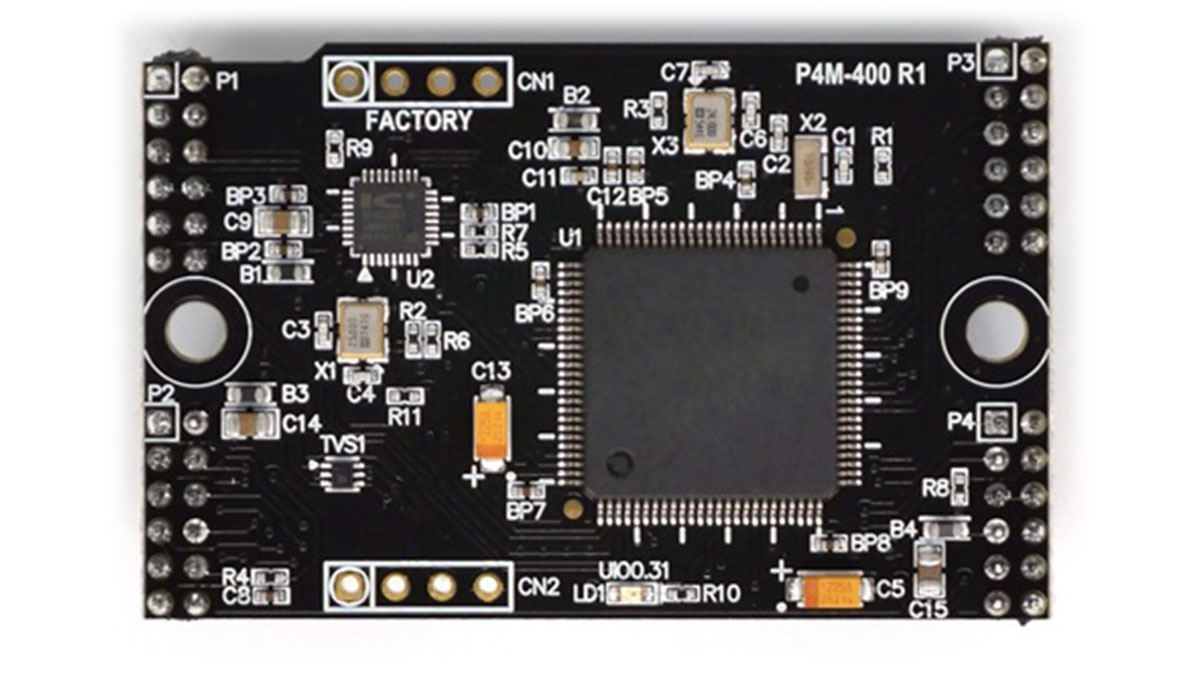
PHPoC, an acronym of PHP on Chip, inherits it’s core functions from PHP. Especially, PHPoC adds new functions, which are used to interact with hardware peripherals such as I/O, UART, I2C, SPI, ADC, TIMER/COUNTER, RTC and so on. Aside from building IoT applications with PHPoC, you can still develop dynamic Web pages too. The Sollae Systems’ P4M-400 is an example of a PHPoC module which was recently released to facilitate the use of PHPoC.
The module comes with a PHPoC interpreter and uses PHPoC language for programming. It works effectively with 10/100M Ethernet as well as IEEE 802.11b or 802.11g Wireless LAN connectivity and it also comes with different interfaces such as ADC, UART, SPI, I2C, hardware timer, and many more, which can be used to connect with sensors.
Read more: P4M-400: BUILD POWERFUL IOT APPLICATIONS WITH PHP USING PHPOC
- What is PHPoC?
PHPoC stands for PHP on Chip and is a programming language based on PHP designed for building Internet of Things applications. - How does PHPoC differ from standard PHP?
While standard PHP is limited to the web, PHPoC expands it to a general-purpose language that interacts directly with hardware peripherals. - Which hardware interfaces does PHPoC support?
It supports I/O, UART, I2C, SPI, ADC, TIMER/COUNTER, and RTC for interacting with hardware peripherals. - Can PHPoC still be used for web development?
Yes, aside from building IoT applications, you can still develop dynamic Web pages using PHPoC. - What is an example of a PHPoC module?
The Sollae Systems' P4M-400 is an example of a PHPoC module released to facilitate the use of PHPoC. - Does the P4M-400 support wireless connectivity?
Yes, it works effectively with IEEE 802.11b or 802.11g Wireless LAN connectivity. - What type of Ethernet connection does the P4M-400 support?
The module works effectively with 10/100M Ethernet. - What is the primary function of the new functions added by PHPoC?
The new functions are used to interact with hardware peripherals such as I/O, UART, I2C, and SPI.
