Electronics News Updates

Low Power ESP8266 – Sleeping at 78 micro Amps

Low Power ESP8266 – Sleeping at 78 micro Amps

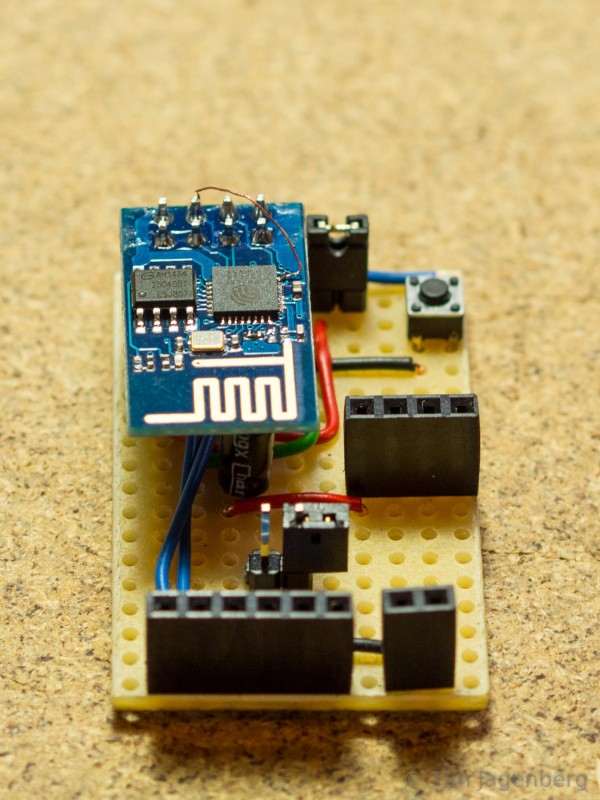
I recently bumped into NodeMCU firmware for the ESP8266. It’s an Lua interpreter, making tinkering with IoT ideas really simple. Just flash the firmware onto the ESP8266 and connect via serial console. You can start prototyping right away using the interactive Lua interpreter. You can easily persist your ideas on a simple flash file system.

Low Power ESP8266 – Sleeping at 78 micro Amps Continue Reading

Print On Polymer Multiplies Solar Output

Print-On Polymer Multiplies Solar Output

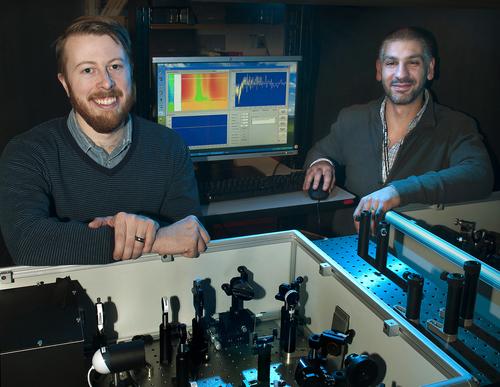
PORTLAND, Ore. — Scientists have demonstrated a doubling of the number of electrons produced by carbon-based photovoltaic polymer potentially doubling the efficiency of any solar cell. The process called “singlet fission” produces “identical twin” electrons from a single photon, instead of the normal one, dramatically boosting the theoretical maximum output of solar cells. Instead of

Print-On Polymer Multiplies Solar Output Continue Reading

Data logging with Arduino

Data-logging made simple with Arduino

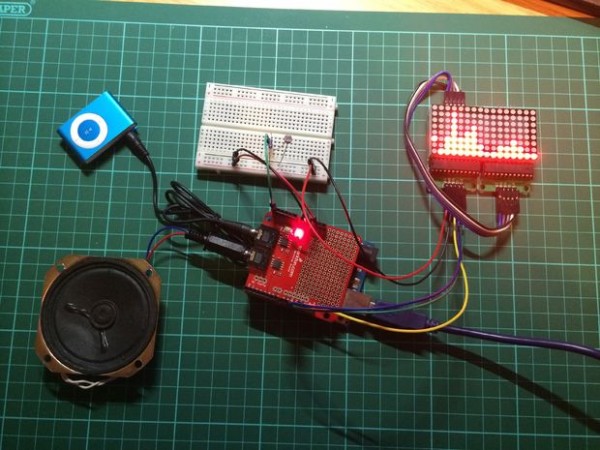
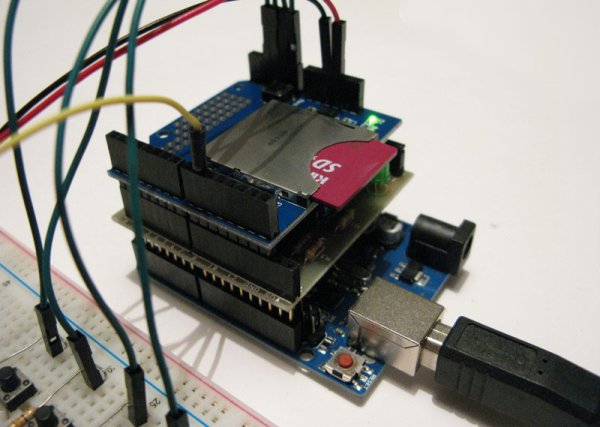
One of the best capabilities provided by Arduino regards its very high modularity, which helps users to quickly translate ideas into physical artifact, as practically demonstrated by Mauro, which shows on his blog how to build a simple data-logger by properly combining different shields. By using few additional components (mainly resistors and buttons) a fully-functional

Data-logging made simple with Arduino Continue Reading

Silicon Germanium Chip Sets New Speed Record

Silicon-Germanium Chip Sets New Speed Record

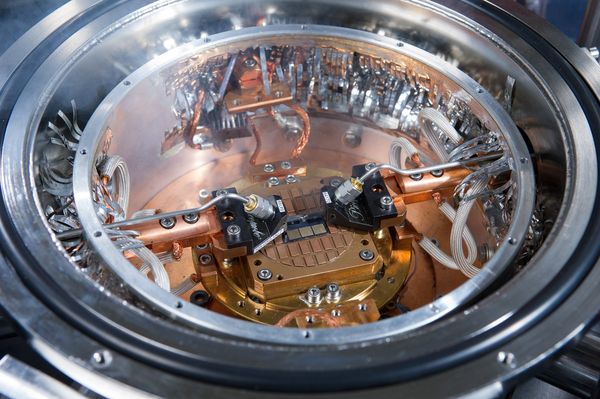
A research collaboration consisting of IHP-Innovations for High Performance Microelectronics in Germany and the Georgia Institute of Technology has demonstrated the world’s fastest silicon-based device to date. The investigators operated a silicon-germanium (SiGe) transistor at 798 gigahertz (GHz) fMAX, exceeding the previous speed record for silicon-germanium chips by about 200 GHz. Although these operating speeds

Silicon-Germanium Chip Sets New Speed Record Continue Reading

Flexible graphene based LED clears the way for flexible displays

Flexible graphene-based LED clears the way for flexible displays

Researchers from the University of Manchester and University of Sheffield have developed a new prototype semi-transparent, graphene-based LED device that could form the basis of flexible screens for use in the next-generation of mobile phones, tablets and televisions. The incredibly thin display was created using sandwiched “heterostructures”, is only 10-40 atoms thick and emits a

Flexible graphene-based LED clears the way for flexible displays Continue Reading

Scroll to Top