
Summary of INTRODUCTION TO LORA – SEND DATA BETWEEN TWO ARDUINO USING LORA
This article highlights LoRa as a critical IoT communication protocol, acquired by Semtech from Cycleo in 2012. It emphasizes LoRa's ultra-low power and long-range capabilities (up to 80km line-of-sight), making it ideal for remote battery-powered devices. The technology supports both peer-to-peer communication and Low Power Wide Area Networks (LPWAN) via the LoRaWAN standard managed by the LoRa Alliance. Key features include end-to-end security, location services, and global interoperability, distinguishing it from protocols like WiFi or Zigbee that struggle with range-power tradeoffs.
Parts used in the LoRa Project:
- LoRa radios
- Semtech hardware
- Cycleo patented wireless technology
- LoRaWAN standard
- The Things Network platform
- Arduino boards
Selecting the right communication protocol is an important part of any IoT project as not being able to communicate with the server/device cloud quickly takes away the “I” in IoT and could lead to the ultimate failure of the project. Several communication protocols exist, from WiFi and Zigbee to 2G, LTE, and even satellite communications, but each of them is usually plagued by one limitation or the other which makes them unsuitable for certain IoT use cases, with the major culprits usually being a tradeoff between range, power, and bandwidth. Semtech, however, demonstrating an understanding the future of IoT, saw a potential game-changer when they acquired France based Cycleo in 2012. Cycleo had developed a patented wireless communication technology called LoRa, which combined ultra-low power consumption with an effective long-range. Semtech leveraged on the power of the community via a consortium and transformed the technology into one of the key drivers of the current wave of digital transformation being instituted by IoT.
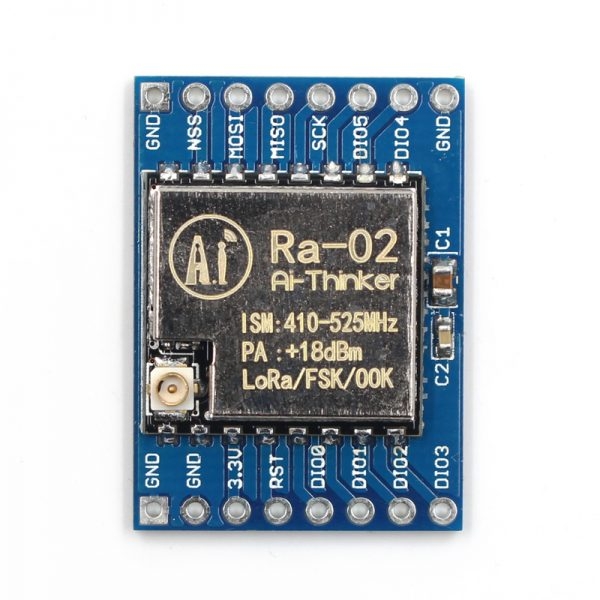
Using LoRa technology, devices can typically communicate over a range of 13- 20Km with the ability to go as far as 80KM in certain Line-of-sight setups, and as far as several 100s of KM from outer space as demonstrated by FOSSAT and Lacuna. This range achieved at a very low power which makes LoRa more suitable than other communication protocols, for remote, battery-powered IoT devices that are expected to run for months (or years) on a single battery charge.
LoRa can be deployed in two major ways:
- As a Peer to Peer Communication protocol
- As a Low Power Wide Area Network
Peer to Peer communication allows two devices with LoRa radios to talk to each other in a manner similar to how two Bluetooth devices communicate, with the major difference being the fact that the range increases massively and less power is consumed.
For deployment as a wide area network, LoRa works hand in hand with Protocols like LoRaWAN which its usually confused with. LoRaWAN is a high capacity, Long Range, open, Low Power Wide Area Network (LPWAN) standard, based on LoRa technology and designed for LoRa Powered IoT Solutions by the LoRa Alliance. The standard takes full advantage of all the features of the LoRa technology to deliver services including reliable message delivery, end to end security, location and multicast capabilities to users while ensuring the interoperability of the various LoRaWAN networks world-wide. This is the standard on which platforms like the things network are built.
Read more: INTRODUCTION TO LORA – SEND DATA BETWEEN TWO ARDUINO USING LORA
- What is the main advantage of LoRa over other IoT protocols?
LoRa combines ultra-low power consumption with effective long-range communication. - How far can LoRa devices communicate?
Devices typically communicate over 13 to 20 kilometers, reaching up to 80 kilometers in line-of-sight setups. - Can LoRa be deployed for peer-to-peer communication?
Yes, two devices with LoRa radios can talk directly to each other similar to Bluetooth but with much greater range. - What is the relationship between LoRa and LoRaWAN?
LoRa is the physical technology, while LoRaWAN is the open network standard built on top of it. - Who manages the LoRaWAN standard?
The LoRa Alliance designed and manages the LoRaWAN standard. - Does LoRa support end-to-end security?
Yes, the LoRaWAN standard ensures reliable message delivery and end-to-end security. - What happens if I need to transmit data from outer space?
LoRa has been demonstrated to reach several hundreds of kilometers from outer space.
