
Summary of Electronic Spinet – Musical instrument using Arduino
This project details the creation of a touchless Electronic Spinet using an Arduino UNO. By replacing traditional keys with HC-SR04 ultrasonic sensors, the device detects finger proximity to generate musical tones. The system calculates distance based on sound wave reflection time and triggers specific piano frequencies from a speaker as the user waves their hand in front of the sensor at varying intervals.
Parts used in the Electronic Spinet:
- Arduino UNO
- HC-SR04 Ultrasonic sensors
- 8 ohm Speaker
Spinet it is a vintage musical instrument which has similar looks of a keyboard. It always get better when Technology touches the vintage stuffs. So we decided to build a simple Electronic Spinet using Arduino without using any keys. This project use of ultrasonic sensor which replace the keys. Let’s look into making of this project.
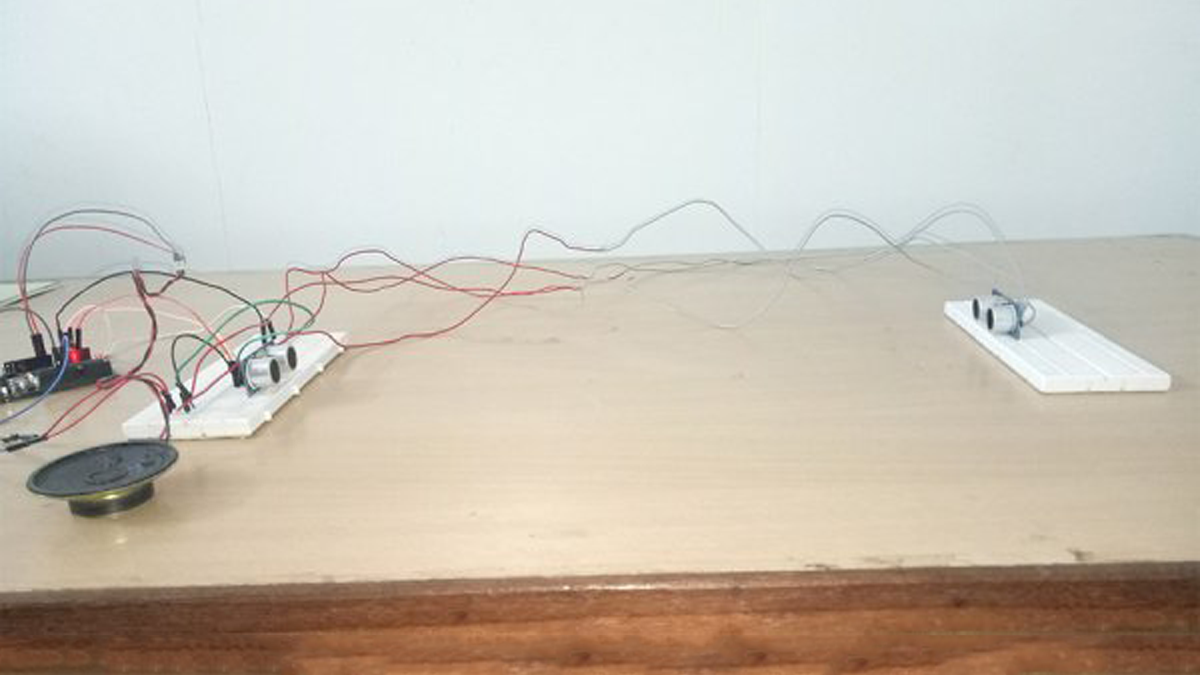
HARDWARE COMPONENTS:
- Arduino UNO
- HC-SR04 Ultrasonic sensors.
- 8 ohm Speaker.
SCHEMATIC DESIGN OF ELECTRONIC SPINET:
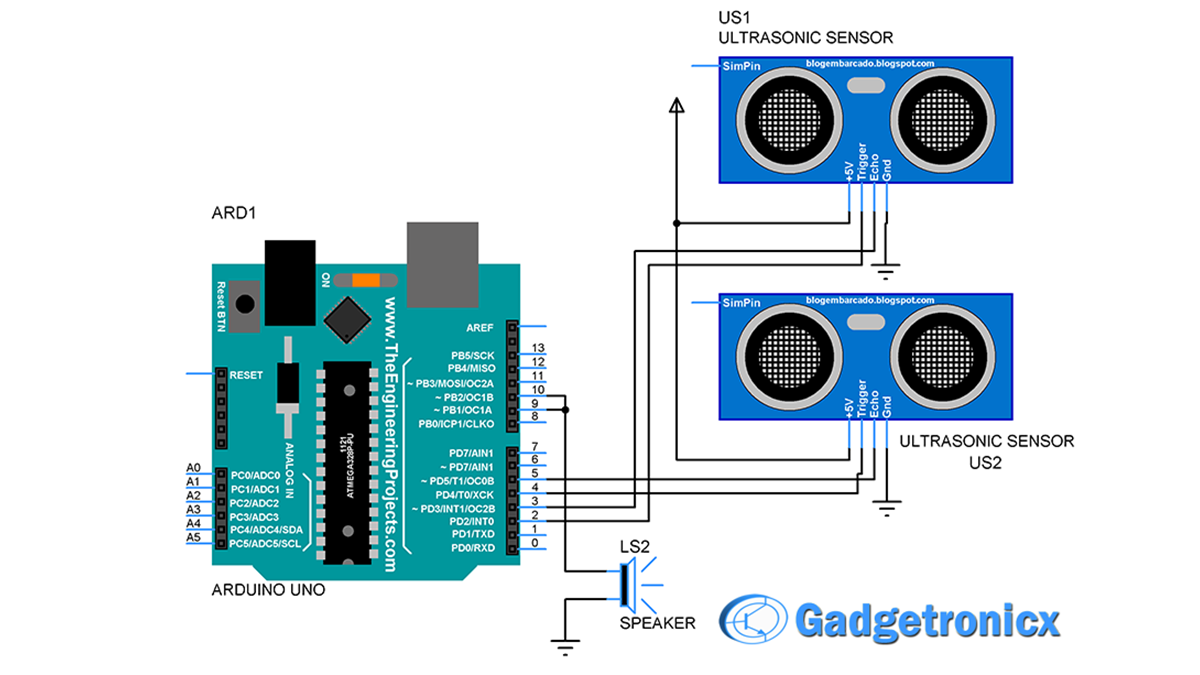
ULTRASONIC SENSORS:
It contains two major parts named as trig and echo. The trig act as transmitter which sends the ultra sound waves. After a small time interval the echo is activated which act as a receiver and accepts the ultra sound which gets reflected from the obstacles. Using the time interval of transmitted and echoed Ultrasonic waves distance between the object is calculated. Later it was fed into Arduino digital pins.
SETTING UP THE PROJECT:
- Fix the sensor to the table so that it will not move from its position, i advise to use any adhesive.
- Then place each sensors at a optimum distance say 50cms to 75cms
- Keep the wires aside so that it will not get stuck to your fingers while usage.
WORKING OF E-SPINET:
In the code, we have used different frequencies of the piano that is frequencies of the existing physical piano. The complete working of the spinet is based on the distance parameter. If there is an obstacle in front of the ultrasonic sensor, sound will be produced in the speaker. Here obstacle is nothing but our finger which we are using for producing the sound.
We have designed the code in such a way that for every 3cms the sound should be changed so that music can be played when we are waving our fingers between the sensors. For example, if we place the finger at the distance of 3cms from the ultrasonic sensor, tone of particular frequency will be produced. Similarly, if we place finger at a distance of 6cms from the ultrasonic sensor, different frequency will be produced. Using this Electronic spinet, we can produce up to 24 sounds which can be expandable up to the users wish.
Read More: Electronic Spinet – Musical instrument using Arduino
-
What replaces the keys in this electronic spinet?
The keys are replaced by HC-SR04 ultrasonic sensors. -
How does the ultrasonic sensor work in this project?
The trig part transmits ultrasound waves, and the echo part receives reflected waves to calculate distance. -
Can I build this spinet without using physical keys?
Yes, the project is designed to be built without any keys using ultrasonic sensors. -
How many sounds can this electronic spinet produce?
The device can produce up to 24 sounds which can be expanded based on user wishes. -
Does the sound change based on finger distance?
Yes, the tone changes for every 3cm distance to allow music production while waving fingers. -
What is the recommended distance between the sensors?
The sensors should be placed at an optimum distance of 50cms to 75cms. -
How is the sensor kept stable during usage?
The sensor should be fixed to the table using adhesive so it does not move. -
What component produces the actual audio output?
An 8 ohm speaker is used to produce the sound when an obstacle is detected.
