
Summary of ARDUINO NANO POWERS REVERSE POLISH NOTATION CALCULATOR
This article describes Simon Boak's custom-built SB116 calculator, designed to replace a vintage TI Programmer for 6502 assembly work. It features Reverse Polish Notation (RPN), supports binary, octal, decimal, and hex operations, and includes logical functions like AND, OR, XOR, and bitshifts. The device is housed in a hand-built metal case with a custom PCB keyboard and a tiny OLED display, powered by an Arduino Nano.
Parts used in the SB116 Calculator:
- Arduino Nano
- Hand-built metal case
- Custom PCB for the keyboard
- Tiny OLED display
There’s something about Reverse Polish Notation (RPN) and the calculators that use it. It calls to mind a time when a calculator was a serious tool, and not just a throwaway toy. Created in the legacy of such calculators by HP and Texas Instruments, [Simon Boak] shows off his SB116, sporting an Arduino Nano under the hood. It’s a fully custom design, with a hand-built metal case, a custom PCB for the keyboard, and a tiny OLED display for maximum retro green goodness.
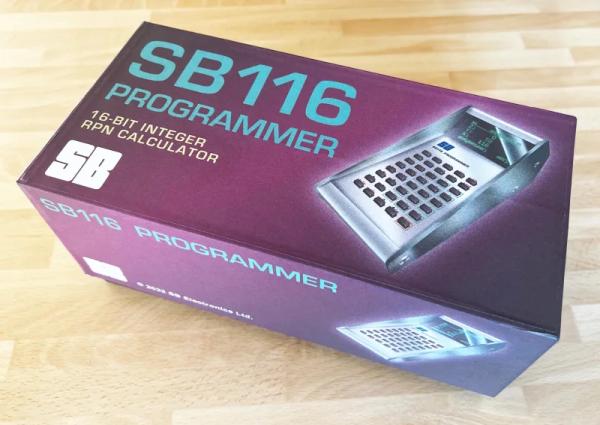
The impetus for this build was to replace a particular calculator, a well-used TI Programmer, that’s useful for working with 6502 assembly. The SB116 supports binary, octal, decimal, and hex; and boasts some downright useful functions — AND, NOT, OR, XOR, and bitshifts. The source code is available, but you’re on your own for the case and keyboard. And for maximized retro faux-nostalgia, [Simon] designed a box that would have looked right at home on an 80s store shelf.
Stick around for more retro-modern takes on calculators, or tales of repairing a genuine vintage model.
Source: ARDUINO NANO POWERS REVERSE POLISH NOTATION CALCULATOR
- What is the main purpose of the SB116 build?
To replace a well-used TI Programmer useful for working with 6502 assembly. - Does the SB116 support multiple number bases?
Yes, it supports binary, octal, decimal, and hex. - What logic functions does the calculator boast?
It boasts AND, NOT, OR, XOR, and bitshifts. - Can users obtain the source code for the project?
Yes, the source code is available to users. - Who is responsible for designing the case and keyboard?
The user is on their own for the case and keyboard design as they are not included in the source code. - What type of display does the SB116 use?
It uses a tiny OLED display for maximum retro green goodness. - Is the calculator design fully custom?
Yes, it is described as a fully custom design. - What historical era does the box design emulate?
The box was designed to look like it would have belonged on an 80s store shelf.
