
Summary of ANIMATRONIC SATURN V LAUNCH TOWER SENDS LEGO MODEL TO THE MOON
Mark Howe built an animatronic launch pad for his one-meter Lego Saturn V rocket, featuring servo-controlled arms, a moving crew catwalk, and authentic countdown audio via Arduino. The model rises on linear actuators driven by steppers, with flame effects created using WS2812 LEDs inside clear tubes. Extensive 3D-printed parts were essential to achieve the detailed look and functional movement.
Parts used in the Animatronic Saturn V Launch Pad:
- Lego Saturn V rocket model
- Servo motors
- Arduino microcontroller
- Stepper motors
- Linear actuators
- WS2812 LED strings
- Clear plastic tubes
- 3D-printed parts
When it comes to their more adult-oriented models, Lego really knocked it out of the park with their Saturn V rocket model. Within the constraints of the universe of Lego parts, the one-meter-tall model is incredibly detailed, and thousands of space fans eagerly snapped up the kit when it came out.
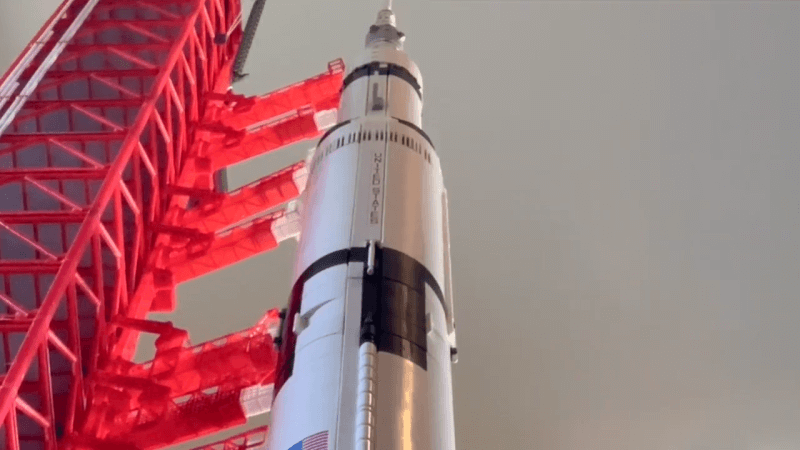
But a rocket without a launchpad is just a little sad, which is why [Mark Howe] came up with this animatronic Saturn V launch pad and gantry for his rocket model. The level of detail in the launchpad complements the features of the Saturn V model perfectly, and highlights just what it took to service the crew and the rocket once it was rolled out to the pad. As you can imagine, extensive use of 3D-printed parts was the key to getting the look just right, and to making parts that actually move.
When it’s time for a launch, the sway control arm and hammerhead crane swing out of the way under servo control as the Arduino embedded in the base plays authentic countdown audio. The crew catwalk swings away, the engines light, and the service arms swing back. Then for the pièce de résistance, the Saturn V begins rising slowly from the pad on five columns of flame. [Mark] uses a trio of steppers driving linear actuators to lift the model; the flame effect is cleverly provided by strings of WS2812s inside five clear plastic tubes. We have to say it took some guts to put the precious 1,969-piece model on a lift like that, but the effect was well worth the risk.
This project has a great look and is obviously a labor of love, and a great homage to the Apollo program’s many successes. We’ve got a ton of other Apollo-era hacks on our pages, including a replica DSKY, a rejuvenated AGC, and a look behind the big boards of mission control.
Source: ANIMATRONIC SATURN V LAUNCH TOWER SENDS LEGO MODEL TO THE MOON
- How does the launchpad move the crane and arms?
The sway control arm and hammerhead crane swing out of the way under servo control. - What provides the flame effect during launch?
Strings of WS2812s inside five clear plastic tubes create the flame effect. - How is the rocket lifted from the pad?
A trio of steppers drives linear actuators to lift the model slowly. - What plays the authentic countdown audio?
An Arduino embedded in the base plays the countdown audio. - Why were 3D-printed parts essential for this project?
Extensive use of 3D-printed parts was key to getting the look right and making parts that actually move. - Does the crew catwalk move during the sequence?
Yes, the crew catwalk swings away when it is time for a launch. - What happens to the service arms after the engines light?
The service arms swing back once the engines light. - Is the Lego Saturn V model safe on the lift mechanism?
The builder took guts to put the precious 1,969-piece model on a lift, but the effect was well worth the risk.
