
Summary of Simulating the Water Cycle in a Desert Using an Arduino-Controlled Pump
This project builds an Arduino-based automated irrigation system for succulents in desert-like conditions, using timed relay control of a pump to deliver regulated water amounts at set intervals. It emphasizes adjustable watering duration and frequency, proper component matching (pump power and battery), and potential upgrades like temperature and humidity sensing; demonstrated with visual/video proof and useful for travelers, workplaces, greenhouses, and remote sites.
Parts used in the Simulating the Water Cycle in a Desert Project:
- Arduino microcontroller
- Relay switch
- Water pump (example spec 5V, 1A)
- Battery or suitable power source matched to pump
- Tubing for water delivery
- Mechanical fittings for leak-free connections
- Temperature and humidity sensor (optional upgrade)
- Cables and connectors
- Mounting hardware or enclosure
Simulating the Water Cycle in a Desert
Particularly under desert-like conditions, this project focuses on creating an automated irrigation system fitted for succulent plants. Maintaining a consistent watering schedule devoid of human intervention is the fundamental purpose, therefore guaranteeing the plant gets water in regulated amounts at set intervals. Central to the system is an Arduino microcontroller that functions as the decision-making center. It sends a timed electrical signal via a relay switch to activate an Arduino-controlled pump intermittently.
Functionality and Configuration
The system offers flexibility by allowing users to adjust both the amount of water and the frequency of watering. Users control this through delay commands that set the pump’s activation time and the interval between cycles. In dry environments, succulents require minimal but consistent hydration, making this level of control essential.
Cases of Application and Realistic Execution
The source of impetus for this project has, in fact, quite common real-life problems: differential treatment of plants during long absences. The inventor personally found a demand for the automation of this process after encountering difficulty in watering plants while on vacation. It serves as a means of self-care when a person cannot rely on others to care for their plants. This makes it highly useful for busy lives and frequent travelers.
Long-term Benefit.
Beyond personal convenience, this solution suits workplaces, greenhouses, and remote research stations where human presence is limited. Automation ensures reliable and consistent hydration cycles without the need for constant supervision.
Hardware Compatibility Consideration.
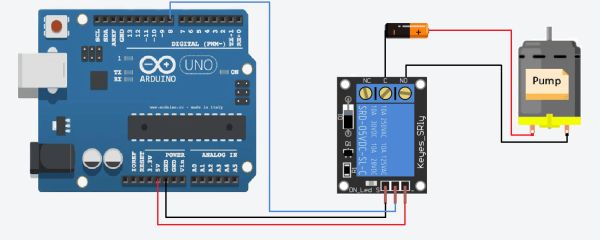
A technical schematic would be functional, but could also add an extra level of usability. The most important aspect is to carefully select components—for example, matching the pump’s power specifications (5V, 1A) with a suitable battery source. This careful electrical planning ensures the system operates safely and efficiently.
Completed System and Demonstration
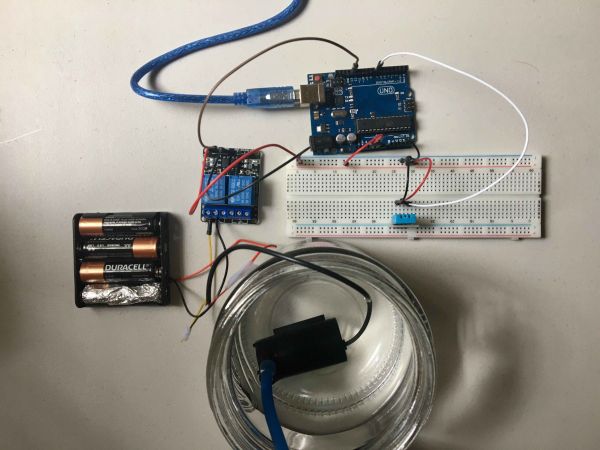
The project is officially complete upon the successful assembly and commissioning of the automated irrigation system. A visual and video demonstration adds value by verifying that the design works as intended. It showcases the Arduino-controlled pump in action, turning theory—timing, control, and water delivery—into a working prototype.
Skills and Lessons Learned
Technical Proficiency Gained
The project provided invaluable practical experience with several fundamental automation and embedded electronics components. To guarantee dependable and leak-free water flow—a crucial component of any irrigation system—mechanical planning was necessary when assembling the pump and tubing system.
Electrical Integration
Using a relay to handle current loads higher than what the Arduino can safely handle was another important lesson learned. This illustrates a grasp of the fundamental idea in automation and electronics: the interface between low-power logic controls and higher-power hardware components.
Observation of the Environment
Lastly, the addition of a temperature and humidity sensor suggests that the project’s scope has grown. Although previous sections didn’t cover the sensor in detail, its inclusion suggests a possible upgrade path where the system could eventually make watering decisions based on environmental conditions, adding an intelligent layer to the setup.
Read more: Simulating the Water Cycle in a Desert Using an Arduino-Controlled Pump
- What is the main purpose of the project?
The main purpose is to maintain a consistent automated watering schedule for succulent plants without human intervention. - How does the system control watering frequency and amount?
Users adjust delay commands on the Arduino to set the pump activation time and the interval between cycles. - Can the system operate while the user is on vacation?
Yes, it is designed to provide reliable watering during long absences such as vacations. - Why is a relay used in the design?
The relay handles current loads higher than the Arduino can safely handle, allowing safe control of the pump. - What power considerations are important for the pump?
Match the pump’s power specifications (for example 5V, 1A) with a suitable battery or power source to ensure safe and efficient operation. - Is a temperature and humidity sensor part of the project?
The project includes a temperature and humidity sensor as a suggested upgrade for making watering decisions based on environmental conditions. - Where is this automated system useful besides homes?
It suits workplaces, greenhouses, and remote research stations where human presence is limited. - What demonstrates the system is complete and functional?
Successful assembly, commissioning, and a visual/video demonstration showing the Arduino-controlled pump in action confirm the system works as intended.
