
Summary of antiAFK – Sending random keyboard commands
The antiAFK project is a modified Arduino Leonardo designed to prevent online game logouts by sending randomized keyboard commands. It randomizes key selection, press duration, and timing intervals within configurable limits via CDC serial port, ensuring users remain active during high-population events without triggering inactivity kicks.
Parts used in the antiAFK:
- Arduino Leonardo
- CDC serial port
Hey everyone, back with another project. The antiAFK is something I originally started working on almost a year ago, but its only been since 2014 started that I’ve been making real progress on all my projects.
Plus, I just finished my MSc the other day so now I’ve got all the time to work on my OSHW!
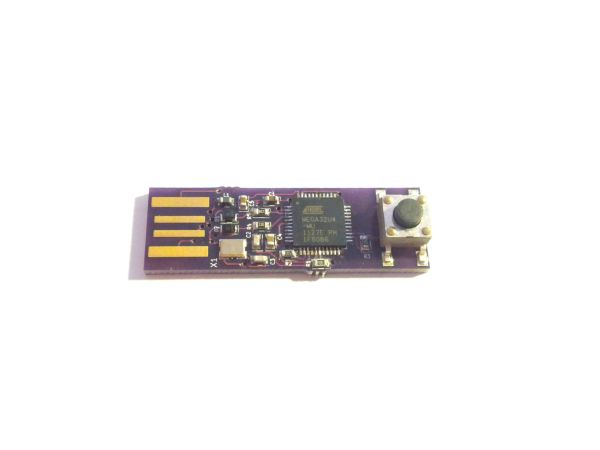
The antiAFK is essentially a stripped down Arduino Leonardo with the intention of sending occasional keyboard commands to the attached PC with the intention of preventing the user from being logged out of online games due to inactivity. This can help on high population servers where being kicked back to the login queue can mean that you miss a group event. It randomizes the time between presses (with a min and max), the key from a set of valid keys, and the duration of the key press event. The period, variance, and valid key set are configurable by the user through the CDC serial port.
For more detail: antiAFK – Sending random keyboard commands
-
What is the primary function of the antiAFK device?
It sends occasional keyboard commands to an attached PC to prevent the user from being logged out of online games due to inactivity. -
How does the device handle key presses?
It randomizes the time between presses, the specific key from a set of valid keys, and the duration of each key press event. -
Can users configure the device settings?
Yes, the period, variance, and valid key set are configurable by the user through the CDC serial port. -
Why was this project started?
It helps on high population servers where being kicked back to the login queue can cause users to miss group events. -
What hardware serves as the base for the antiAFK?
The project uses a stripped down Arduino Leonardo. -
When did real progress begin on this project?
Real progress started in 2014 after the author finished their MSc.
