
Summary of A 6-axis Inertial Motion Sensing Device
STMicroelectronics introduced the LSM6DB0, a compact 3x3 mm iNEMO family sensor integrating a 3-axis accelerometer, 3-axis gyroscope, and an ARM Cortex processor. Designed for baseband chipsets lacking co-processors, it synchronously combines true 6-axis sensing to minimize system latency while supporting external I2C sensors and Android Kit-Kat 4.4.
Parts used in the LSM6DB0 Project:
- 3-axis accelerometer
- 3-axis gyroscope
- Low energy ARM-based Cortex processor
- I2C interface
STMicroelectronics have announced the LSM6DB0, the latest addition to its iNEMO family. It packs a 3-axis accelerometer, 3-axis gyro and low energy ARM-based Cortex processor in a tiny 3 x 3 mm package.
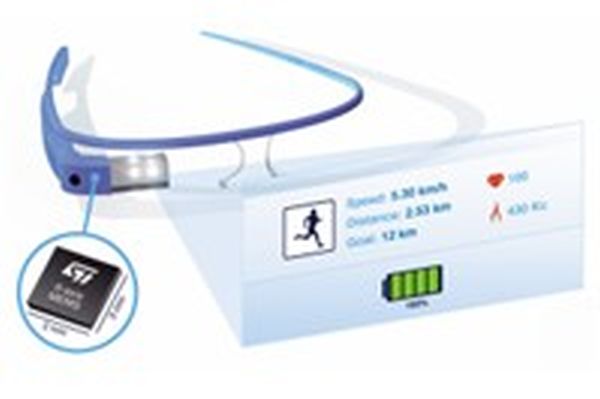
This chip is designed to interface with baseband chipsets that don’t have a sensor co-processor. Additional external sensors can also be hooked up via its I2C interface, allowing the on-board processor to take care of all sensor-related functions to help minimize application latency at a system level. The device is fully compatible with all of the latest mobile operating systems including Android Kit-Kat 4.4. The sensor’s performance is the result of true 6-axis sensing, where both the 3-axis accelerometer and 3-axis gyroscope are manufactured on the same chip. They operate synchronously at the same output data rate,combinig correlated, true six-degree-of-freedom motion and not just separate acceleration and angular-rate inputs.
For more detail: A 6-axis Inertial Motion Sensing Device
- What is the package size of the LSM6DB0?
The device comes in a tiny 3 x 3 mm package. - Can the LSM6DB0 interface with baseband chipsets without a sensor co-processor?
Yes, this chip is specifically designed to interface with such chipsets. - How does the LSM6DB0 handle external sensors?
Additional external sensors can be hooked up via its I2C interface. - Does the LSM6DB0 support Android Kit-Kat 4.4?
Yes, the device is fully compatible with Android Kit-Kat 4.4. - Are the accelerometer and gyroscope manufactured on the same chip?
Yes, both are manufactured on the same chip for true 6-axis sensing. - Do the sensors operate at different data rates?
No, they operate synchronously at the same output data rate. - What benefit does synchronous operation provide?
It combines correlated, true six-degree-of-freedom motion rather than separate inputs. - How does the on-board processor help the system?
It takes care of all sensor-related functions to minimize application latency.
