
Summary of J.FLEX, A LITHIUM-ION BATTERY THAT IS FLEXIBLE
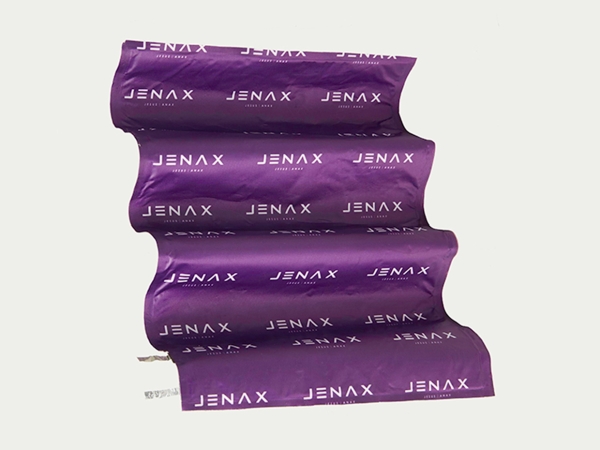
Jenax has developed J.Flex, an ultra-thin, flexible, and rechargeable lithium-ion battery capable of being bent, rolled, or twisted. Demonstrated at CES 2020, it powers wearables like sensor-lined helmets, medical patches, and power banks. Unlike bulky batteries, J.Flex measures as thin as 0.5mm and offers high cycle life with a secret polymer electrolyte composition.
Parts used in the J.Flex Battery:
- Graphite
- Lithium cobalt oxide
- Polymer electrolyte
- Cathode
- Anode
- Electrolyte
- Membrane separator
A Busan-based company has been developing J.Flex, an advanced lithium-ion battery that is ultra-thin, flexible, and rechargeable for the past few years now. The company used terms like bend, roll, twist, scrunch, fold, flex to describe the battery. EJ Shin, head of strategic planning at Jenax says:
What we’re doing at Jenax is putting batteries into locations where they couldn’t be before.” She goes on “we’re now interacting with machines on a different level from what we did before,
this was demonstrated at CES 2020 in Las Vegas.
The devices unveiled by Jenax includes a sensor-lined sports helmet developed by UK-based firm HP1 Technologies for measuring pressure and force of impact, a medical sensor patch designed in France that can be embedded in clothings, for monitoring a wearer’s heart rate, and wearable power banks in form of belts and bracelets for patients who continuously have to be hooked up to medical devices. Shin says:
You don’t want to carry a big, bulky battery on your body all the time. It’s heavy, uncomfortable, and sticks out from your clothes that’s when you need very thin, flexible batteries.
Nicholas Kotov, a professor of chemical engineering at the University of Michigan is of the opinion that such kind of batteries may one day power more than just wearables, He identifies unmanned aerial vehicles as one example. A flexible battery installed in the wings or landing gear of such a device could create more space in the body for other components.
Jenax is not the only company developing flexible batteries. Companies like Panasonic, Samsung, and STMicroelectronics are developing flexible batteries of their own. But Jenax boasts of having “a higher degree of flexibility” compared with its competitors. To create flexible batteries, companies manipulate the components of a battery cell, which includes the cathode, anode, electrolyte, and membrane separator. According to Shin, the secret to its flexibility lies in
a combination of materials, polymer electrolyte, and the know-how developed over the years.
The J.Flex is made from graphite and lithium cobalt oxide, but its exact composition and architecture remain a secret. Jenax has more than 100 patents protecting its battery technology.
J.Flex can be sized to be as thin as 0.5 millimeters, which will fit suitably for sensors, and as tiny as 20 by 20 millimeters (mm) or as large as 200 by 200 mm. It has an operating voltage between 3 and 4.25 volts. Depending on the size, conventional batteries capacity varies from 10 mAh to 5 Ah, with close to 90 percent of this capacity remaining after 1,000 charge-discharge cycles. Each charge typically takes an hour. However, J. Flex’s battery life depends on how it’s used. According to Shin, a single charge can last for a month in a sensor, but wouldn’t last that long if the battery was powering a display.
Read more: J.FLEX, A LITHIUM-ION BATTERY THAT IS FLEXIBLE
- What is J.Flex?
J.Flex is an advanced, ultra-thin, flexible, and rechargeable lithium-ion battery developed by Jenax. - How thin can J.Flex be made?
The battery can be sized to be as thin as 0.5 millimeters. - Does J.Flex retain capacity after many cycles?
Yes, close to 90 percent of its capacity remains after 1,000 charge-discharge cycles. - Can J.Flex be used in unmanned aerial vehicles?
Professor Nicholas Kotov suggests such batteries could one day power drones by fitting into wings or landing gear. - How long does a single charge typically last?
A single charge takes about an hour, but usage duration varies from a month in sensors to less time for displays. - What makes J.Flex more flexible than competitors?
The flexibility comes from a combination of materials, specifically a polymer electrolyte, and years of know-how. - Are there other companies making flexible batteries?
Yes, Panasonic, Samsung, and STMicroelectronics are also developing flexible batteries. - What voltage range does J.Flex operate within?
It has an operating voltage between 3 and 4.25 volts.
