
Summary of Wireless Power Outlets RF from Raspberry Pi
Summary: This article explains how to control multiple RF wireless power outlets from a Raspberry Pi using inexpensive 433MHz transmitter/receiver modules. It outlines wiring, cloning the rfoutlet repository, using RFSniffer to capture 6-digit on/off codes, updating toggle.php with codes, and setting codesend permissions so it runs without sudo.
Parts used in the Wireless Power Outlets RF from Raspberry Pi:
- Raspberry Pi
- 433MHz RF transmitter module
- 433MHz RF receiver module
- Jumper wires (to connect modules to GPIO pins)
- Wireless RF power outlets (433MHz compatible)
- SD card with Raspbian and network access
- git (to clone repository)
Thanks LifeHacker and HackADay for featuring my post. If anyone has questions please leave a comment below and I’ll be happy to help!
Have you ever wanted to wirelessly control power outlets from your phone? You could buy a Belkin WeMo Switch for over $40 for 1 outlet or build your own with 5 outlets for under $35 if you already own a Raspberry Pi. Hopefully this post will guide you in the right direction.
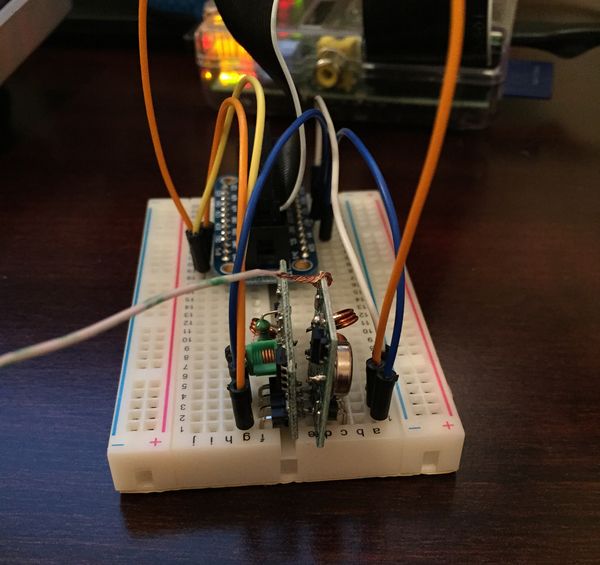
Steps:
- Connect wires to Rf transmitter and receiver chips. If you use different gpio pins the programs CodeSend and RFSniffer will not work. If you would like to use different pins check out Ninjablocks 433Utils
-
- Run: git clone https://github.com/Timl88/rfoutlet.git /var/www/rfoutlet
- Use RFSniffer to find RF codes for your devices
- Run: sudo /var/www/rfoutlet/RFSniffer
- Record all 6 digit codes for on/off for each outlet
- Update toggle.php file with your codes
- Run: sudo nano /var/www/rfoutlet/toggle.php
- Change permission of codesend program so sudo isn’t required:
- Run: sudo chown root.root /var/www/rfoutlet/codesend
- Run: sudo chmod 4755 /var/www/rfoutlet/codesend
For more detail: Wireless Power Outlets RF from Raspberry Pi
- Can I control multiple outlets with one Raspberry Pi?
Yes, the project describes controlling five outlets from one Raspberry Pi if you already own it. - How do I capture the RF codes for my outlets?
Run RFSniffer by executing sudo /var/www/rfoutlet/RFSniffer and record the 6 digit on/off codes. - Where do I put the captured RF codes?
Update the toggle.php file in /var/www/rfoutlet with the recorded codes. - Do I need to run codesend with sudo?
No, change ownership and permissions with sudo chown root.root /var/www/rfoutlet/codesend and sudo chmod 4755 /var/www/rfoutlet/codesend so sudo is not required. - What repository do I clone for the project?
Clone https://github.com/Timl88/rfoutlet.git into /var/www/rfoutlet using git clone. - Must I use specific GPIO pins for the example programs?
Yes, the CodeSend and RFSniffer programs expect specific GPIO pins; using different pins requires adapting code or using Ninjablocks 433Utils. - How do I start the project files on my Pi?
After cloning the repository, run RFSniffer to find codes, edit toggle.php with codes, and set codesend permissions as described.
