
Summary of Atmospheric Monitoring with Arduino by Patrick Di Justo, Emily Gertz E-Book
Makers can build low-cost atmospheric monitoring devices using Arduino and inexpensive sensors. The book offers concise tutorials, illustrations, and step-by-step instructions to detect harmful gases, dust particles (smoke, smog), and upper atmospheric haze, and shows how to apply the scientific method to interpret test results.
Parts used in the Atmospheric Monitoring with Arduino:
- Arduino (microcontroller)
- Gas sensors (for detecting harmful gases)
- Particulate matter sensors (for dust, smoke, smog)
- Optical sensors (for upper atmospheric haze)
- Wiring and connectors
- Power supply
- Breadboard or PCB for prototyping
- Enclosure or mounting hardware
Book Description
Makers around the globe are building low-cost devices to monitor the environment, and with this hands-on guide, so can you. Through succinct tutorials, illustrations, and clear step-by-step instructions, you’ll learn how to create gadgets for examining the quality of our atmosphere, using Arduino and several inexpensive sensors.
Detect harmful gases, dust particles such as smoke and smog, and upper atmospheric haze—substances and conditions that are often invisible to your senses. You’ll also discover how to use the scientific method to help you learn even more from your atmospheric tests.
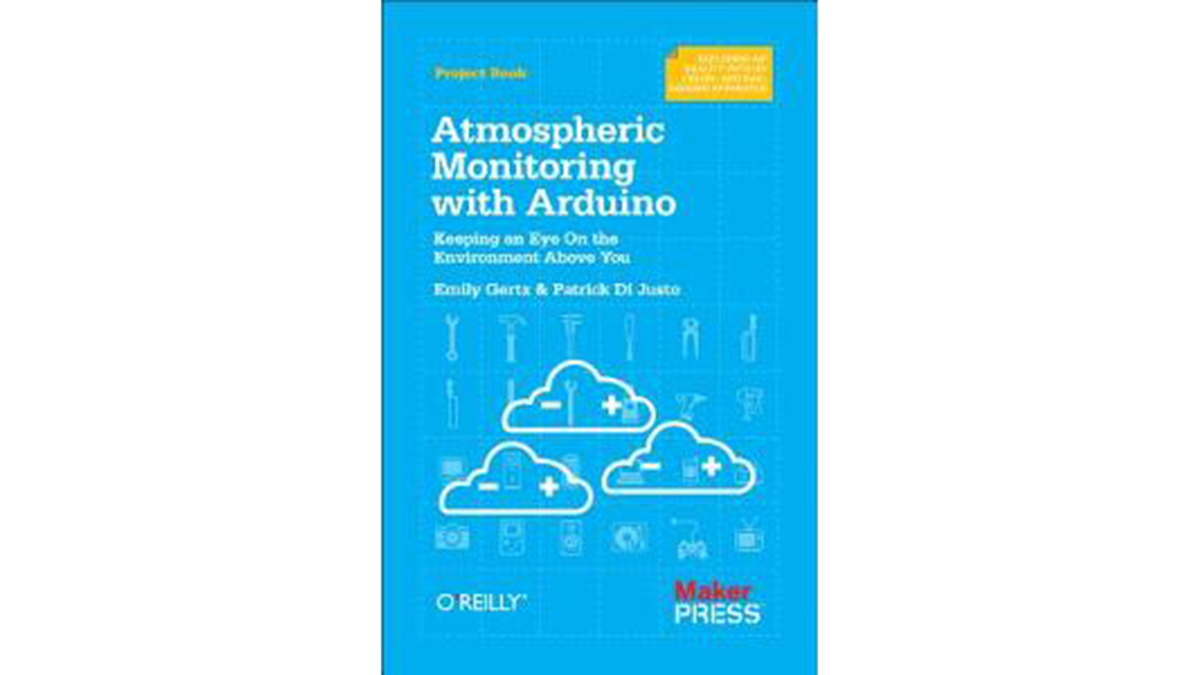
Book Details |
|
| Publisher: | O’Reilly Media |
| By: | Patrick Di Justo, Emily Gertz |
| ISBN: | 978-1-44933-814-5 |
| Year: | 2012 |
| Pages: | 90 |
| Language: | English |
| File size: | 3.9 MB |
| File format: | |
Paper Book |
|
| Buy: | Atmospheric Monitoring with Arduino by Patrick Di Justo, Emily Gertz E-Book |
Online Book |
|
| Read: | Atmospheric Monitoring with Arduino |
- What does the book teach?
How to build low-cost devices with Arduino and inexpensive sensors to monitor atmospheric conditions. - Can I detect harmful gases with the projects in the book?
Yes, the book explains detecting harmful gases using gas sensors. - Does the book cover detecting dust and smoke?
Yes, it includes methods to detect dust particles such as smoke and smog with particulate sensors. - How are the instructions presented?
Through succinct tutorials, illustrations, and clear step-by-step instructions. - Is the scientific method addressed?
Yes, the book shows how to use the scientific method to learn from atmospheric tests. - What platform do the projects use?
The projects use Arduino as the microcontroller platform. - Is this book suitable for makers worldwide?
Yes, it is aimed at makers around the globe building low-cost monitoring devices.
