
Summary of HANDMADE MEMBRANE KEYPAD, AND THE ARDUINO APPLICATION
The author demonstrates a handmade membrane keypad using thin copper foil and printed paper layers, assembled by cutting and pasting to form contacts. The prototype works despite tricky construction, and includes wiring diagrams and Arduino example code to test the keypad. Source: paulbleisch.com blog post.
Parts used in the ARDUINO MEMBRANE KEYPAD:
- Thin copper foil pieces
- Printed paper layers
- Adhesive for cutting and pasting layers
- Wires for connections
- Arduino microcontroller (for example code and testing)
- Basic soldering or connection tools
The author has done a beautiful job with handmade membrane is quite an original view is a little tricky, but it works in the prototype experiments, a thin copper foil pieces of the paper… Electronics Projects,Handmade membrane keypad, and the Arduino application “arduino projects, microcontroller projects, “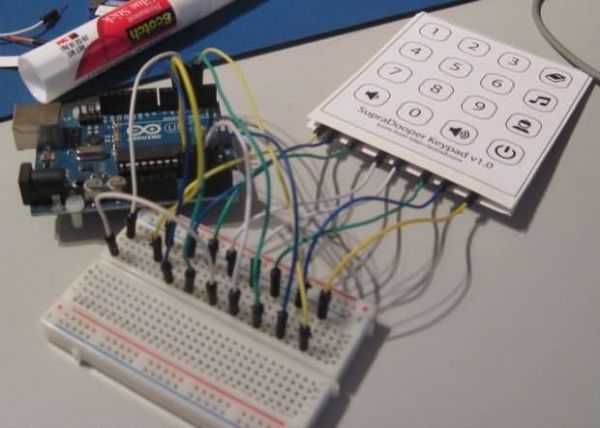
The author has done a beautiful job with handmade membrane is quite an original view is a little tricky, but it works in the prototype experiments, a thin copper foil pieces of the paper it’s printed … wiring diagram of the necessary connections being made that is being cut and pasted.. in addition, there is an Arduino example code to test the keypad membrane.
ARDUINO MEMBRANE KEYPAD
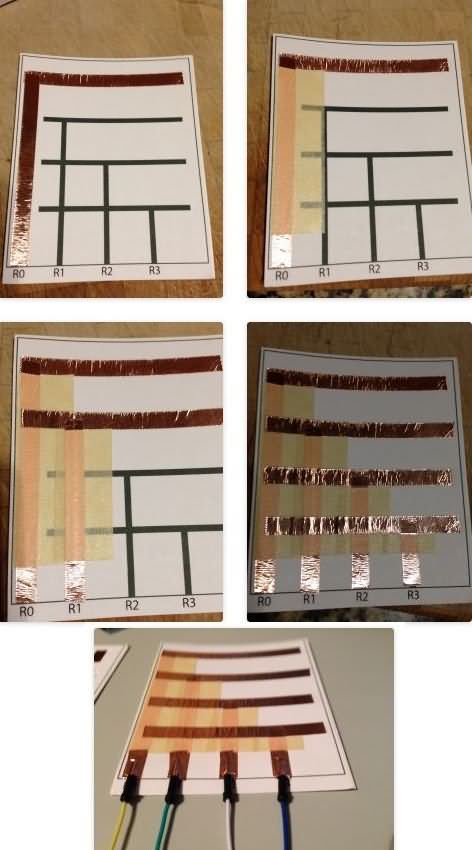
source: paulbleisch.com/blog/2015/01/19/custom-arduino-membrane-keypad/
- What materials are used to make the handmade membrane keypad?
Thin copper foil pieces and printed paper layers assembled by cutting and pasting, plus wires and adhesive. - Does the handmade membrane keypad work in prototypes?
Yes, the author reports it works in prototype experiments despite being a little tricky. - Is there wiring information included for the membrane keypad?
Yes, the article includes a wiring diagram of the necessary connections. - Is there Arduino code provided to test the keypad?
Yes, an Arduino example code is provided to test the keypad membrane. - Can the membrane be made by cutting and pasting layers?
Yes, the construction involves cutting and pasting printed paper and copper foil layers. - Is soldering required to connect the membrane to the Arduino?
The article mentions wires and connections; basic soldering or connection tools are implied for making connections.
