
Summary of Tack your Gait!
This project tracks individual gait patterns using pressure sensors connected to an Arduino MKR1000. It counts steps, calculates steps per minute, and displays GPS coordinates on a Windows Phone via Bluetooth. The system uses Velostat-based foot sensors and requires sideloading the Microsoft Virtual Shields app due to store availability issues.
Parts used in Tack your Gait:
- Velostat
- Linqstat
- SparkFun Bluetooth Modem - BlueSMiRF Silver
- Coppertape (narrow)
- Cork 2mm
- Foam rubber 2mm
- Felt plate
- Soldering iron
- Arduino MKR1000
Everyone has a certain Gait-Rythtm! ..influenced by architecture and our surrounding. This Project should Tack your Gait and find yours.
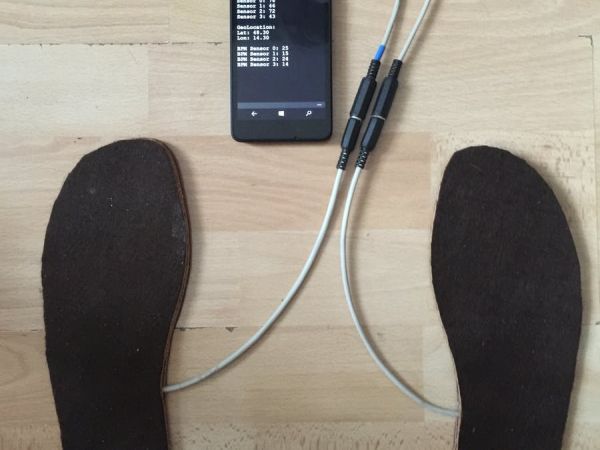
Things used in this project
Hardware components |
||||||
|
× | 1 | ||||
 |
|
× | 1 | |||
|
× | 1 | ||||
|
× | 2 | ||||
|
× | 1 | ||||
|
× | 1 | ||||
Software apps and online services |
||||||
|
||||||
Hand tools and fabrication machines |
||||||
 |
|
|||||
Story
The Basic idea is to track your Gait because it is very Special and individual. A friend of mine tried this earlier with different sensors but they always brake. The big Problem with programming was that the library for virtual shields was not compiling without error on MKR1000. So use the latest Version! The second problem was that the app from Microsoft, which you can download from the store is not working! So you need a win10 computer with visual community 2015 to sideload the app on your phone! Don’t overstress the Bluetooth-Connection -> no realtime data visualizing because the Bluetooth module hangs up!
The first Thing was to build the sensors:
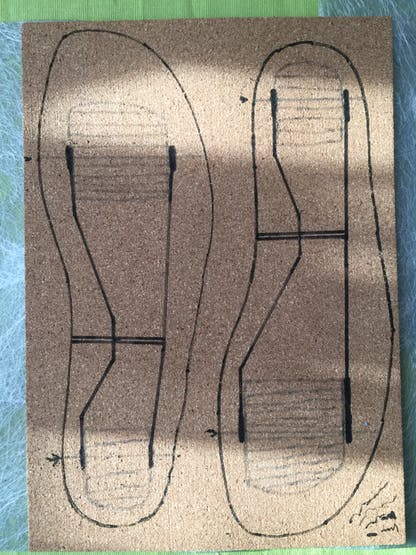
the basic layout on cork 2mm
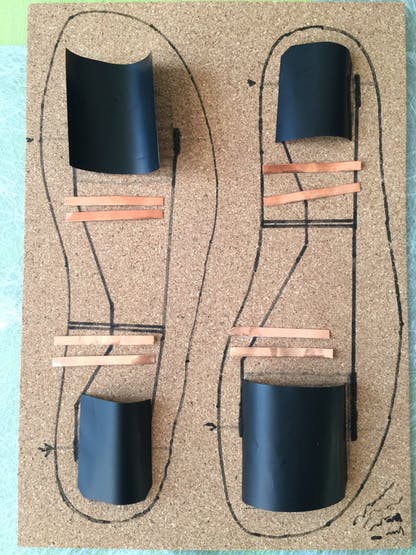 the velostat-foil and copper-stripper
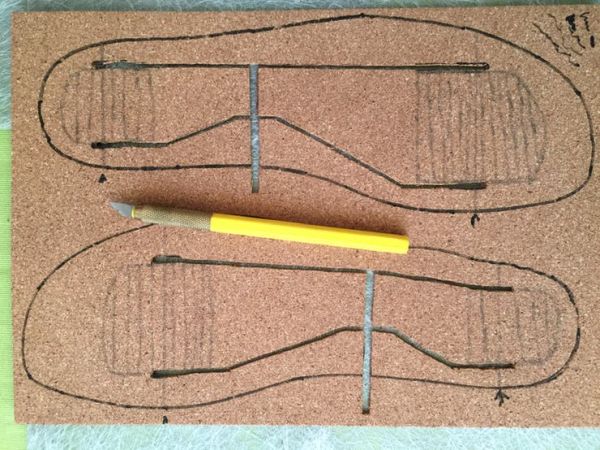 cutting out for cabeling
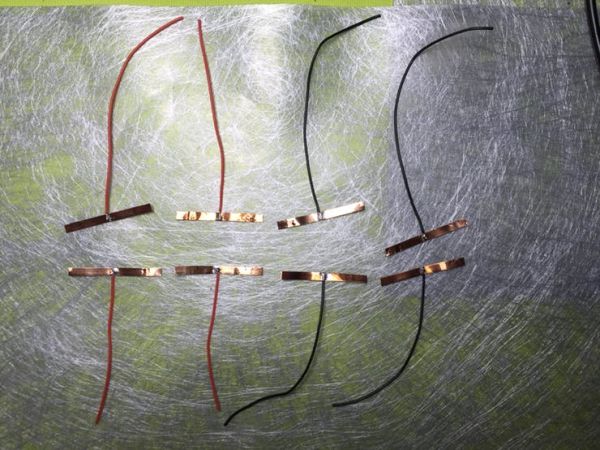 copper stripes with cabels
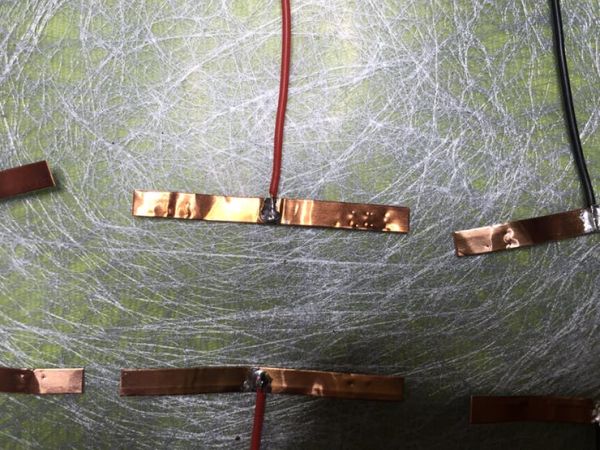 detail of soldering
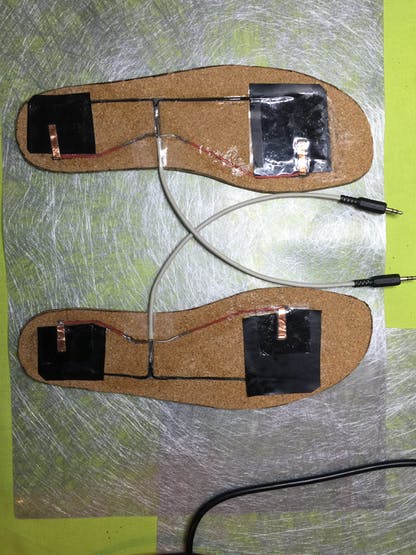 build up sensors for left and right! cabeling sealed with silicon!
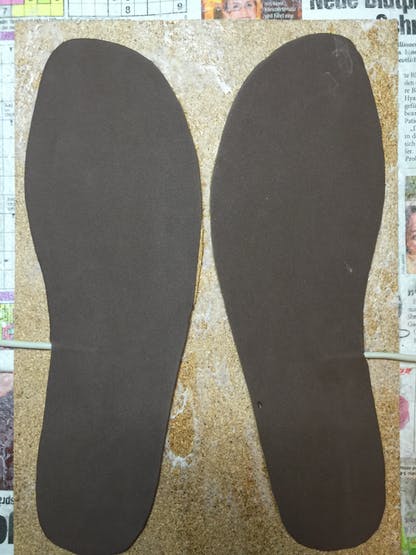 gluing on 2nd cork 2mm
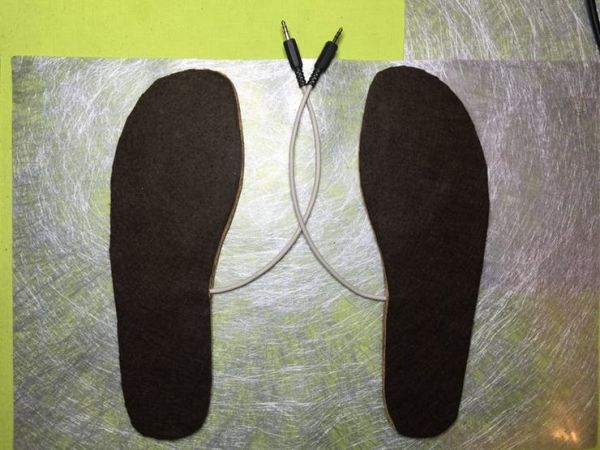 finished up side with fizmatte
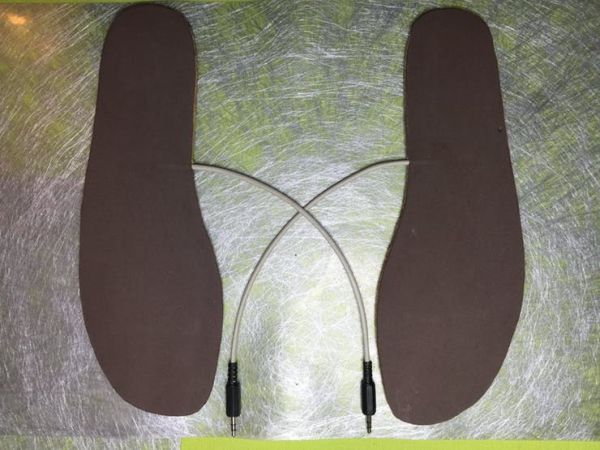 finished down side with moosgummi
The second Thing was cabeling to arduino:
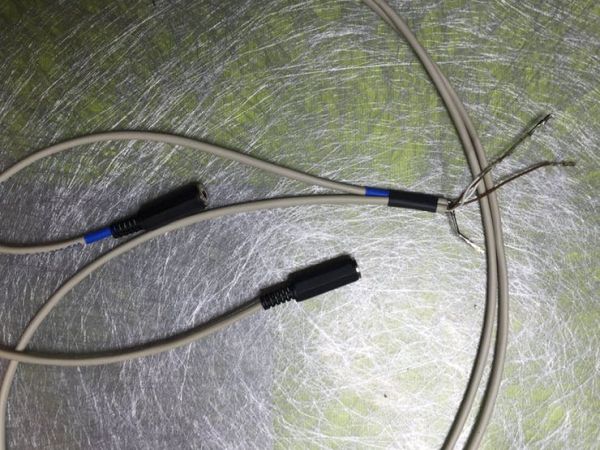
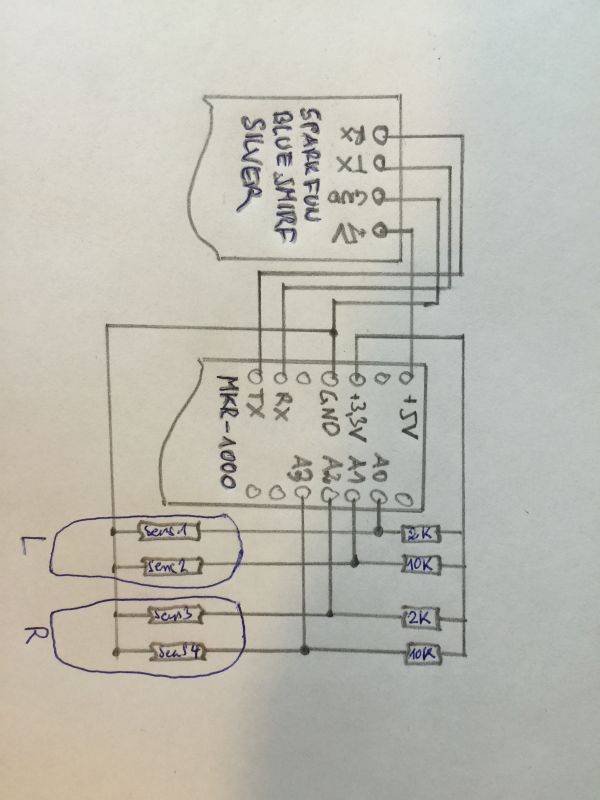
Making a Little circuit-board for connecting sensors and Bluetooth-Module to sensor:
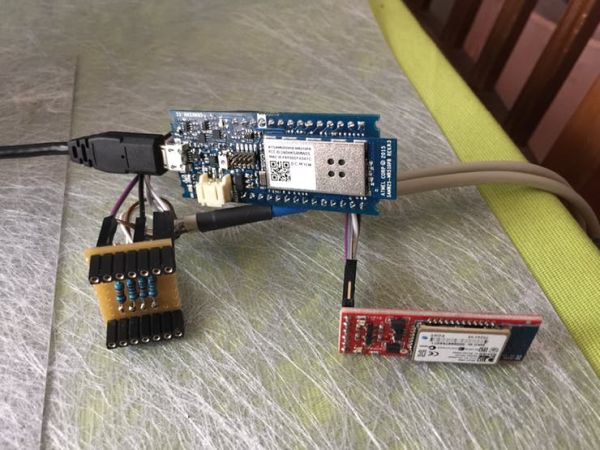 Add-On-Board, Arduino and Bluetooth-Module
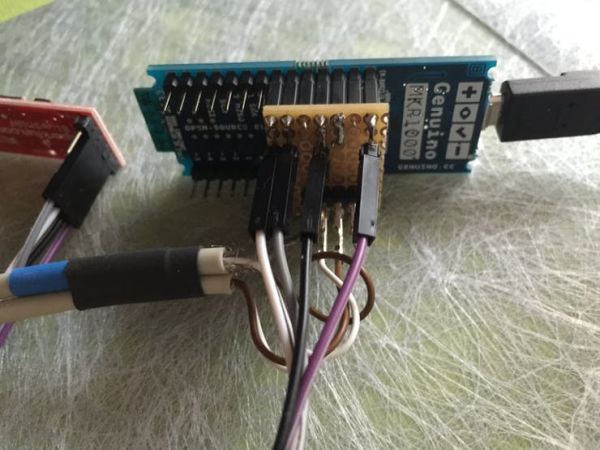 mounted circuit board
…and at last programming, hook up to phone and testing!
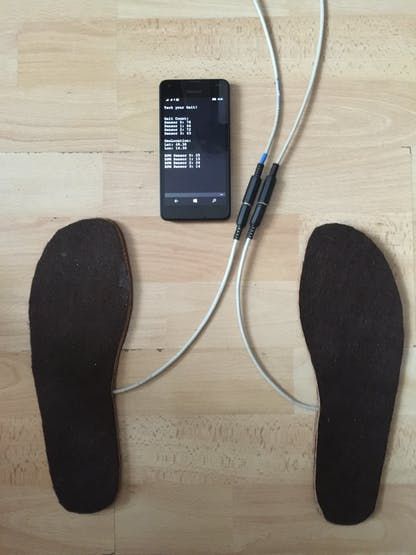 sensors with phone!
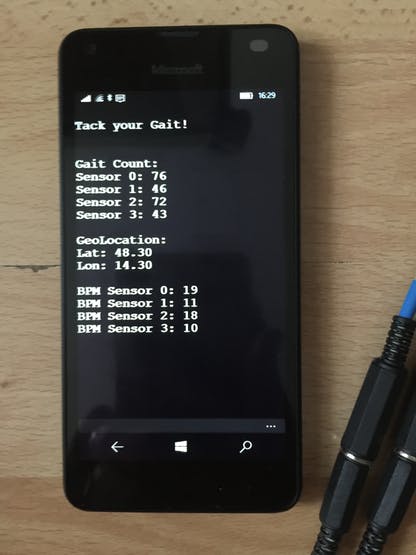 details of output
…and at last programming, hook up to phone and testing! With the project so far you can Count your steps and calculate Steps per Minute……..and it Shows your GPS-Position! In the next step i hook up a SD-Card-Slot and write the data to a SD-Card for protocol. So you can use Google to trace your route on a map and make a mid-track with processing!
But for this the time was to short and the Problems too much 🙂
Schematics
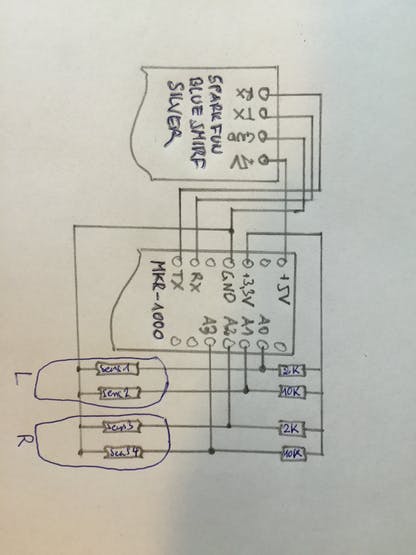
circuit diagram
Code
Source : Tack your Gait!
- How do I install the application for this project?
You must use the Side-Load function on a Windows 10 computer with Visual Studio 2015 because the app in the store is not working. - What hardware components are required to build the sensors?
The sensors are built using cork 2mm, Velostat foil, copper strippers, felt plates, foam rubber, and silicon for sealing cables. - Can this project visualize data in real time?
No, you should not overstress the Bluetooth connection as the module hangs up when attempting realtime data visualization. - What specific Arduino board does the code target?
The code is programmed specifically for the Arduino MKR1000 board. - What libraries are included in the source code?
The code includes the ArduinoJson library, VirtualShield, Text, and Geolocator libraries. - What functions can the completed project perform?
The project can count steps, calculate steps per minute, and show the user's GPS position. - Why was a custom circuit board created?
A small circuit board was made to connect the sensors and the Bluetooth module to the sensor setup. - What voltage divider values were used in the design?
The designer used 2K and 10K resistors as a voltage divider and warned not to exceed the maximum Ampere.
