
Summary of LDR Robot using an Arduino
This article guides users in building an LDR/IR Robot that seeks light and avoids obstacles using an Arduino, LDRs, and IR sensors. It details the required kit components, assembly steps for motors and gearboxes, and necessary tools like a hot glue gun and soldering iron. The project emphasizes customization, allowing builders to design unique chassis configurations while ensuring the robot self-corrects its path via sensor input.
Parts used in the LDR Robot with IR and a Servo:
- Arduino
- Battery Holder
- Acrylic Chassis
- On/Off Switch
- Motor Gearbox and Wheel
- Power Jack
- LDR
- IR Receiver
- LED
- IR LED
- Resistor
- Servo
- NPN Transistor
- Ping Pong Ball
- Diode
- Screw
- Bread Board
- Velcro
- Straw
- Wire Pack
LDR Robot with IR and a Servo
The LDR/IR Robot is designed to seek out light and avoid obstacles. The robot uses the Light Dependent Resistor to seek out light and the Infrared Sensor to detect and avoid objects in its path. The following are instructions with pictures to show exactly how we built our robot. Your robot can be designed the way you desire and in your own order. At the end of this manual you will find some pictures of various robots built with this kit. Use your imagination and make your robot unique. Have fun!
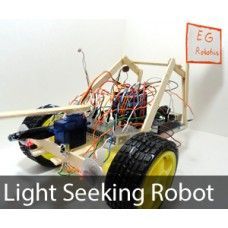
http://egrobotics.com/store/index.php?route=product/product&path=59&product_id=50
You will find that not all parts have to be used.
Components:
1 x Arduino
1 x Battery Holder
1 x Acrylic Chassis
1 x On/Off Switch
2 x Motor Gearbox and Wheel
1 x Power Jack
3 x LDR
1 x IR Receiver
12 x LED
2 x IR LED
14 x Resistor
1 x Servo
4 x NPN Transistor
1 x Ping Pong Ball
4 x Diode
2 x Screw
1 x Bread Board
2 x Velcro
1 x Straw
1 x Wire Pack
The tools used in this project are:
Hot Glue Gun
Scissors
Small Screwdriver
Needle Nose Pliers
Wire Stripper
Sharpie
Electrical Tape
Soldering Iron(can be done without)
Step 1: Components and Tools
http://egrobotics.com/store/index.php?route=product/product&path=59&product_id=50
You will find that not all parts have to be used.
Components:
1 x Arduino
1 x Battery Holder
1 x Acrylic Chassis
1 x On/Off Switch
2 x Motor Gearbox and Wheel
1 x Power Jack
3 x LDR
1 x IR Receiver
12 x LED
2 x IR LED
14 x Resistor
1 x Servo
4 x Transistor
1 x Ping Pong Ball
4 x Diode
2 x Screw
1 x Bread Board
2 x Velcro
1 x Straw
1 x Wire Pack
The tools used in this project are:
Hot Glue Gun
Scissors
Small Screwdriver
Needle Nose Pliers
Wire Stripper
Sharpie
Electrical Tape
Soldering Iron(can be done without)
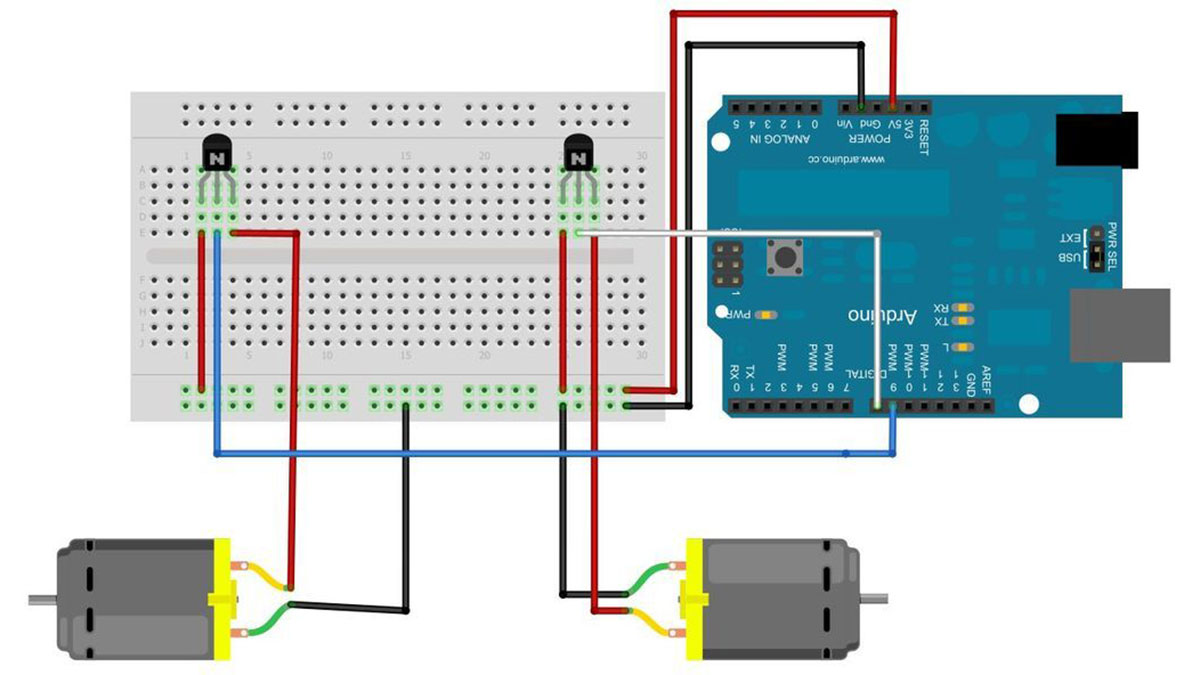
Step 2: Wiring The Motors
The chassis of the robot is not predetermined, make it how you want, the only rule is to make it awesome!
Find the motor, which is already placed within the yellow gearbox, but can be taken out if you so choose for other projects. Attach a pair of the twisted wires to the motor’s metal tabs by first stripping the ends of the wires and then inserting them through the holes in the tabs. Normally this would be done using a soldering gun however it works well to insert the wire through the hole and firmly clamp the wire around it using needle nose pliers. Be careful not to twist the tab on the motor because it might break. Once it is connected firmly, place a drop of hot glue over it to keep it in place.
Step 3: Attaching Gearboxes
Attach the motor-gearbox to the chassis. This can be done using a dab of hot glue on the chassis and then pressing the motor-gearbox into it. Be sure to use just a little bit of hot glue otherwise it might be hard to get off if it needs to be repositioned. Align the two wheels so that it will naturally drive in a straight line. It is alright if it veers to one side a little because it is sensor driven and will auto self-correct.
1 x Battery Holder
1 x Acrylic Chassis
1 x On/Off Switch
2 x Motor Gearbox and Wheel
1 x Power Jack
3 x LDR
1 x IR Receiver
12 x LED
2 x IR LED
14 x Resistor
1 x Servo
4 x Transistor
1 x Ping Pong Ball
4 x Diode
2 x Screw
1 x Bread Board
2 x Velcro
1 x Straw
1 x Wire Pack
For more detail: LDR Robot using an Arduino
- How does the robot seek out light?
The robot uses Light Dependent Resistors (LDR) to detect and seek out light sources. - What is the function of the Infrared Sensor?
The Infrared Sensor detects objects in the robot's path to help it avoid obstacles. - Can I build the chassis differently than shown?
Yes, the chassis is not predetermined, and you can design it however you desire. - Do I need to use all parts in the kit?
No, you will find that not all parts have to be used in the final build. - How are the motor wires attached without soldering?
You can strip the wire ends, insert them through the motor tabs, and clamp them firmly using needle nose pliers. - What should I do if the robot veers slightly to one side?
It is alright if it veers because the sensor-driven system will auto-self-correct. - Is a soldering iron strictly required for this project?
No, the project notes that the soldering iron step can be done without. - How can I ensure the wheels drive in a straight line?
You should align the two wheels so that they naturally drive in a straight line during assembly.
