
Summary of Pacman/Ghost LED Matrix
This project constructs an interactive LED matrix displaying Pacman and a Ghost. The display toggles between characters via a button press, while the Ghost's color shifts to blue in cold conditions or red when warm, driven by a temperature sensor. The build involves laser-cut cardboard platforms, translucent paper for light diffusion, and an Arduino Uno to manage logic and power distribution within a custom enclosure.
Parts used in thePacman/Ghost LED Matrix:
- 71 leds (led strip)
- 1 push button
- 1 Arduino Uno
- 1 Temperature sensor BME280
- Cardboard
- Translucid paper
- Jumpers
- Power supply 5V
We created a LED matrix that shows a Pacman and a Ghost. The figure changes by pressing a button. Also, the ghost takes the color according to the external temperature. It means, if it is cold, the figure turn blue, but if it is warm outside it will change to red.
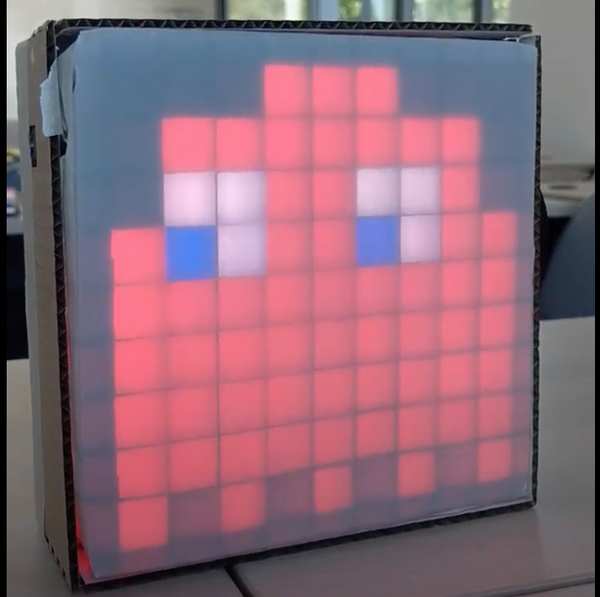
Supplies
- 71 leds (led strip)
- 1 push button
- 1 Arduino Uno
- 1 Temperature sensor BME280
- Cardboard
- Translucid paper
- Jumpers
- Power supply 5V
Step 1: Shape
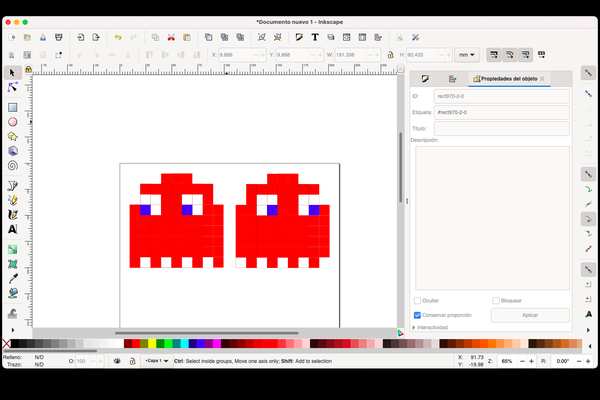
To start with the project, we built-up the idea on paper in order to know how many LEDs we could assign and how to place and connect them.
With the same structure for the ghost, we set it for the Pacman shape.
Step 2: Connect Wires
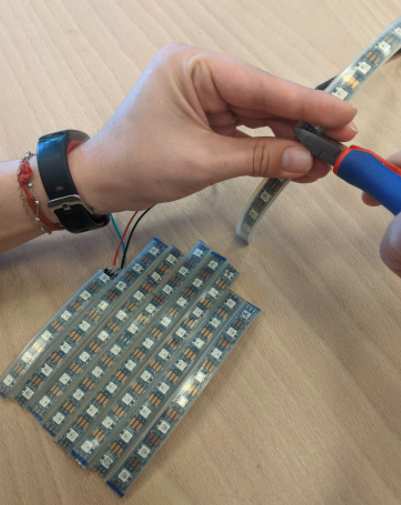
Now, we already know how to place and connect the leds for the different shapes. Then we cut and solder the led strip, in a way to make easy at the moment to set the leds.
Step 3: Place the Led Strip on the Platform
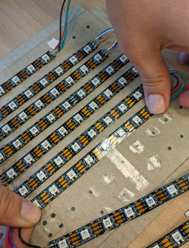
Then, we design a platform where we are going to place the LED strip. Here is the design. Once it is cut by the laser cut, we placed the LED strip.
Step 4: Connect the Arduino
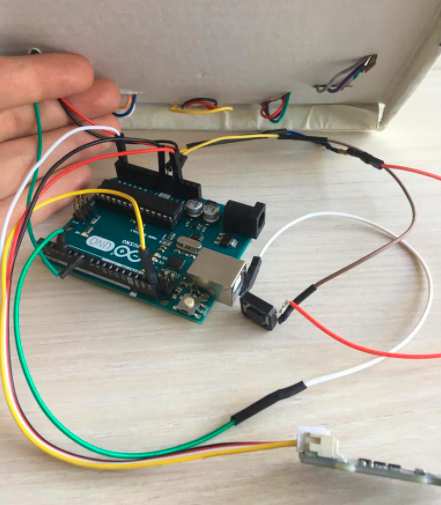
Once all the wires are connected and placed, we connect everything to the Arduino. The sensor is located on pin A4. The push btton is located on pin 4. And the LEDs are connected to pin 7.
Step 5: Grid Creation
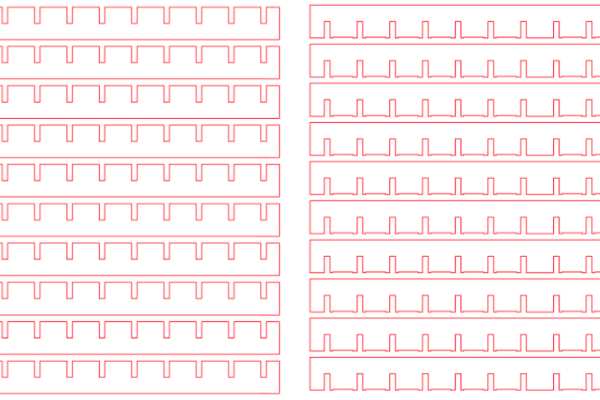
Next, we design the grid structure. This structure will help us to create squares for each LED, also it allows the LEDs to glow more. Then we set the translucent paper so the lights can stand out.
Step 6: Box Creation
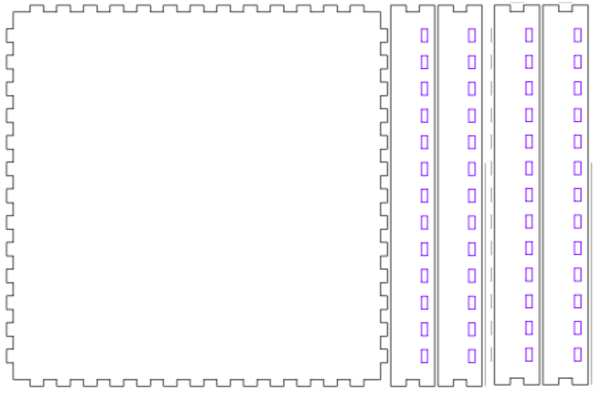
Afterwards, we created a box to place the whole project, where we can “hide” the Arduino. For this, we use an A-Box template.
Step 7: Build-up the Project
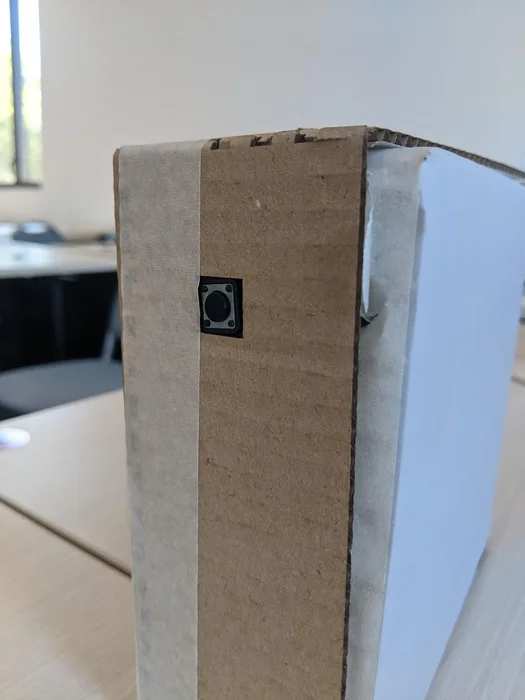
We put together all the structure built before. The Arduino and the power supply are placed inside the box, allowing the LED grid to stand out externally. The pushbutton is located in one of the walls of the box and once you press on it, the Pacman animation starts. When you press again, the ghost animation starts. This last animation may vary depending on the ambient temperature. When the temperature sensor detects a cool weather, the ghost turns blue, while when there’s a warm weather it turns red.
Source: Pacman/Ghost LED Matrix
- How does the ghost change color?
The ghost turns blue if the weather is cool and changes to red when the weather is warm. - What triggers the animation switch?
Pressing the push button located on one of the box walls starts the Pacman or Ghost animation. - Which pin connects the temperature sensor?
The sensor is located on pin A4. - Where is the push button connected?
The push button is located on pin 4. - What material diffuses the LED lights?
Translucid paper is set over the grid structure so the lights can stand out. - How are the LEDs arranged for visibility?
A designed grid structure creates squares for each LED and allows them to glow more effectively. - Where are the Arduino and power supply placed?
They are placed inside the box to hide them while allowing the LED grid to stand out externally. - What template was used for the box?
An A-Box template was used to create the enclosure for the project.
