
Summary of MASS PRODUCTION 3D PRINTING HACK CHAT
The article explains that while injection molding dominates mass-produced plastic parts, its high tooling and setup costs make it impractical for moderate runs or complex designs. Gabe Bentz of Slant 3D describes using large-scale 3D print farms to fill that manufacturing gap, producing medium-volume parts that injection molding can't economically or practically make. The piece highlights when 3D printing is a viable alternative and what running a print farm entails.
Parts used in theMass Production 3D Printing Hack Chat:
- 3D printed plastic parts (general)
- 3D printers (print farm machines)
- Print farm infrastructure (racks, power, ventilation)
- Filament or print material (thermoplastic feedstock)
- Part design files (CAD models for printing)
- Post-processing tools (for cleanup and finishing)
We’ll take a wild guess and say that right now, within arm’s length of wherever you’re reading this, there’s something that was produced by injection molding. Look around; it’s there someplace, and whatever it is, thousands or perhaps millions of other identical artifacts were produced along with it, all by squeezing hot plastic into intricately machined metal tools.
It’s not much of an overstatement to say that, for good or for ill, the world is made from injection-molded plastic. But not every product can support the often considerable up-front costs associated with injection molding. The tooling needed is often remarkably complicated and correspondingly expensive, and running the machines that actually do the molding is expensive and highly specialized. Unless you’re committed to making a lot of parts, injection molding might just be out of your league.
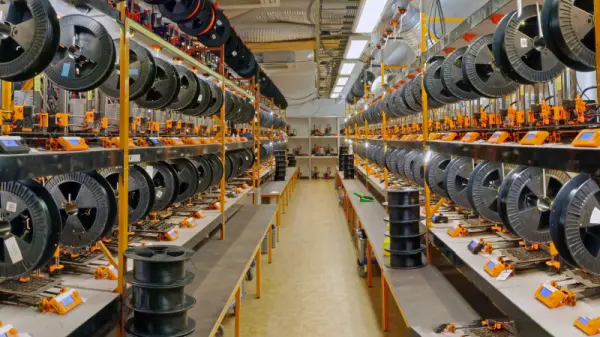
But does that mean that medium-sized runs of parts are out of luck? Not at all! Gabe Bentz, founder and CEO of Slant 3D, is passionate about filling the manufacturing void where injection molding is prohibitive, either by virtue of start-up costs or because the part design is just not possible to manufacture. His massive print farms are busy day in and day out cranking out parts for customers that otherwise couldn’t be made. So if you’ve ever wondered what it takes to run a print farm, and what kinds of design considerations make a part a candidate for mass production by 3D printing, drop by the chat and we’ll see what he has to tell us.
Source: MASS PRODUCTION 3D PRINTING HACK CHAT
- Why might injection molding be impractical for some projects?
Because tooling and setup costs are often high and machines are expensive and specialized, making it uneconomical for lower-volume or complex parts. - Can 3D printing fill the gap left by injection molding?
Yes, Gabe Bentz and Slant 3D use large print farms to produce medium-volume parts that would be impractical to make with injection molding. - What kind of runs are 3D print farms suitable for?
Medium-sized runs where injection molding's up-front costs or design limitations make molding prohibitive. - What are common components of a 3D print farm?
Many 3D printers, infrastructure such as racks, power and ventilation, materials like filament, design files, and post-processing tools. - Why would a part design be unsuitable for injection molding?
Some geometries and complexities are difficult or impossible to manufacture with injection molding tooling and processes. - Does running a print farm require continuous operation?
Yes, the article notes print farms are busy day in and day out producing parts for customers. - Who is Gabe Bentz?
He is the founder and CEO of Slant 3D, a company using print farms to mass-produce parts by 3D printing.
