
Summary of LiFePO4wered/Solar1 – Solar power supply for IoT devices
This article describes a robust, user-friendly solar power system designed for outdoor IoT sensor nodes. It features a LiFePO4 battery for longevity and high-temperature performance, paired with a switch-mode MPPT charge controller supporting 4.5–28V input. Key functionalities include automatic heater control to optimize charging temperatures, low voltage cutoffs to protect the battery, and configurable settings for MPPT voltage and charge current. The project aims to provide a reliable power solution with up to 3A output current, available as prototypes on Tindie.
Parts used in the Solar Power Supply for IoT Devices:
- LiFePO4 battery
- Switch mode MPPT charge controller
- External thermistor (optional)
- Solar panel (implied by 4.5-28V input range)
- IoT sensor nodes
Description
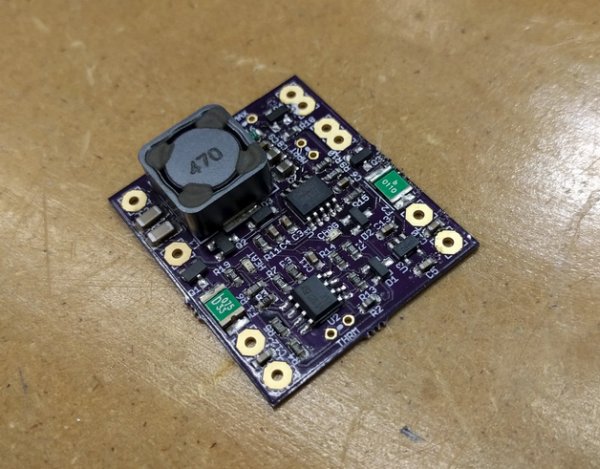
– LiFePO4 battery for high charge cycle count, high temperature performance and 3.2V output voltage (compatible with most chips used in IoT).
– Switch mode MPPT charge controller for high efficiency, 4.5-28V solar input range.
– Charge and output current up to 3A (depending on the battery capacity).
– Automatic heater control to bring the battery up to temperature before charging, ensuring maximum battery life.
– Low voltage cutoff disconnects the load from the battery when the battery voltage becomes too low, again ensuring maximum battery life.
– User can set MPPT voltage, charge current and connect an external thermistor if desired.
-
Since the components list here on Hackaday.io is a horrendous way to publish a BOM and a BOM needs to be published for projects entering the “Best Product” Hackaday Prize category, I decided to upload a spreadsheet instead. 🙂 I also tested the FindChips software Hackaday was pushing, and it’s pretty cool, but I didn’t get much support to add components it didn’t know about. Anyway, here’s also a link to that BOM. Enjoy!
-
For sale on Tindie!
Patrick Van Oosterwijck • 06/29/2017 at 17:04 • 0 comments
Finally got around to taking some product pictures and writing enough documentation to be able to start selling the prototypes I built on Tindie!
Hopefully with the connection diagram and design information it will be possible for most people with some electronics background to use these successfully.
I’ll duplicate some of this information here for those interested in how to make use of this board:
Read more: LiFePO4wered/Solar1 – Solar power supply for IoT devices
- What is the primary purpose of this project?
To create a complete, easy-to-use solar power system for reliable outdoor deployment like IoT sensor nodes. - Can the system operate at high temperatures?
Yes, it uses a LiFePO4 battery known for high temperature performance. - Does the system include automatic heating?
Yes, it features automatic heater control to bring the battery up to temperature before charging. - What is the maximum output current?
The charge and output current can go up to 3A depending on the battery capacity. - How does the system protect the battery from over-discharge?
A low voltage cutoff disconnects the load when the battery voltage becomes too low. - Is the MPPT voltage adjustable?
Yes, the user can set the MPPT voltage along with the charge current. - Can I connect an external thermistor?
Yes, users have the option to connect an external thermistor if desired. - Where can I purchase the prototypes?
The prototypes are available for sale on Tindie.
