
Summary of Esplora X M5Stack
This article details building a retro NES game console by combining the Arduino Esplora as an I2C gamepad with the M5Stack (ESP32) for display and emulation. This setup avoids the long boot times associated with Raspberry Pi solutions, offering instant gameplay access.
Parts used in NES Game Console:
- Arduino Esplora
- M5Stack core with 2.0" LCD
- 2 pins male-male pin header
- 6 pins male-female pin header
- Grove Conversion Cable
- 1 to 1 patch wires for SCL and SDA connections
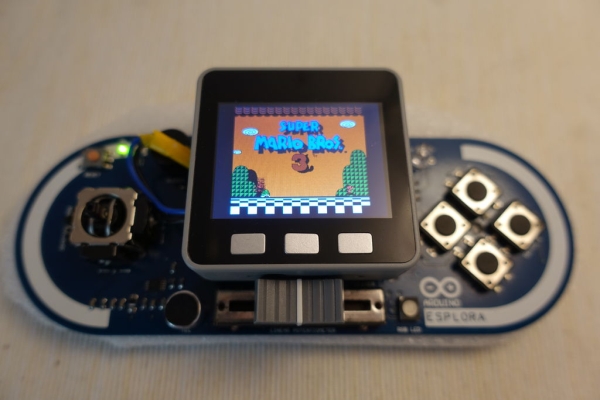
This instructables show how to combine Arduino Esplora and M5Stack to make a NES game console.
Step 1: What Is Arduino Esplora?
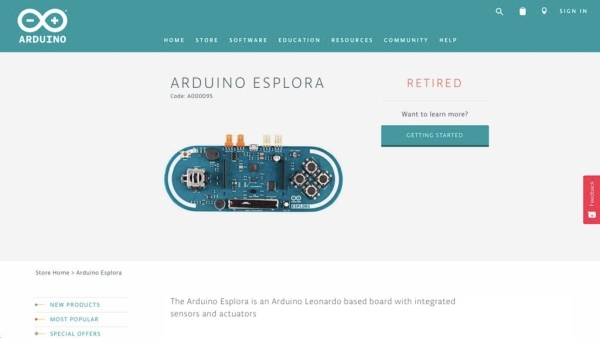
Arduino Esplora is an Atmega32U4 AVR microcontroller board.
It is unique Arduino boards, because it built-in various input sensors out-of-the-box, including a joystick, 4 push buttons, a slider, a temperature sensor, an accelerometer, a microphone, a light sensor, etc.
And also Arduino IDE provided various example for using all of it.
This time I will program Esplora as an I2C slave device to act as an I2C gamepad.
Ref.: https://store.arduino.cc/usa/arduino-esplora
Step 2: What Is M5Stack?
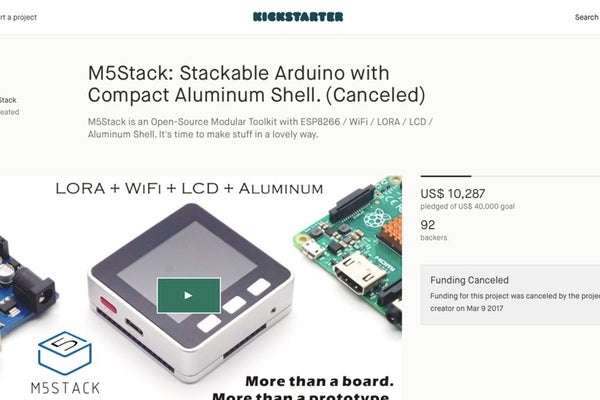
M5Stack start from a kickstarter project at 2017, ESP32 core, built-in 2.0″ color LCD, tiny 5 cm form factor, support stackable modules and grove I2C modules.
Now it already have various core models, tens of stackable modules and also support tons of I2C Grove modules.
Ref.:
https://www.kickstarter.com/projects/179167367/m5s…
Step 3: Why Play Retro Game With ESP32?
It is a very popular topic using Raspberry Pi to make a retro game console with Retropie distribution.
It do the job very well, but the most notable problem is the boot time.
I do not want to wait over half a minute to enter a retro game, a real game console no need to wait for this!
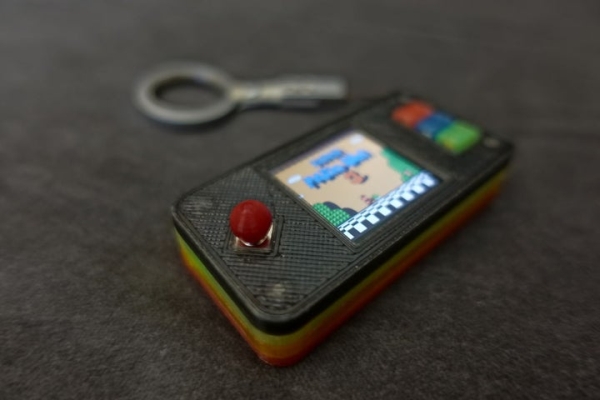
Then I found esp32-nesemu no need to wait for boot, so I try to use M5Stack to build a NES game console.
Step 4: Hardware Preparation
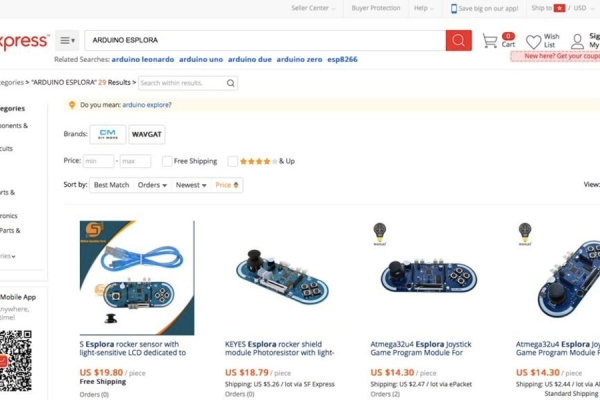
Arduino Esplora
The official product is obsoleted but it is still very easy to find a clone on the web.
M5Stack
Any M5Stack core with 2.0″ LCD should be ok.
Pin Headers
2 pins male-male pin header and 6 pins male-female pin header.
Grove Conversion Cable
Normal 4 pin Male Jumper to Grove 4 pin Conversion Cable preferred. I did not have this cable in hand, so I just patch 1 to connect SCL and SDA pins myself.
Step 5: Software Preparation
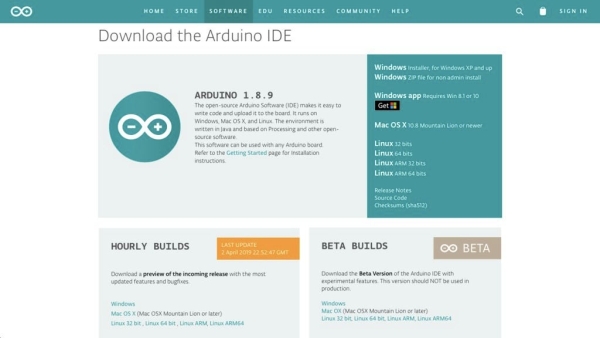
Arduino IDE
Download and install Arduino IDE if not yet:
https://www.arduino.cc/en/Main/Software
ESP-IDF
Follow the setup guide to install ESP-IDF if not yet:
https://docs.espressif.com/projects/esp-idf/en/sta…
Step 6: Program I2C Gamepad
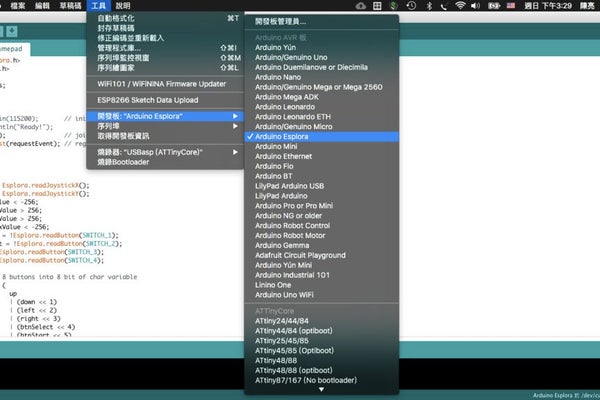
I have written a simple program to read the joystick and buttons input and translate it into I2C message.
Here is the program steps:
- Download esplora-i2c-gamepad.ino at GitHub: https://github.com/moononournation/esplora-i2c-gam…
- Connect Esplora to the computer
- Open Arduino
- Upload program
Source: Esplora X M5Stack
-
What is the Arduino Esplora?
It is an Atmega32U4 AVR microcontroller board featuring built-in sensors like a joystick, buttons, slider, temperature sensor, accelerometer, microphone, and light sensor. -
Why use ESP32 instead of Raspberry Pi for this project?
The author chose ESP32 because it avoids the long boot time required by Raspberry Pi Retropie, allowing immediate entry into games. -
Which software tools are required for this project?
You need Arduino IDE for the Esplora program and ESP-IDF for the M5Stack configuration. -
How does the Arduino Esplora function in this build?
The Esplora is programmed to act as an I2C slave device that reads inputs from its joystick and buttons and translates them into I2C messages. -
What specific hardware components are needed for the connection?
The project requires pin headers, a Grove conversion cable, or patch wires to manually connect SCL and SDA pins if a cable is unavailable. -
Can any M5Stack model be used?
Yes, any M5Stack core equipped with a 2.0" LCD screen is suitable for this project.
