
Summary of Make A Worms in Space Board Game Using Arduino
NASA took worms to the ISS in a capsule; after an accident, worm astronauts must reach an escape capsule via a damaged airlock reachable from the other side. Human astronauts assist by toggling quadrant warning lights to motivate worms, which move by completing circuits that trigger servo-powered doors. The game starts in Quadrant 1 and progresses to Quadrant 4, where rewards like coffee grounds await. Designers used Arduino, copper tape conductivity sensing inspired by Disney Touché, laser-cut acrylic levels, LEDs, servos, and color gels to build the interactive maze.
Parts used in the Worms in Space project:
- 4pcs MG90S Gear Micro Servo for RC Helicopter Plane Boat Car + Horns
- microtivity IL726 1-watt Ultra-bright White LED (Pack of 12)
- Cast Acrylic Sheet - Thickness: .118", Size: 12" x 24", Color: Light Blue Transparent
- 1/4 inch x 55 yds Copper Foil Tape
- 12x12" Color Correction Gels (Red and Blue)
- Arduino (5V supply and analog inputs)
- Laser cutter and Illustrator file for cutting acrylic pieces
- Worms (experimental subjects)
- Food rewards (coffee grounds, apple peels)
Story:
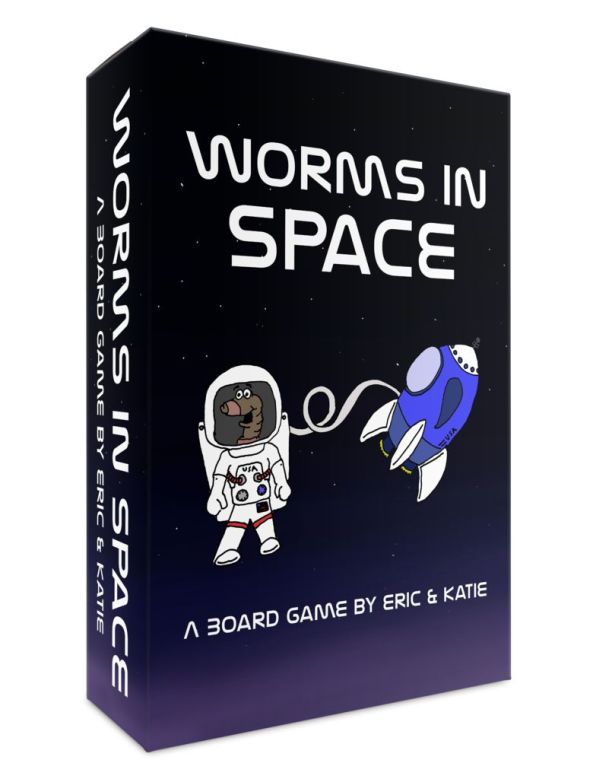
NASA has taken worms to the ISS on their own special capsule. There was an accident aboard the station and the worm astronauts have to navigate to the escape capsule to return to Earth. The airlock to the escape capsule has been damaged but can be reached from the other side of the ship. The human astronauts are helping their wormy comrades reach the capsule by using a series of warning lights in each quadrant of the station.
Goal:
To motivate a worm, through its natural sensation of visible light, to navigate from a starting point to an intended location.
Gameplay:
The worm starts in Quadrant 1 of the game board. The worm moves through each quadrant by incrementally triggering door switches until it reaches Quadrant 4. Quadrant 4 will be filled with some of the worm’s favorite foods, like coffee grounds or apple peels, so it can be rewarded for all of its efforts. The player is able to toggle LEDs on/off in order to motivate the worm to trigger the next door and to keep the worm from curling up in a dark corner of the game board.
Designers:
Hello, our names are Eric Hamilton and Katie Staples. We made this project for our Cybiotic Interaction Design Class taught by Andrew Quitmeyer at Georgia Tech. For more information, here is the course website:
http://lmc.gatech.edu/~aquitmeyer3/cybiotic/
Step 1: Supplies
4pcs MG90S Gear Micro Servo for RC Helicopter Plane Boat Car + Horns
microtivity IL726 1-watt Ultra-bright White LED (Pack of 12)
Cast Acrylic Sheet – Thickness: .118″, Size: 12″ x 24″, Color: Light Blue Transparent
1/4 inch x 55 yds Copper Foil Tape
12×12″ Color Correction Gels (Red and Blue)
Step 2: Planning
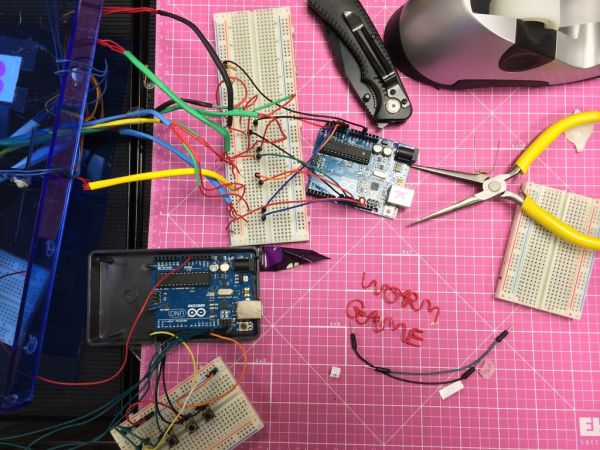
We began our research by using worms in combination with Disney’s Touche project. We decided to simplify our project by using the natural conductivity of the worms to complete simple circuits that control servo-powered doors. We did this by using a 5v outage on the Arduino connected to a strip of copper tape with another strip nearby connected to an analog input.
Disney Touche Technology:
Touché is a new sensing technology that proposes a novel Swept Frequency Capacitive Sensing technique that can not only detect a touch event, but simultaneously recognize complex configurations of the human hands and body during touch interaction. This allows to significantly enhances touch interaction in a broad range of applications, from enhancing conventional touch screens to designing interaction scenarios for unique use contexts and materials.
http://www.disneyresearch.com/project/touche-touch-and-gesture-sensing-for-the-real-world/
Step 3: Construction
Using a laser cutter and the included illustrator file, we cut the acrylic board into two levels. The base of each level is 10″ x10″ and they are separated by the larger 3″ x 1″ pieces. The piece with the center hole goes on top to allow for the mounting of the servos. The 2″ x 1″ pieces are used for the doors and permanent dividing walls. The side walls are the 10″ x 1″ pieces. The file makes a few spare parts too.
For more detail: Make A Worms in Space Board Game Using Arduino
- What is the goal of the Worms in Space project?
To motivate a worm via visible light to navigate from a starting quadrant to an intended location and reach the escape capsule. - How do worms trigger movement between quadrants?
Worms complete simple circuits using their natural conductivity to trigger servo-powered doors. - How are LEDs used in the game?
Players toggle LEDs on and off in each quadrant to motivate worms to trigger the next door and prevent them from curling up in darkness. - Where does the worm start and end in the game board?
The worm starts in Quadrant 1 and moves through quadrants until reaching Quadrant 4, which contains food rewards. - What inspired the sensing approach used in the project?
The project was inspired by Disney Touché and uses the worms' conductivity combined with circuit sensing techniques. - What materials are used to construct the game board?
The board is laser-cut from acrylic sheets into two levels with doors, walls, and mounting holes for servos. - What types of rewards are used in Quadrant 4?
Quadrant 4 is filled with worm favorite foods such as coffee grounds and apple peels. - What role do servos play in the project?
Micro servos power the doors that open when worms complete the circuits, allowing passage between quadrants.
