
Summary of “Smart” keyboard knows who’s typing
Researchers developed a self-powered, transparent keyboard that identifies users by analyzing unique typing patterns like pressure and timing. Using four film layers to harvest energy from keystrokes, the device generates electricity to power itself or charge small devices while repelling dirt via hydrophobic coating. This technology offers a potential solution for enhancing cybersecurity by combining biometric authentication with traditional passwords.
Parts used in the Self-Powered Keyboard:
- Polyethylene terephthalate
- Indium tin oxide
- Fluorinated ethylene propylene
- Hydrophobic coating
Researchers from several universities, including the Georgia Institute of Technology, are working on a keyboard that can isolate typing patterns — such as pressure applied to each key and the time spent between strokes — to accurately identify users. Their findings were published in the journal ACS Nano.
Four layers of transparent film on the device, including polyethylene terephthalate, indium tin oxide, and fluorinated ethylene propylene, harvest and collect energy from the user’s fingertips. “This intelligent keyboard changes the traditional way in which a keyboard is used for information input,” said Zhong Lin Wang, a Regents professor at Georgia Tech’s School of Materials Science and Engineering. “Every punch of the keys produces a complex electrical signal that can be recorded and analyzed.”
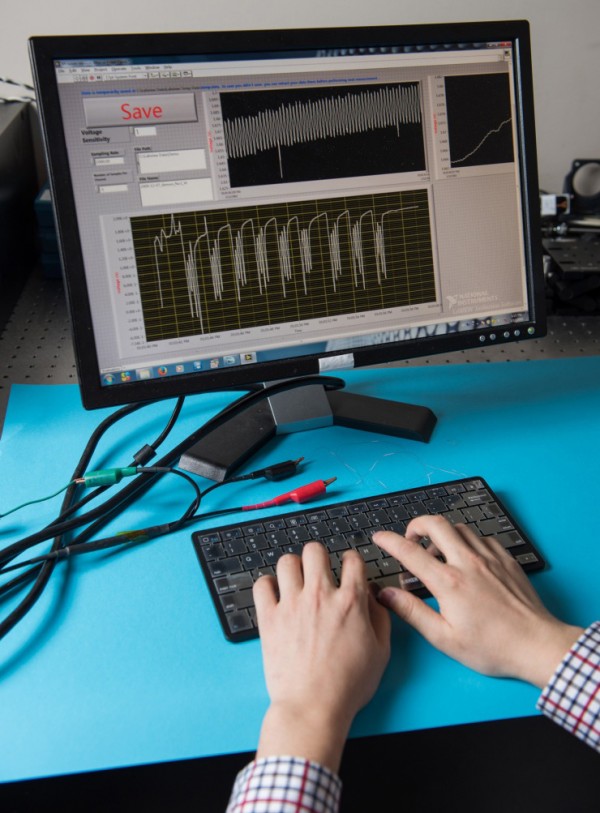
According to Wang and his team, these signals create patterns that serve as a distinctive signature for each user. Tests of 104 subjects who were asked to type the word “touch” four times on their keyboards produced data that enabled the identification of typing patterns with “low error rates.”
Additional features of the self-powered keyboard include a hydrophobic coating that repels dirt and the ability to generate electricity from key strokes — enough to charge a small portable electronic device or power a transmitter to make the keyboard wireless. The researchers believe the keyboard will be competitive with existing keyboards, in both cost and durability.
In a recent Gizmodo article, author Adam Clark Estes looks at the need to improve cybersecurity as well as some early starts in potentially ridding the world of passwords. He sites the November 2014 Sony Pictures hacking scandal — and with it the exposure of reams of personal data, including thousands of passwords — as a case in point. Perhaps combining passwords with this type of biometric authentication could be part of that eventual solution.
For More Details: “Smart” keyboard knows who’s typing
- How does the keyboard identify users?
The device isolates typing patterns such as pressure applied to each key and time spent between strokes to create a distinctive signature. - What materials are used in the device's layers?
Four layers of transparent film include polyethylene terephthalate, indium tin oxide, and fluorinated ethylene propylene. - Can this keyboard generate electricity?
Yes, it harvests energy from fingertips to charge small portable electronic devices or power a wireless transmitter. - Does the keyboard resist dirt?
It features a hydrophobic coating that repels dirt. - What was the error rate in user identification tests?
Tests on 104 subjects produced data enabling identification with low error rates. - How might this improve cybersecurity?
Combining passwords with this biometric authentication could help address security issues exposed by scandals like the Sony Pictures hack. - Is the keyboard expected to be durable?
Researchers believe the keyboard will be competitive with existing keyboards in both cost and durability. - What happens when keys are punched?
Every punch produces a complex electrical signal that can be recorded and analyzed.
